The ancient galleries
an hour isn't enough
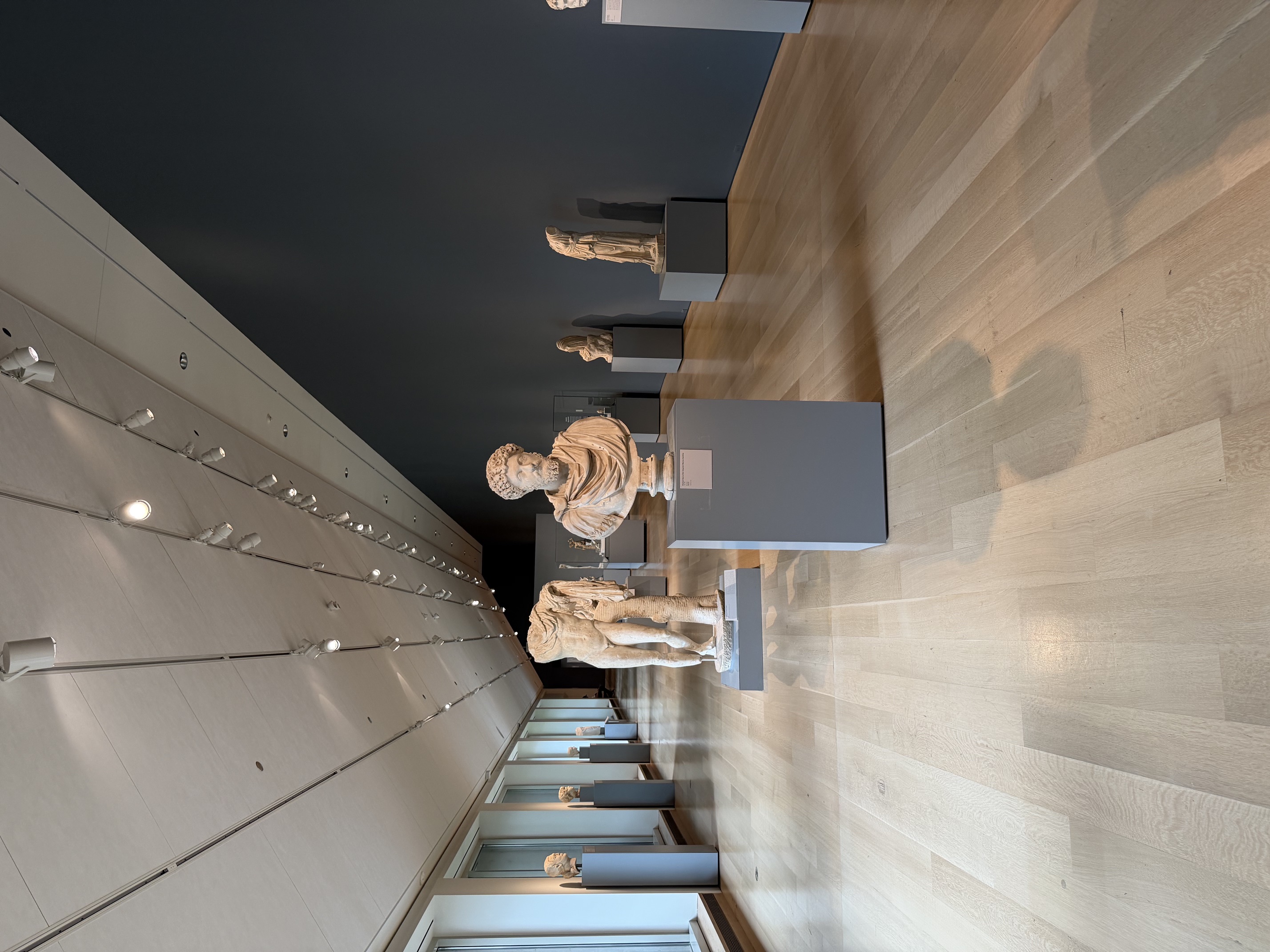
The long gallery on a weekday. Pale wood, a grey wall, and Marcus Aurelius in the middle of the floor.
Most visitors photograph the lions and go straight upstairs to the Impressionists, so the ancient galleries are left to whoever wants them. In June, that was me and one very thorough school group. The collection is smaller than the ones on either coast, but it is well chosen, and the light from the lake is good for looking at marble.
Three things stood out. The first was a pair of vases by the Chicago Painter, who has no recorded name and was given this one because of a jar that has been in this building since 1889. The second was an Apulian krater with Orpheus above a tomb. The third was a case of coins arranged by hairstyle, which added two entries to the catalogue and cost me half an hour I hadn't planned on.
{{ iiifCaption }}
The Chicago Painter
Two vases from about 450 BC, both Athenian and both by the same unknown painter. He is called the Chicago Painter because of the stamnos in this case, which came to the museum in 1889 and was the first piece scholars used to identify the rest of his work. We know this painter only because of a jar in Illinois.
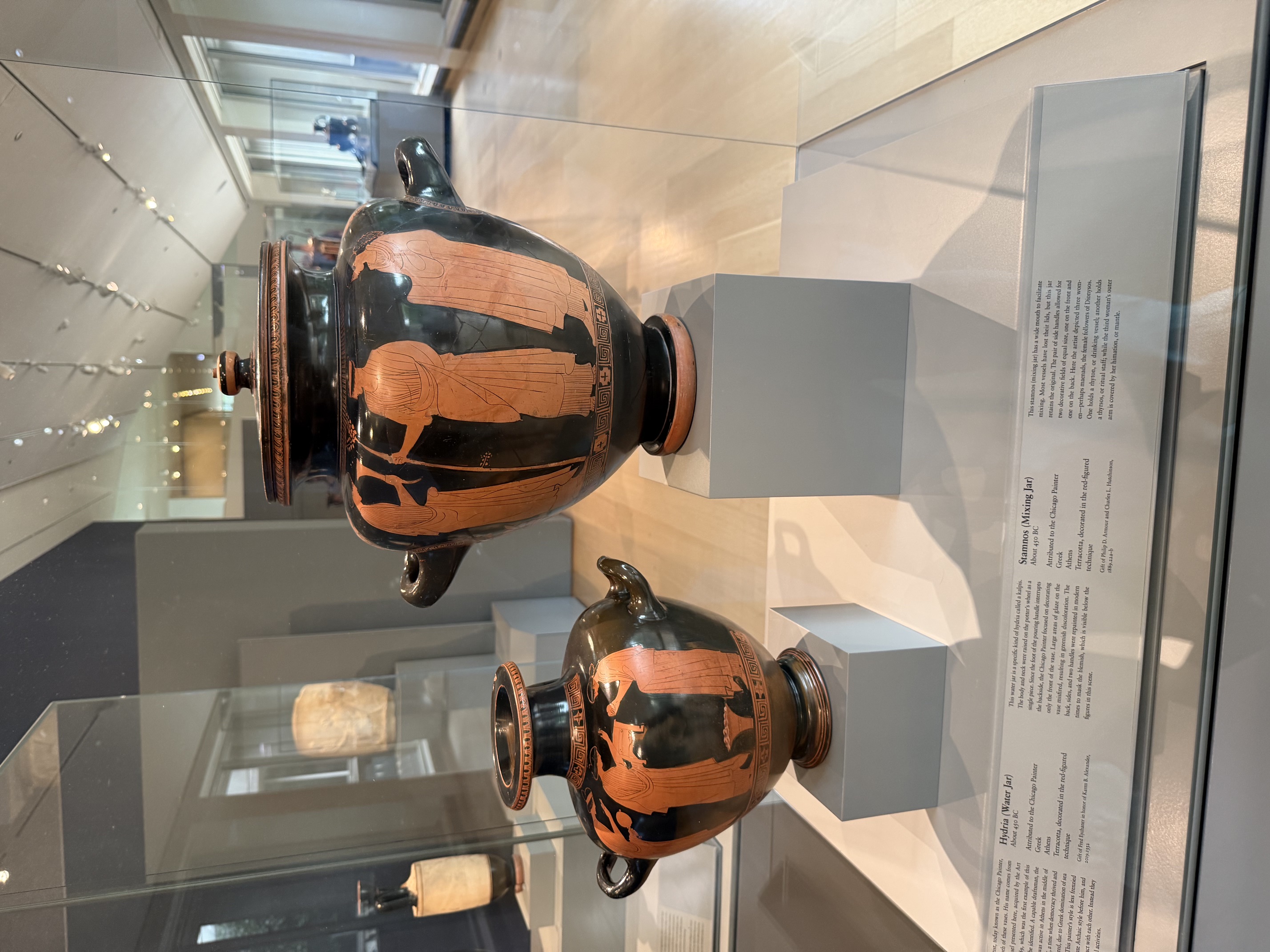
The hydria and the stamnos side by side, both by the Chicago Painter.
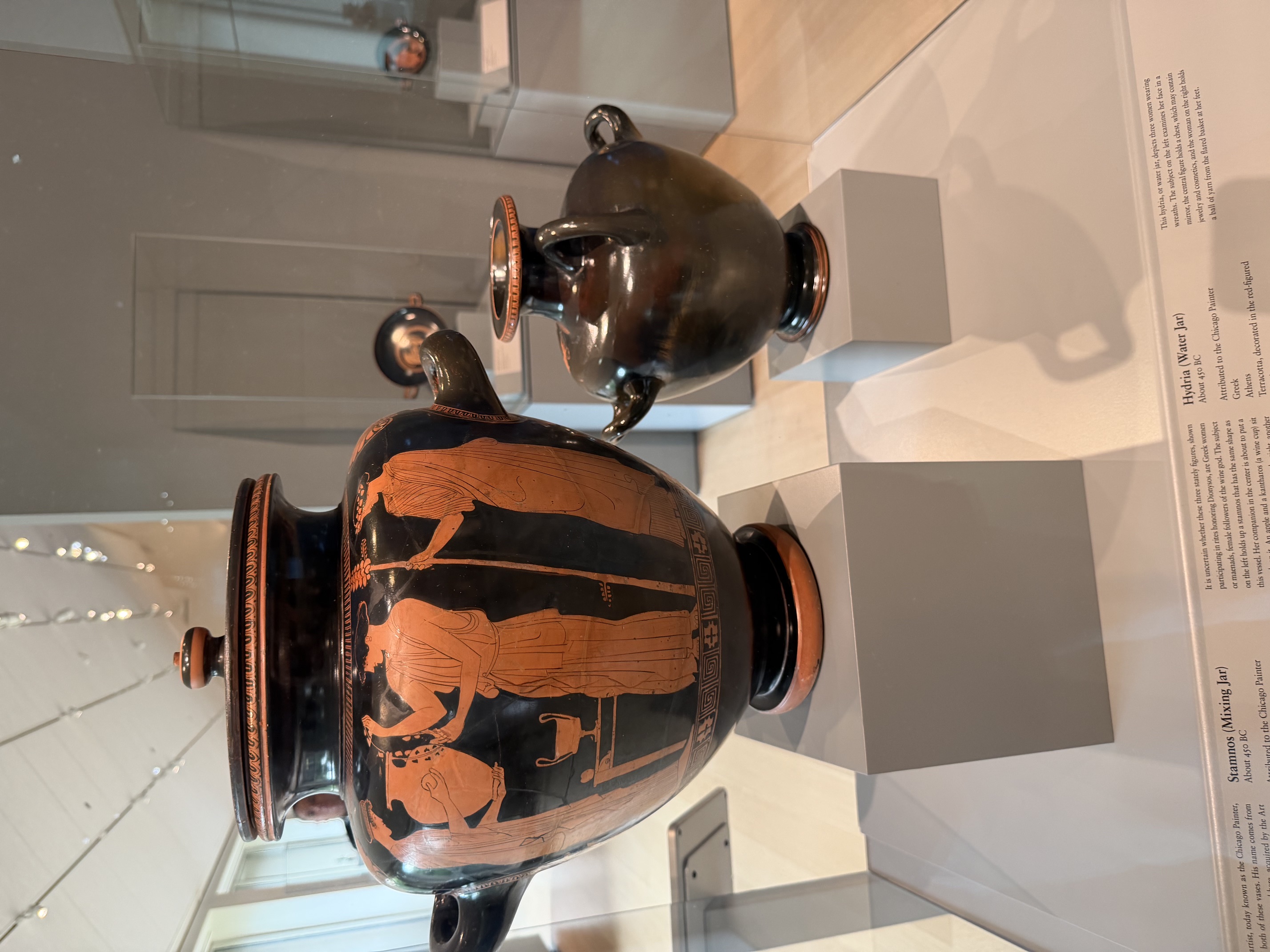
Three women on the stamnos. One holds a rhyton, one holds a thyrsos, and scholars still disagree about whether they are maenads or Athenian women dressed up for a ritual.
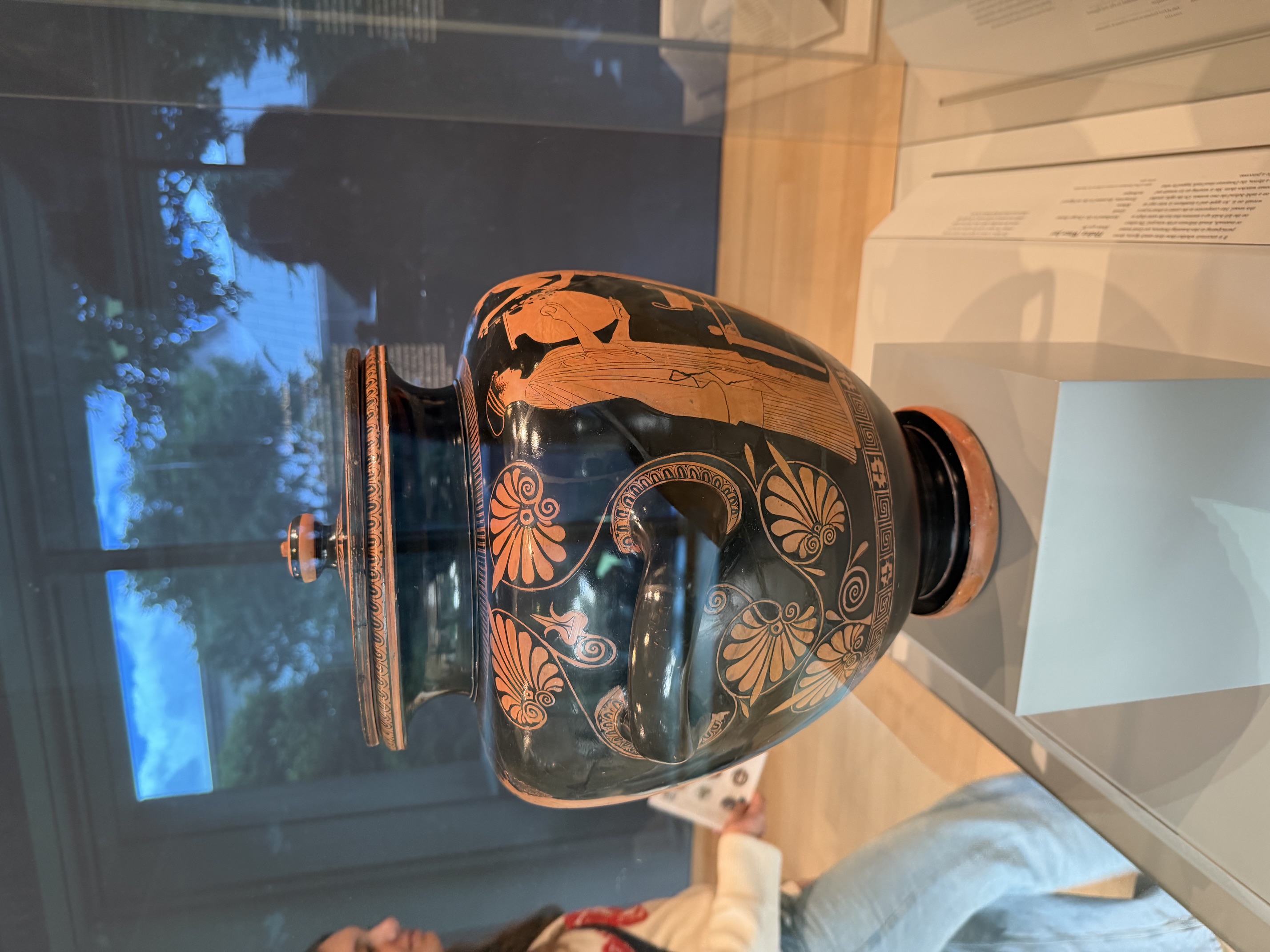
The back of the same jar. It has palmettes and spirals instead of figures, since the painter knew which side people would look at.
An Apulian krater with Orpheus
This krater was made in Apulia around 340 BCE by the Painter of Copenhagen 4223. A young warrior and an older man stand inside a painted tomb while people bring offerings, and Orpheus looks down over the whole scene. Orpheus sang his way into the underworld, won Eurydice back on one condition, and then looked back at her too soon. This pot was probably made for a grave, and the story was likely chosen on purpose.
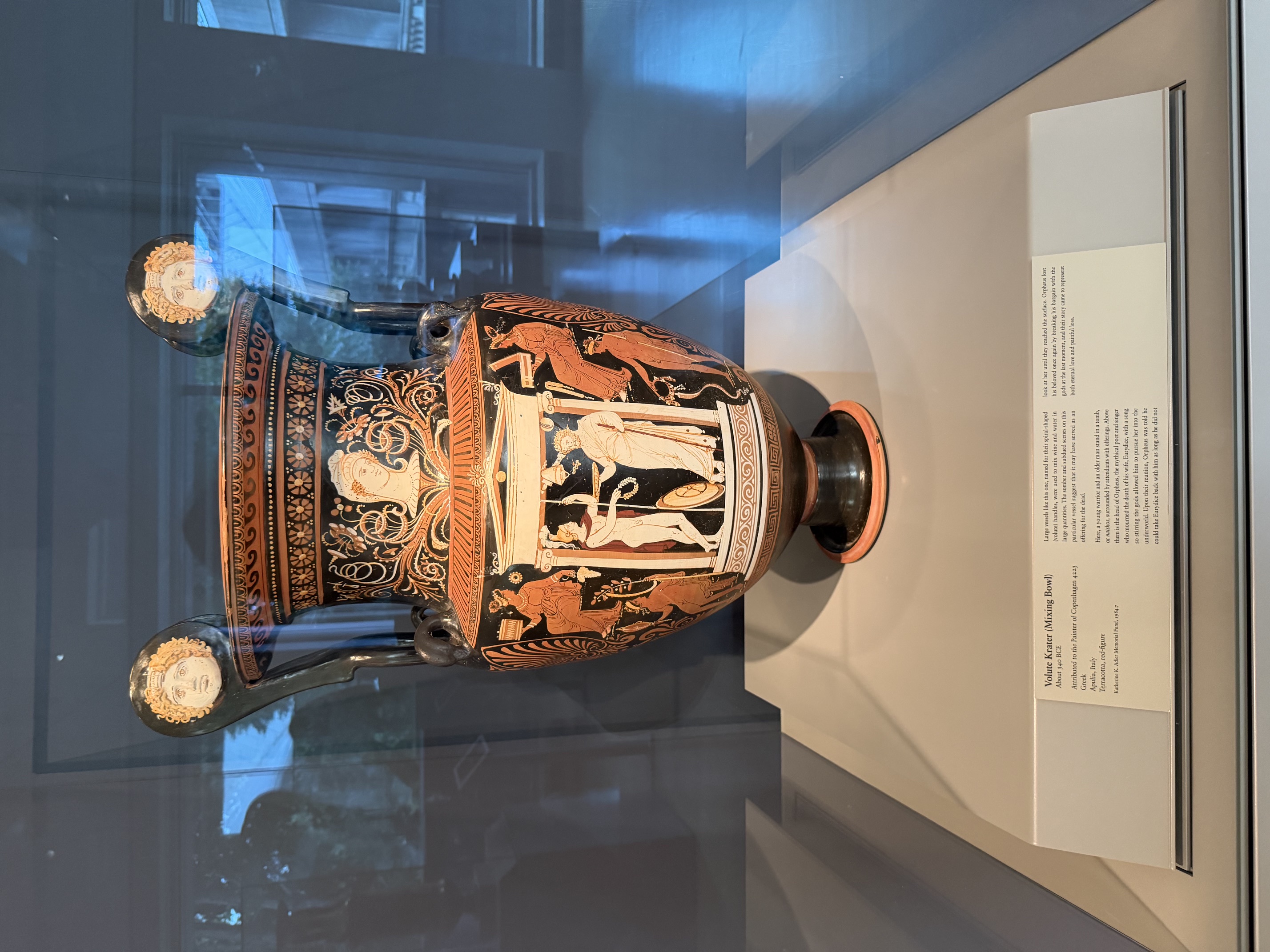
A volute krater, made for mixing wine and given to the dead. The heads on the handles face you from every angle.
Coins arranged by hairstyle
Twenty-three coins organized by hairstyle instead of by emperor or date. There are wreaths, diadems, braids, and the tall styles that would have needed a professional and a whole morning to arrange. Two of these went into the catalogue. It is the smartest display of coins I have ever seen.
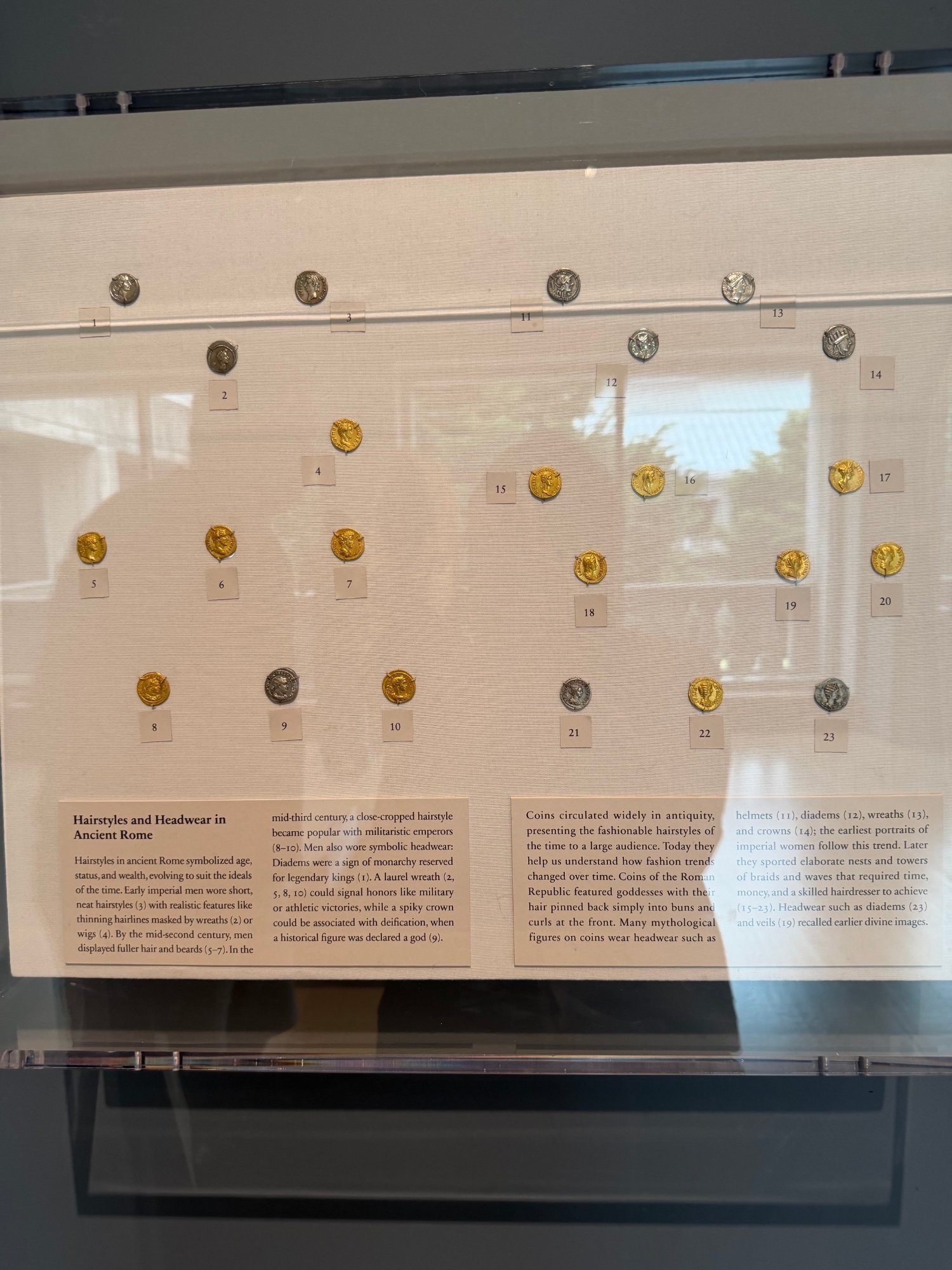
Silver and gold coins pinned in rows. Women in Rome would have seen their own hairstyles on the money they used.
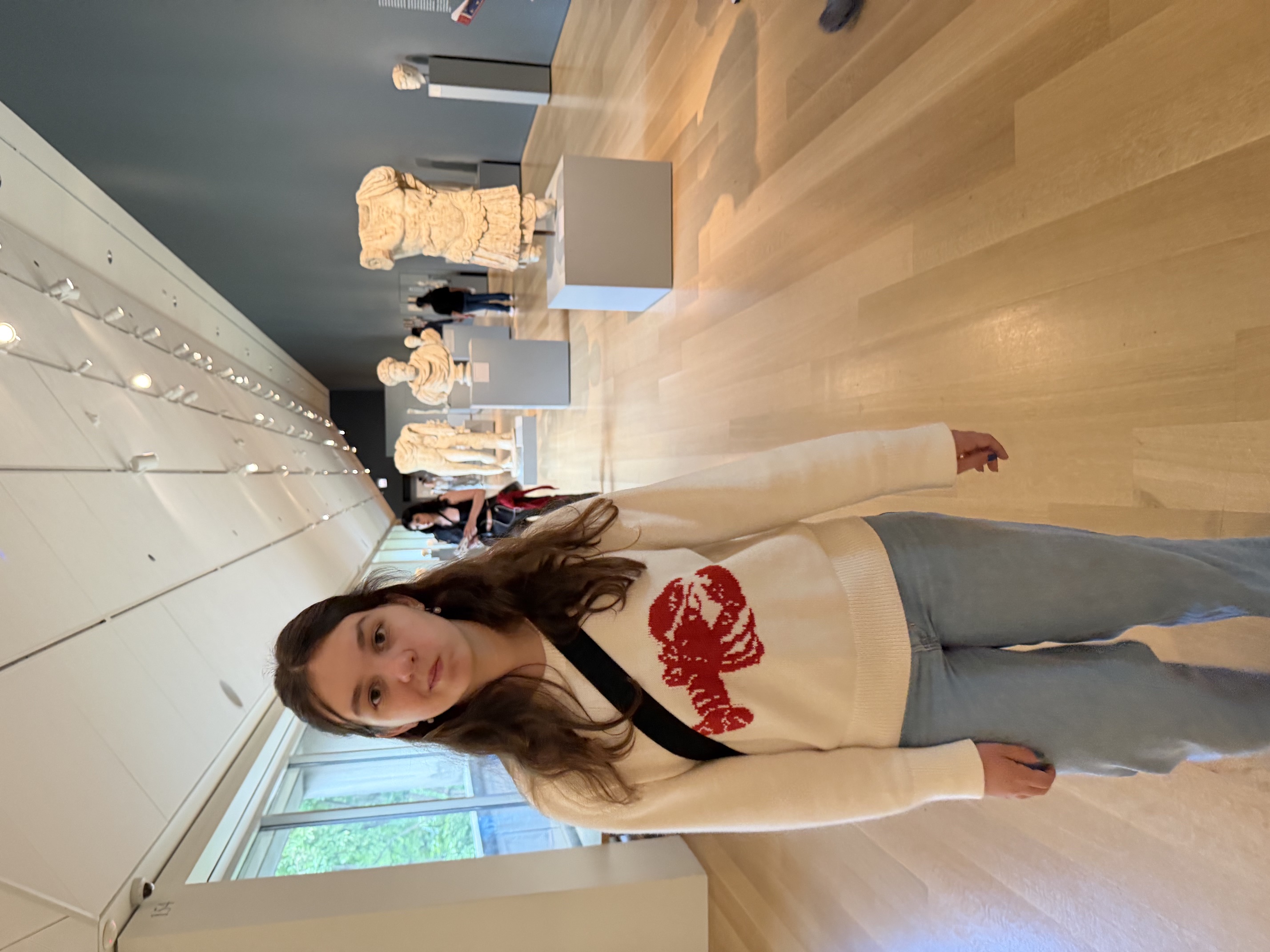
Halfway down the gallery, after staying much longer than the hour these rooms usually get.