Ancient stories in paint
no marble, all paint
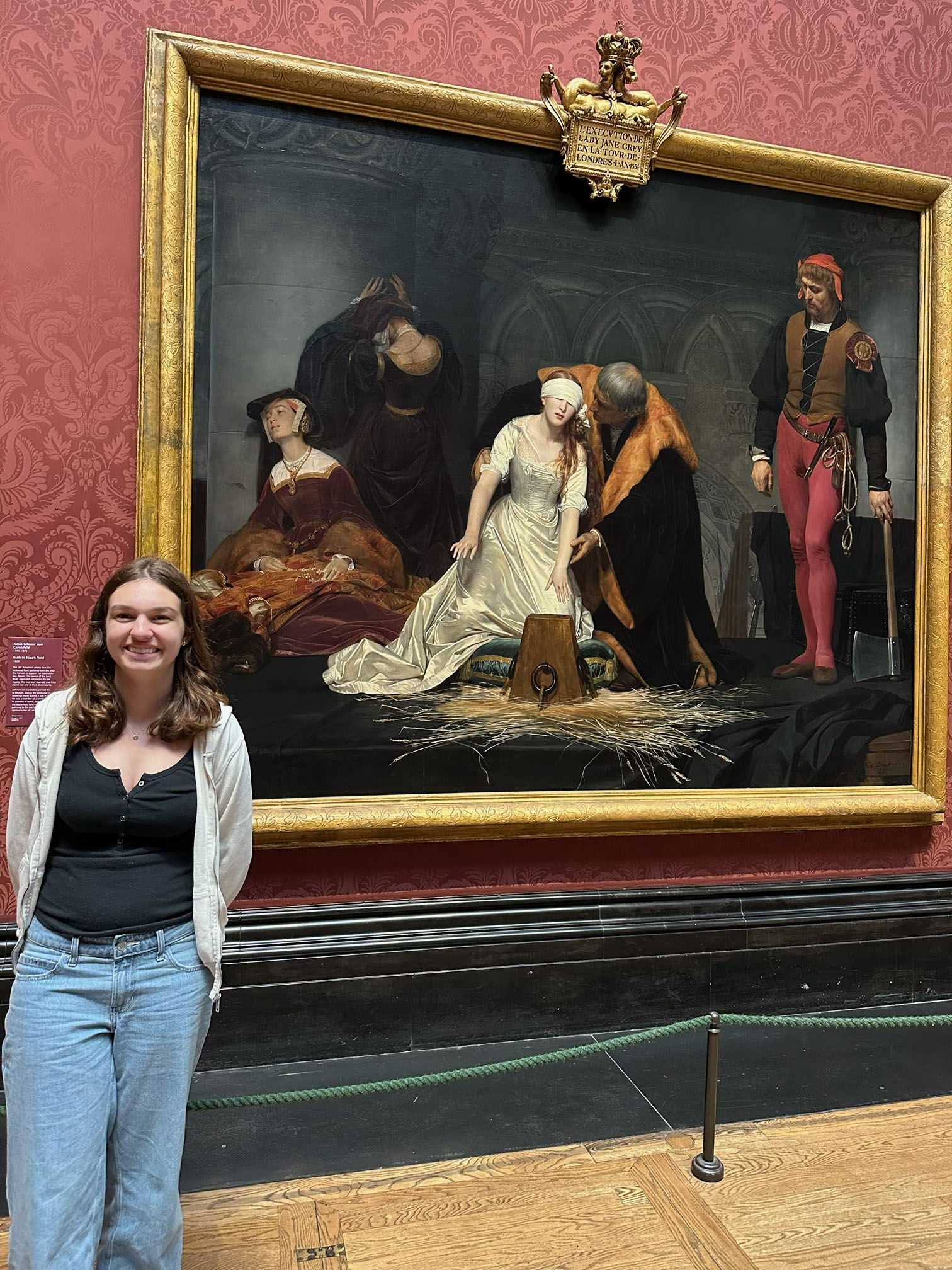
Delaroche's Execution of Lady Jane Grey, 1833. She is seventeen, blindfolded, and reaching for a block she cannot see. The painting is enormous, the room is red, and nobody standing in front of it talks.
There is not a single ancient marble in the building, but I logged the visit anyway, because the classical world does not stop at statues. All of my objects here were paintings, and two of them were Turner painting scenes from Homer.
The other thing you cannot get from a photo of a painting is how much the wall color matters. The British rooms are red damask, the 1700s rooms are blue, and the Impressionists are on flat grey. It is the same collection, but it feels like three completely different places.
Turner on red walls
Two of these hang a few steps apart, and they are doing the same thing: taking a story you already know and turning it into light and weather. Ulysses deriding Polyphemus is a scene from the Odyssey painted as light and weather. The Temeraire is a warship being towed to the scrapyard by a little black steam tug. That is not a myth at all, and somehow it is even more moving.
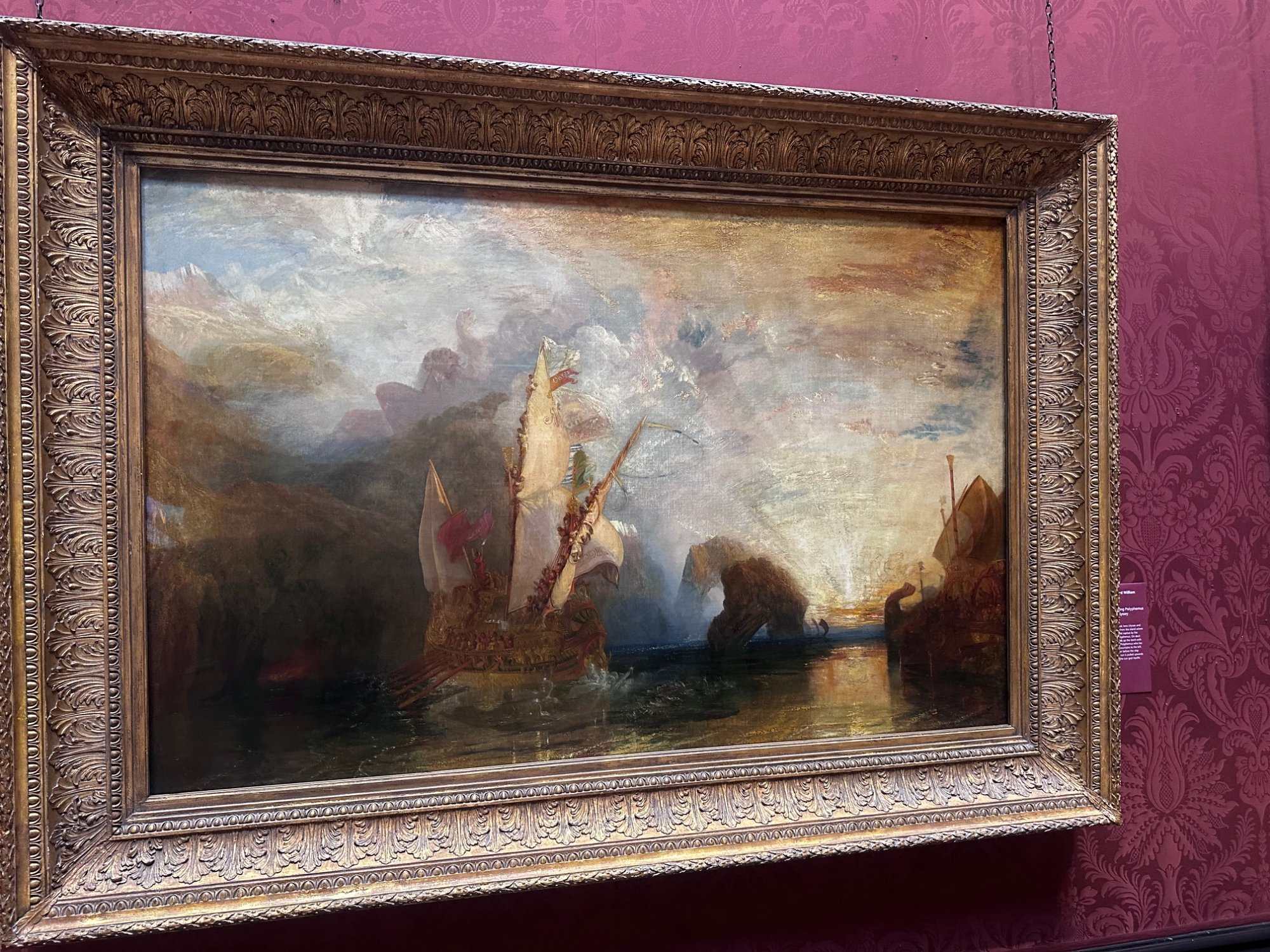
Odysseus sails off shouting insults, and Polyphemus is up in the cloud on the left. You have to look carefully to find him, and that is the point.
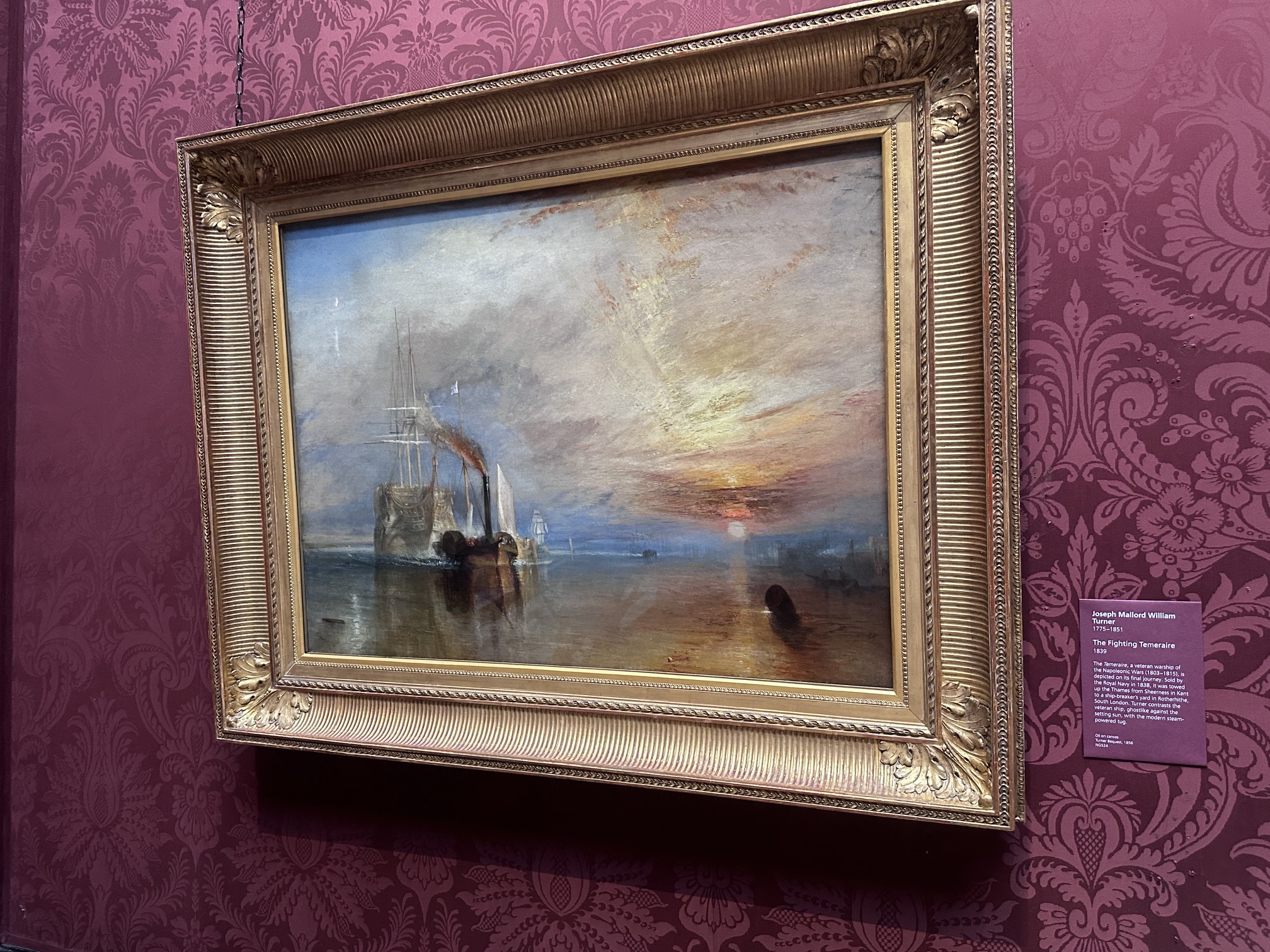
The Temeraire, a ship that fought at Trafalgar, going up the Thames to be scrapped. Turner placed the sunset behind her on purpose.
Portraits on blue walls
Three portraits and a piece of a fourth. There is Rembrandt looking at himself at 63, the year he died. There are the Hallets out for a walk on their wedding morning, painted so loosely that the bride’s dress is mostly a blur. And there are the Graham children putting on a show, with a cat behind them that has spotted the bird cage and is about to cause trouble.
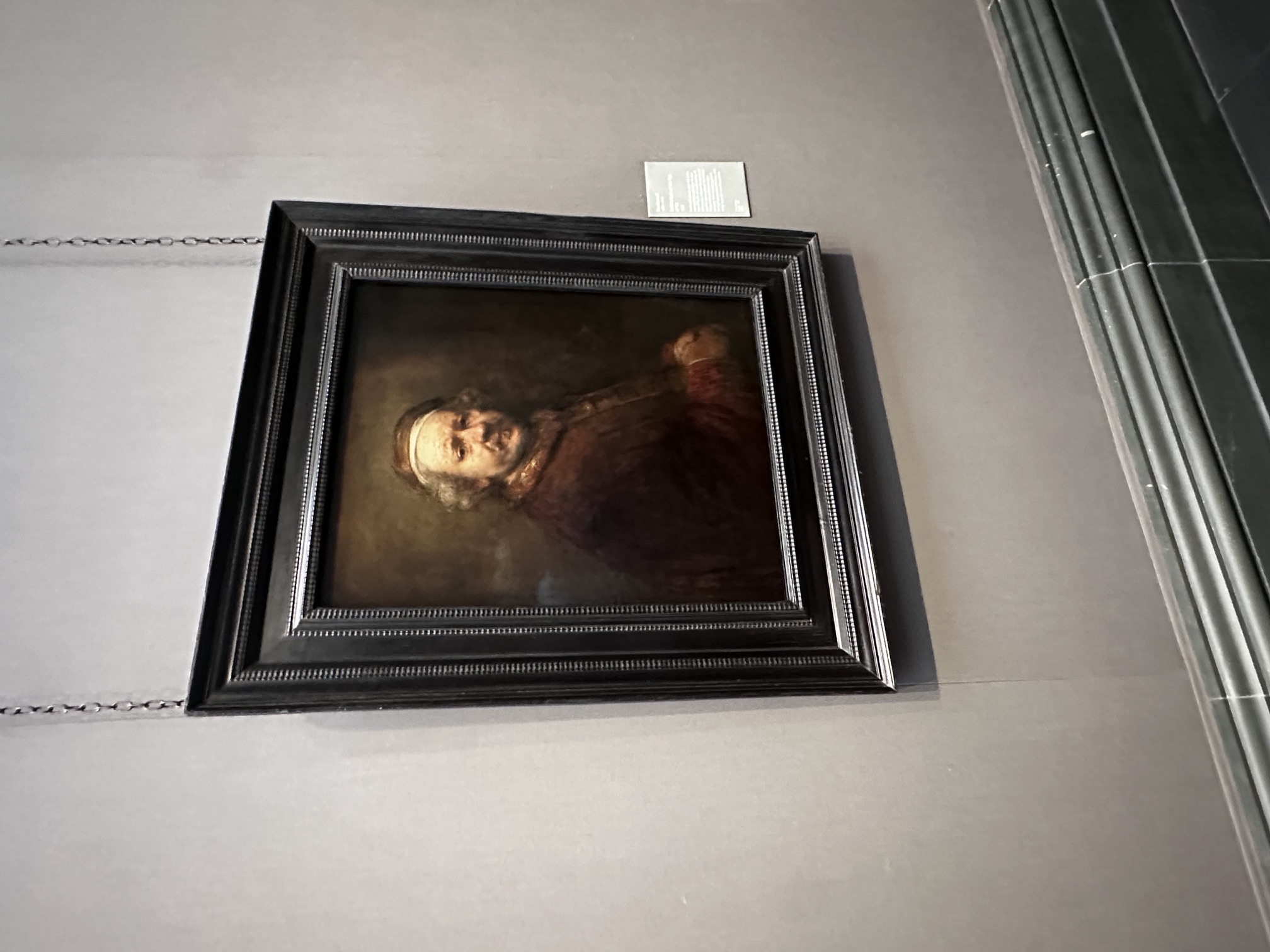
Rembrandt at 63. A small, dark painting on a plain grey wall. It does not need anything else around it.
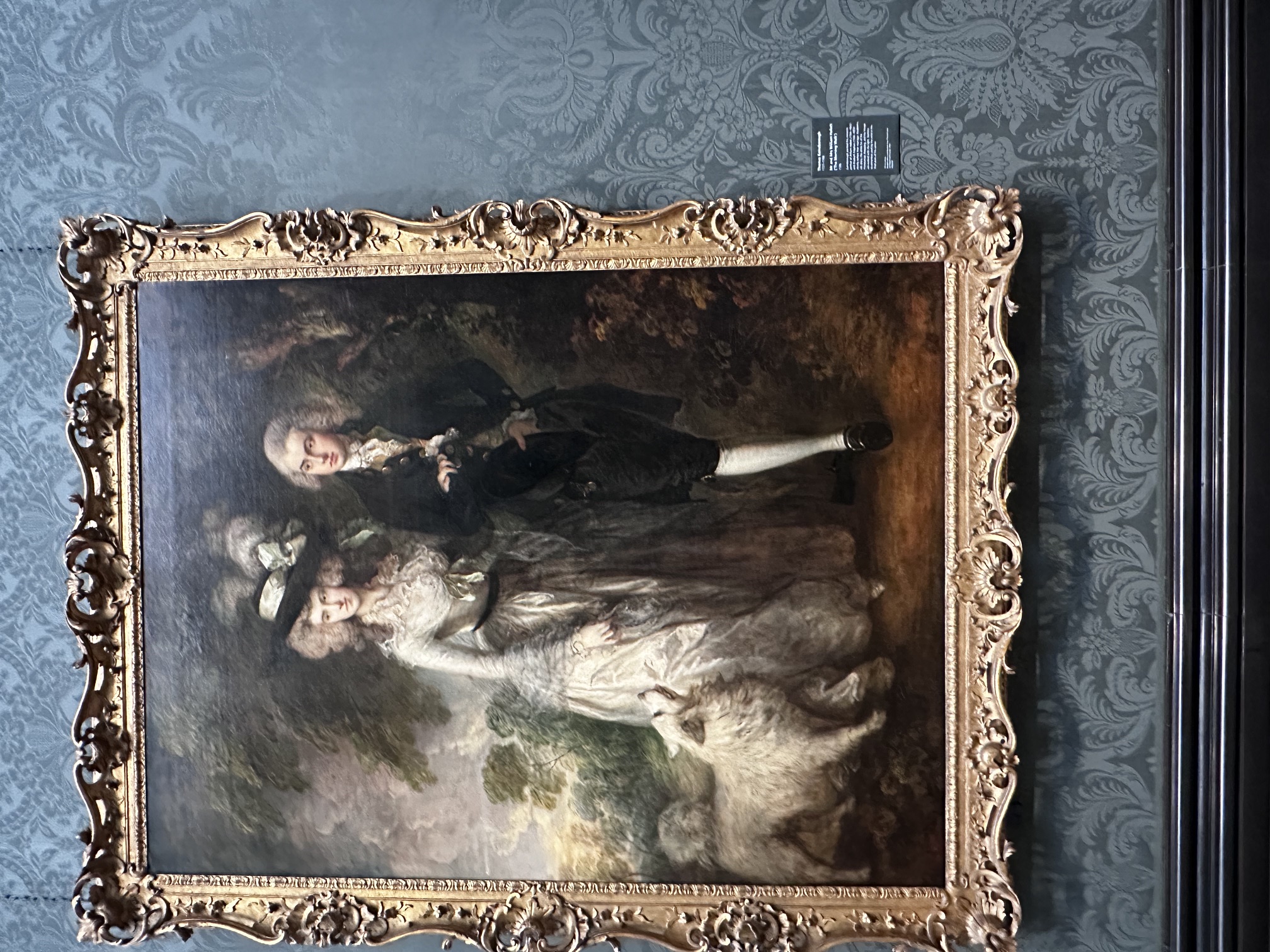
The Morning Walk. They had just gotten married. The dog is the only one who looks serious.
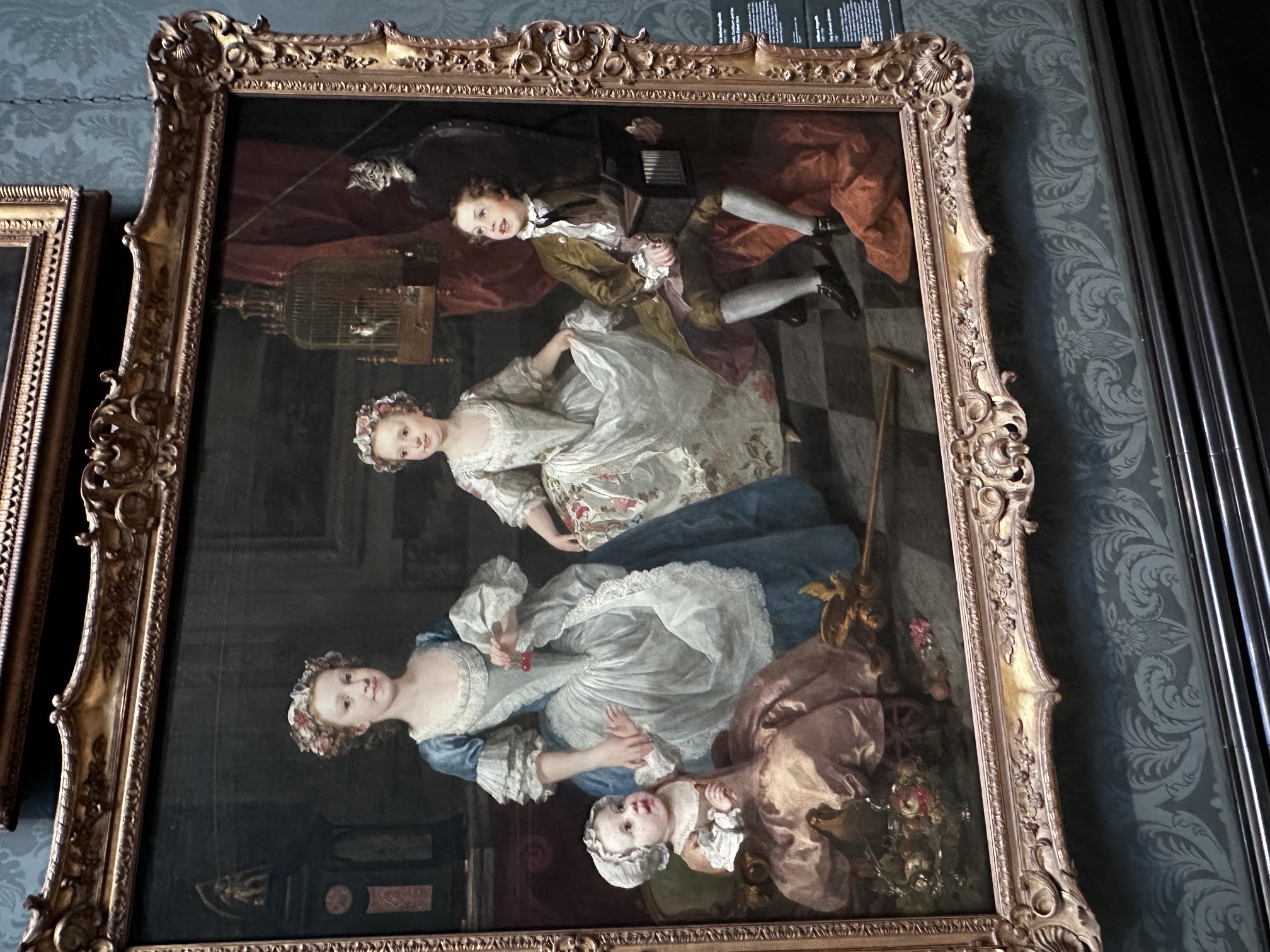
Hogarth’s Graham children. The baby on the left died before the painting was finished.
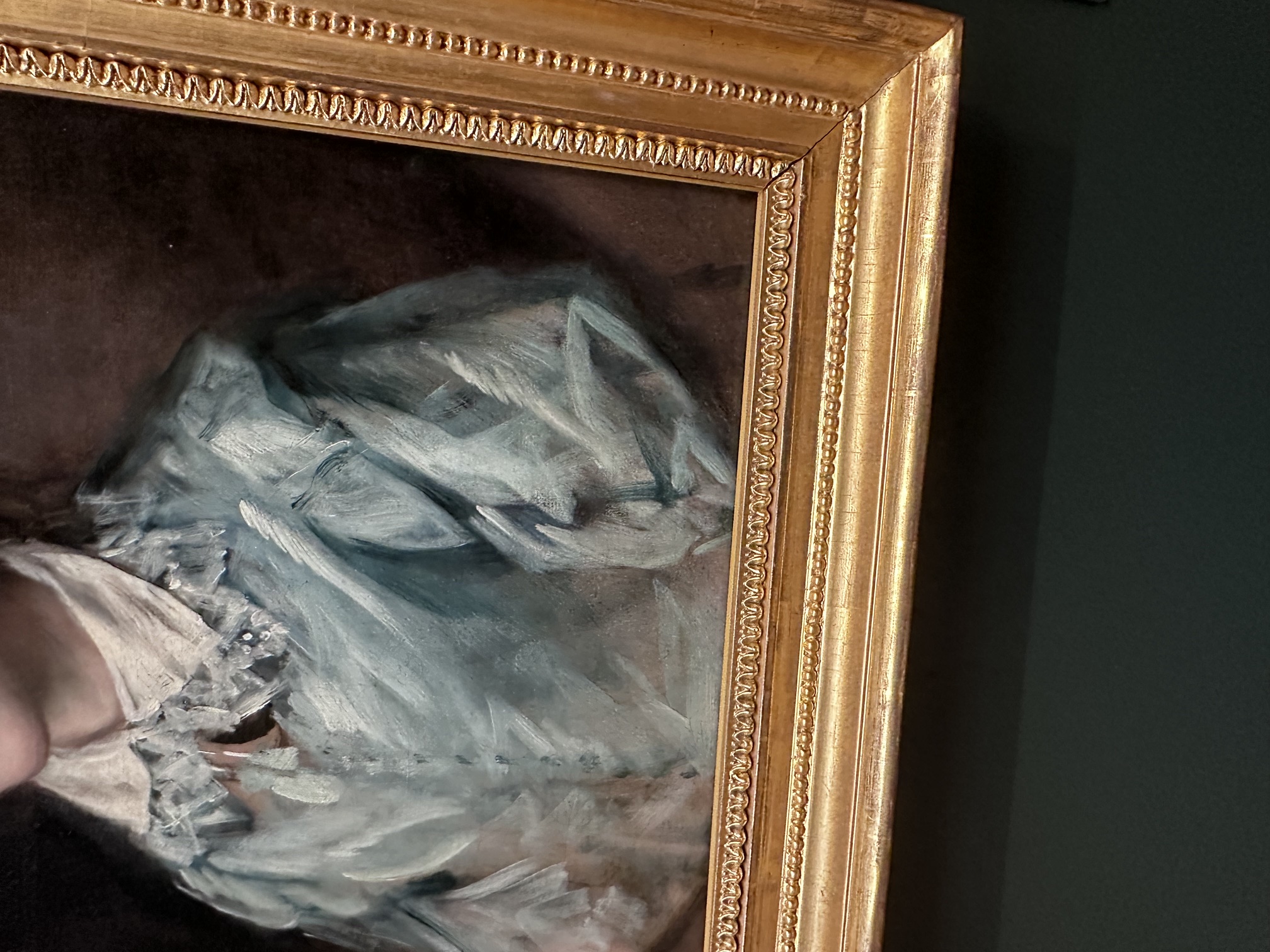
Close enough to see that the whole sleeve is made of about nine brushstrokes. You cannot see this in a book.
French artists in London
A small room I did not expect to like this much. Monet and Pissarro came to London in 1870 to get away from the Franco-Prussian War, and Monet spent ten months painting the Thames in fog. The wall text explains that the famous haze was actually pollution.
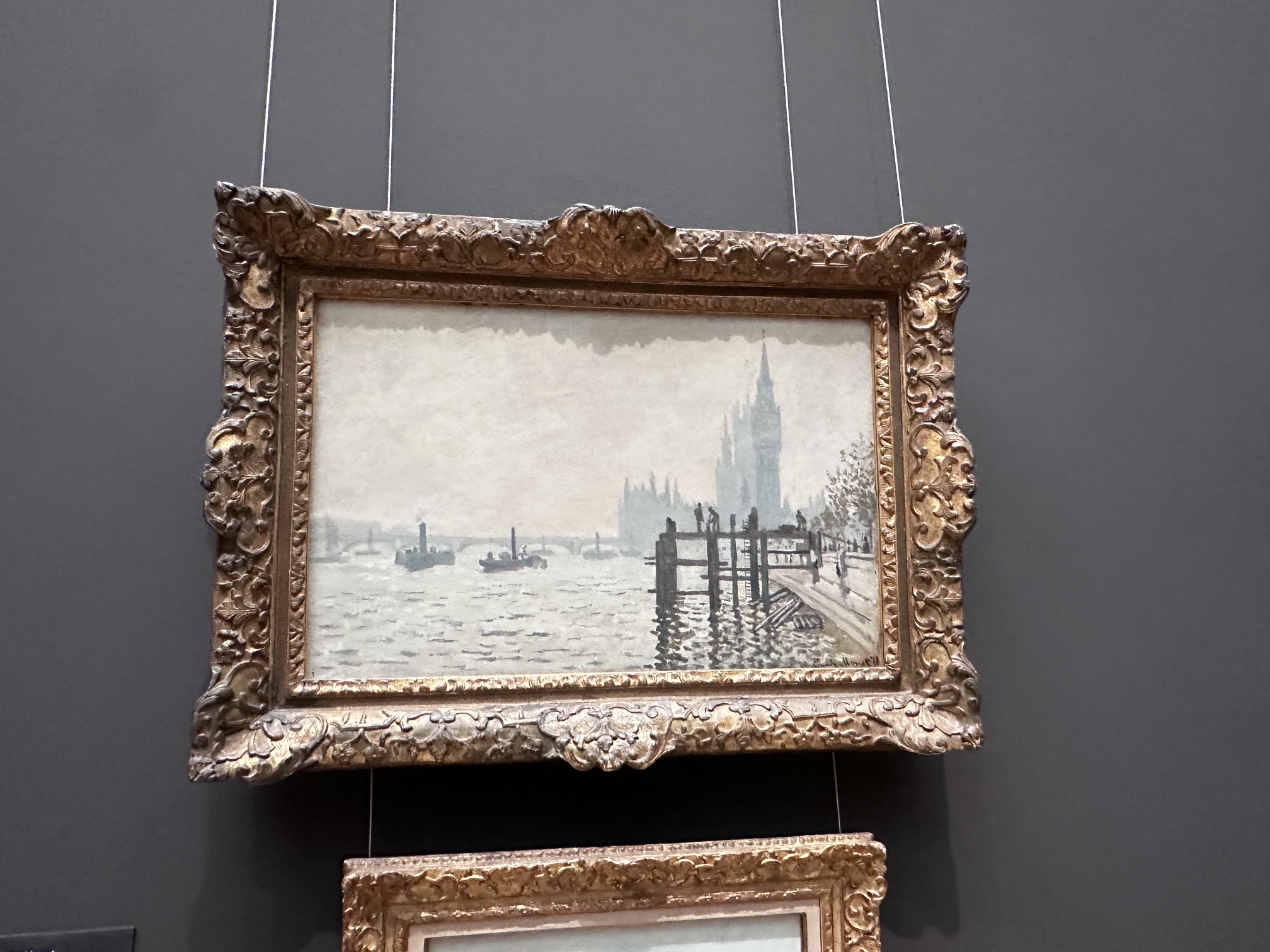
Monet, The Thames below Westminster, about 1871. Dock workers on the new Victoria Embankment, with Parliament barely visible.
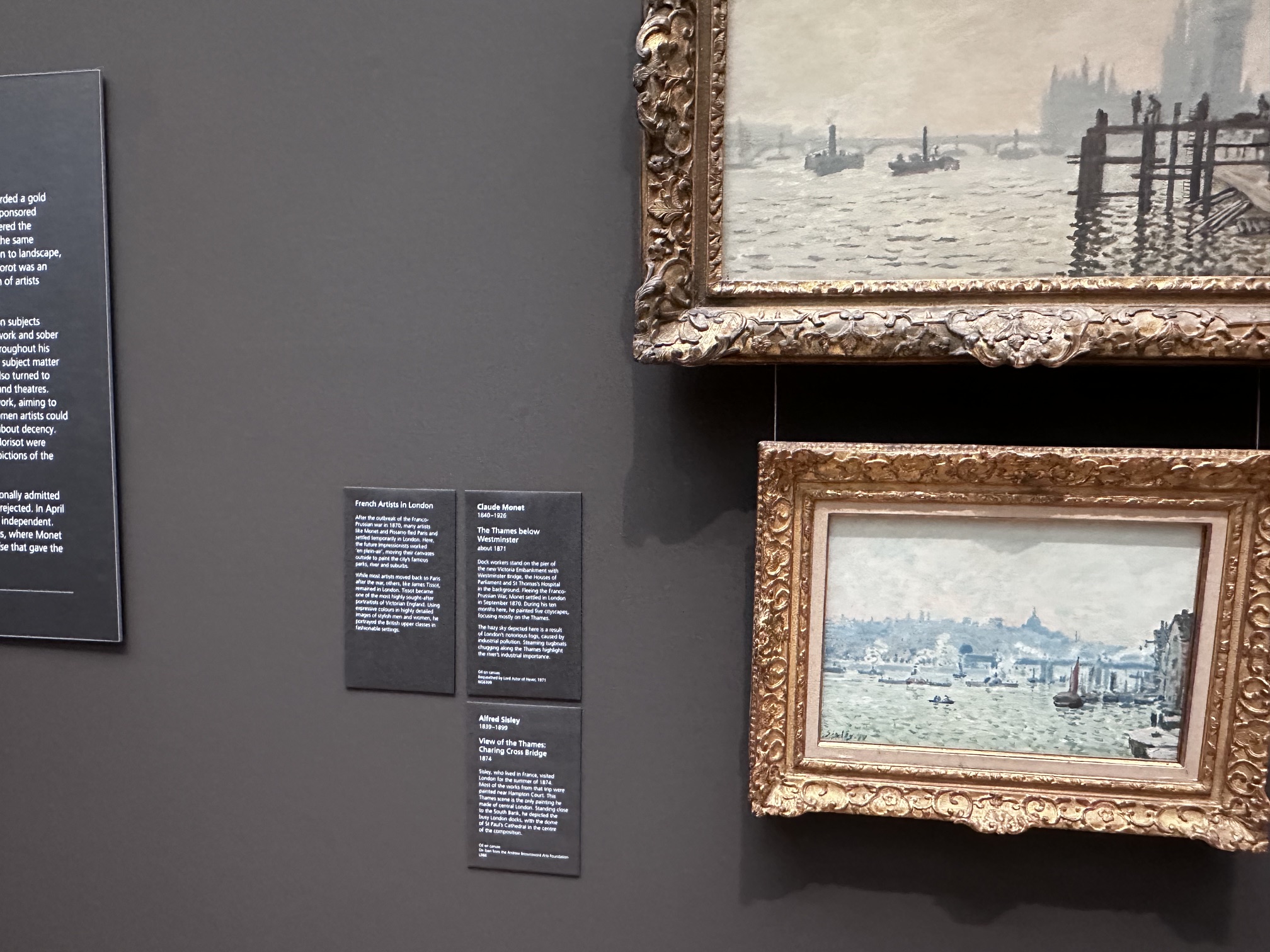
Monet above, Sisley's Charing Cross Bridge below. Two exiles painting the same river, four years apart.
The Degas
Degas, Ballet Dancers, 1888, pastel, and new to the collection. He built it from separate sketches and lined them up like a frieze, which is a very Greek thing to do with a very un-Greek subject. The label says what I already knew from experience: the poses under the tulle are the tired ones. A hand on a hip, a back being stretched, someone bent over between numbers. I have a basket of worn-out pointe shoes at home, so I stood there for a while.
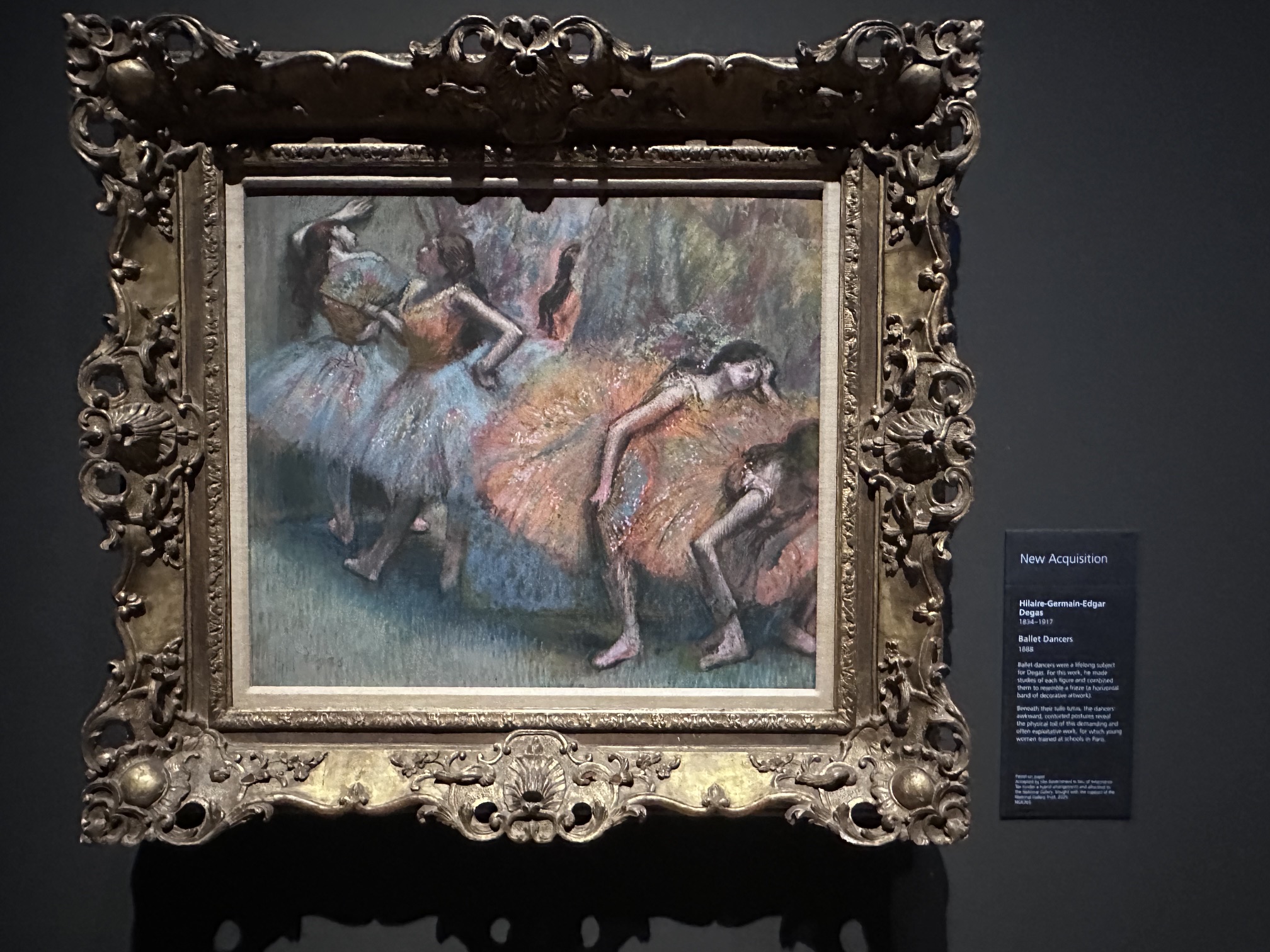
Four dancers, and none of them are dancing. The one on the right is tired.
{{ iiifCaption }}
I had been reading Ovid all spring, which made me notice the mythological references in half the building. The journal has the list. But the two things I actually took away were both about paint: how little of it a good painter needs, and how much the wall color changes what you think you are seeing.