Vases at eye level
a small museum that acts big
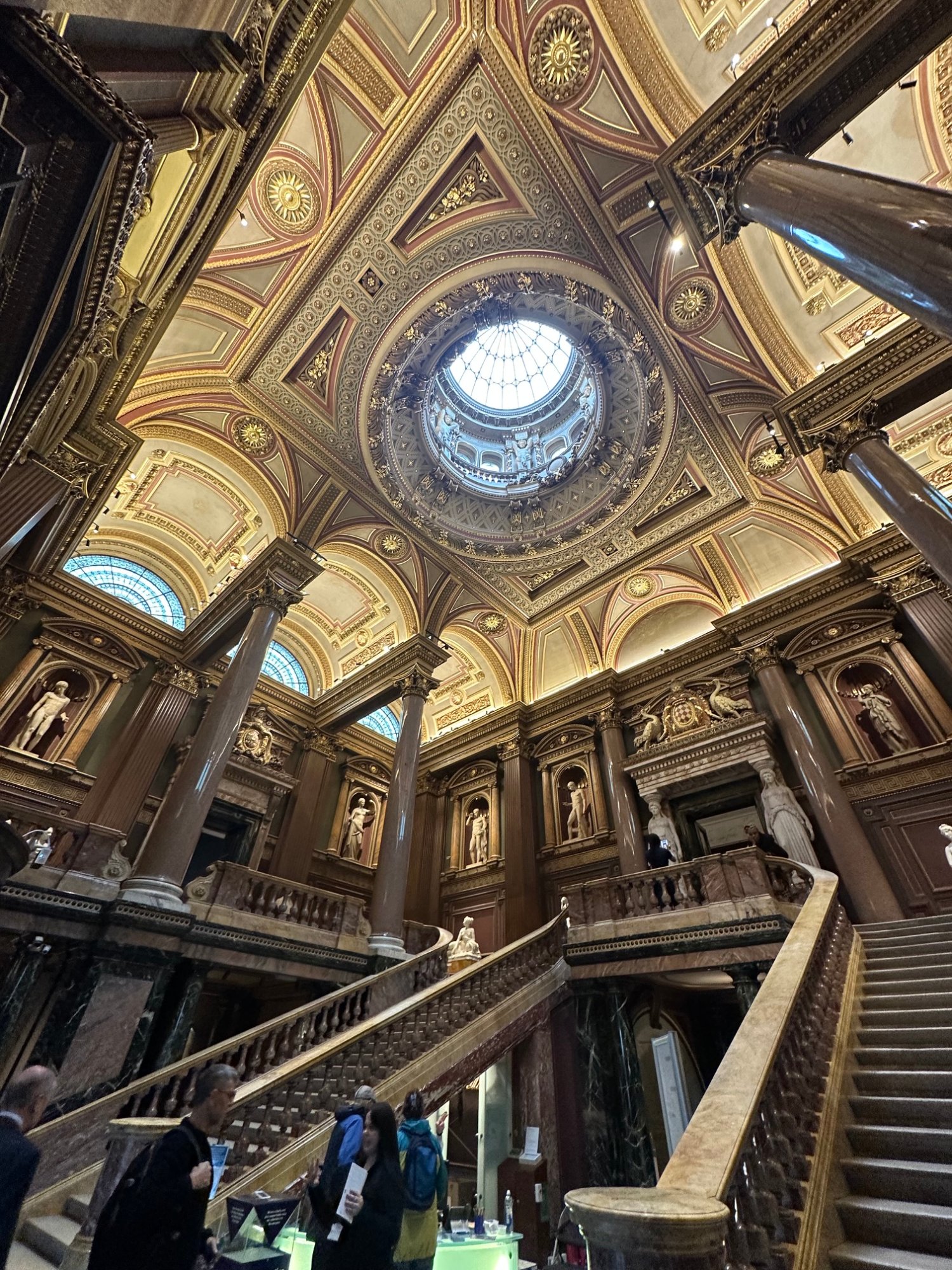
The entrance hall. It has two staircases, a dome, and a great deal of gold decoration.
The Fitzwilliam is a small museum that presents itself like a big one. The entrance hall makes that clear before you have seen a single object: marble, mosaic, caryatids holding up a doorway, and a dome so high you almost have to lie down to photograph it. Then you walk into the Greek and Roman rooms, and everything becomes quiet.
Here is what this museum does better than anywhere else. The vases sit at eye level, in daylight, in cases you can walk all the way around. You can see the foot, the underside of the handle, and the join. I have looked at hundreds of these pots in photos, and this is where I finally got to see the backs. Someone painted the side that nobody was ever going to photograph.
The building first
This is Victorian Cambridge deciding what a temple of art should look like, and going a little overboard.
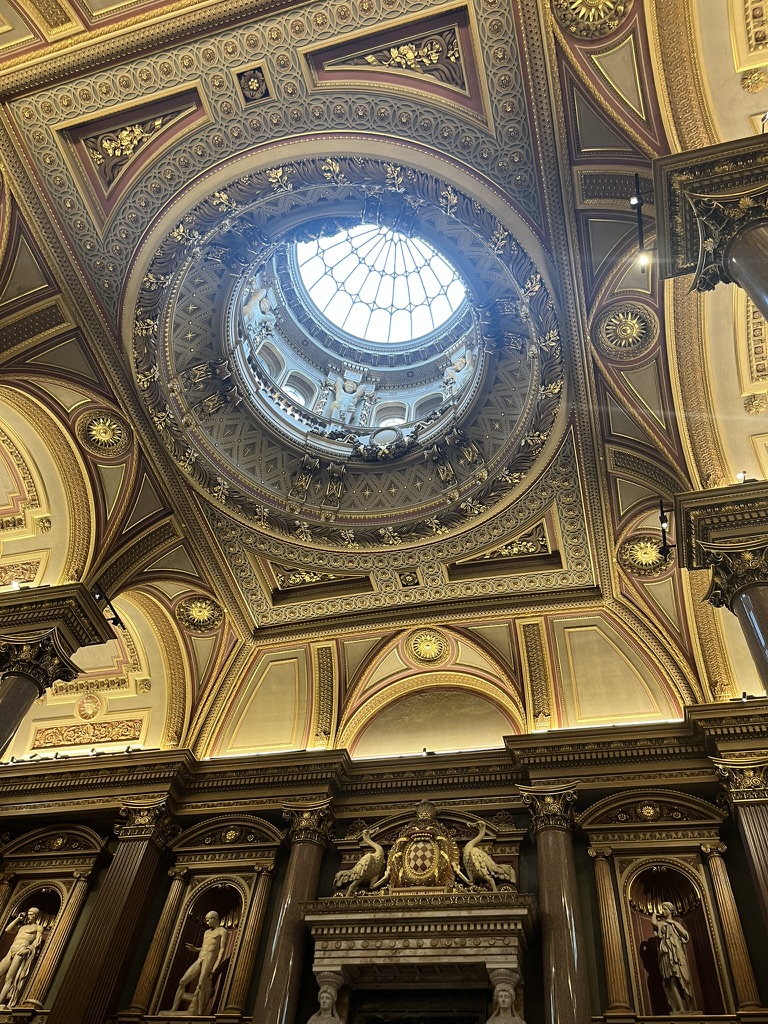
Looking straight up: coffering, gilt rosettes, and a glass oculus.
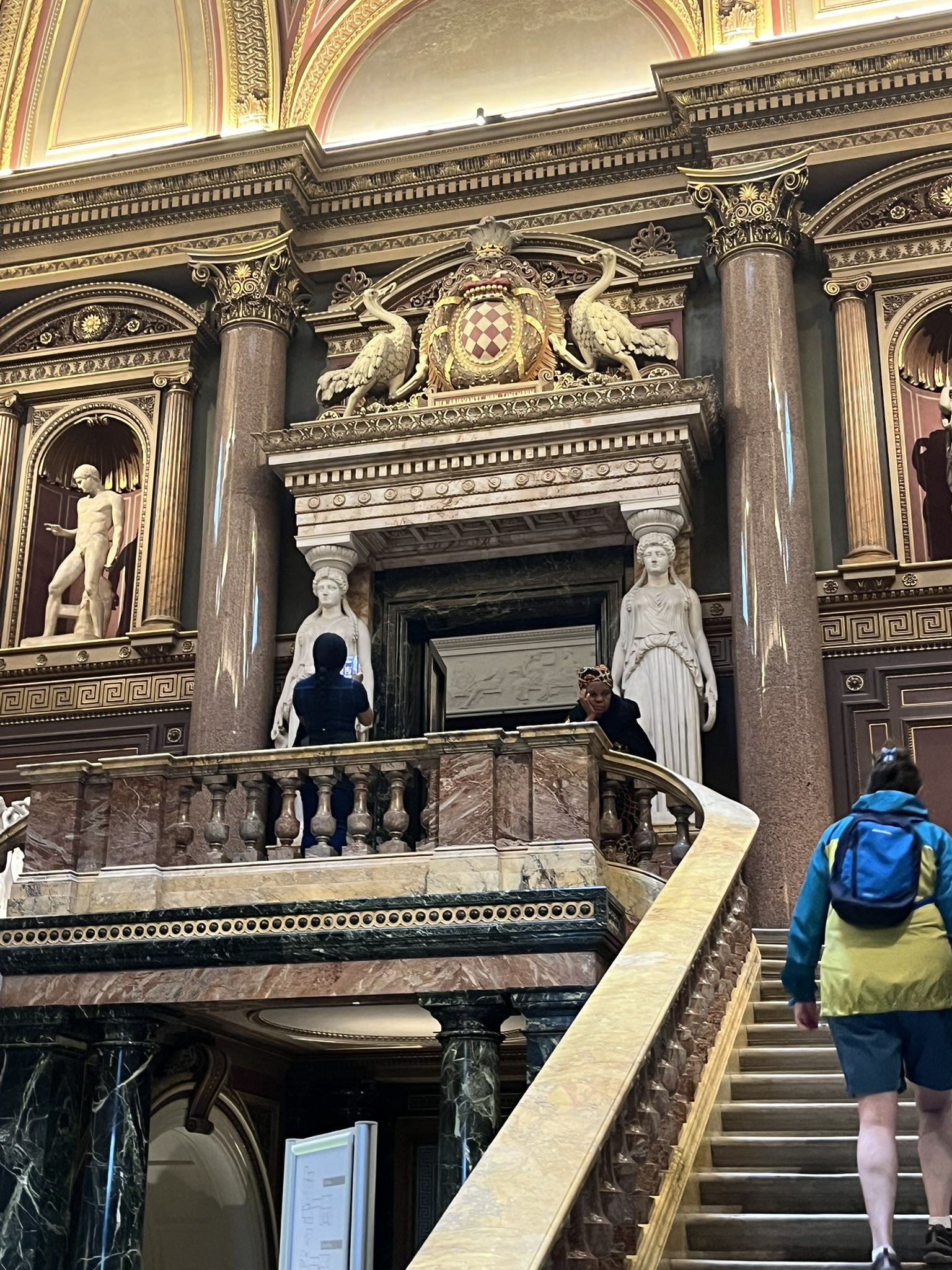
Caryatids on the landing, copied from the Erechtheion in Athens.
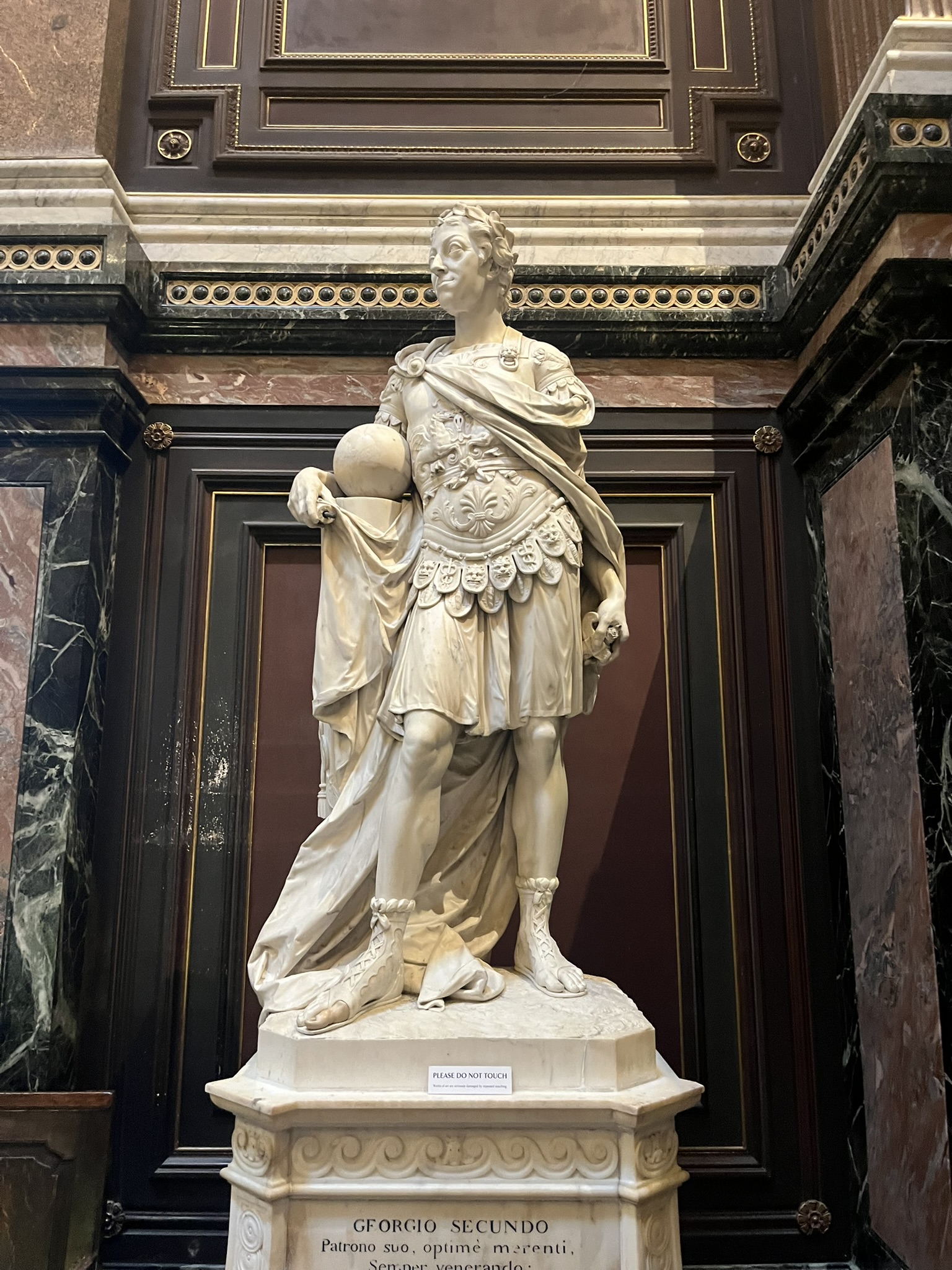
George II dressed in Roman armor, which was a popular style in the 1700s.
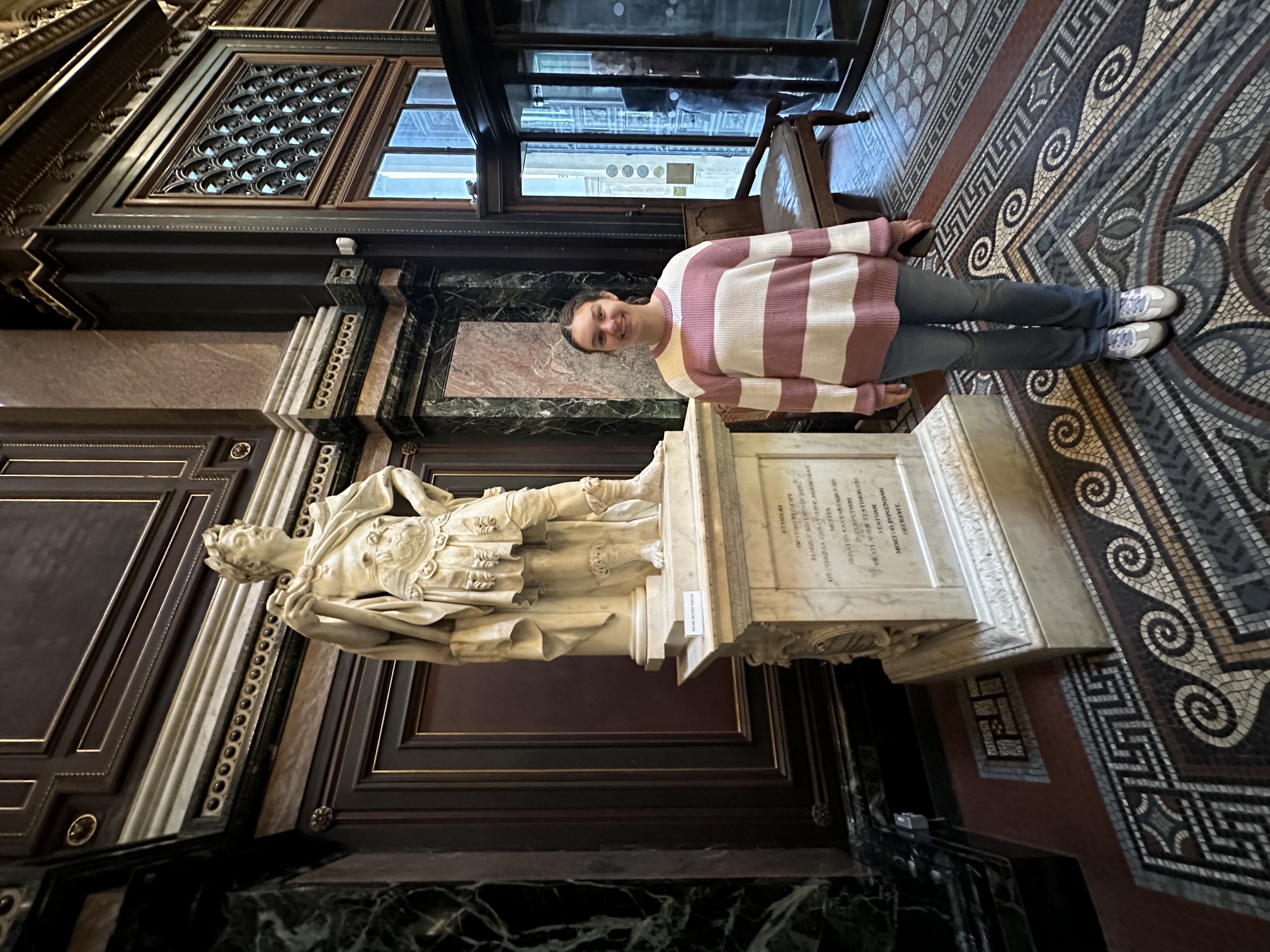
A meander mosaic on the floor, with a Latin dedication at knee height.
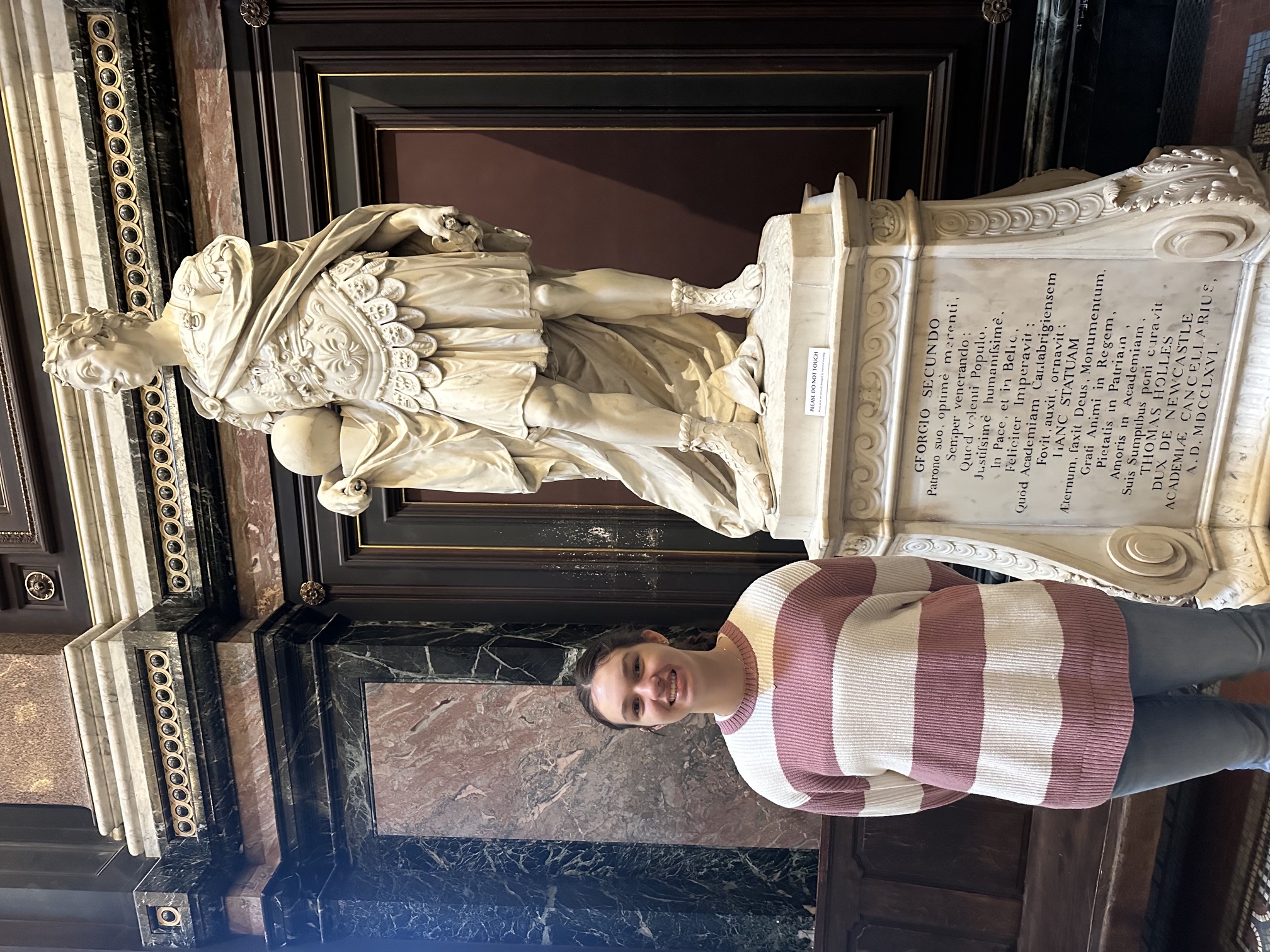
GEORGIO SECUNDO, patrono suo. A duke paid for it.
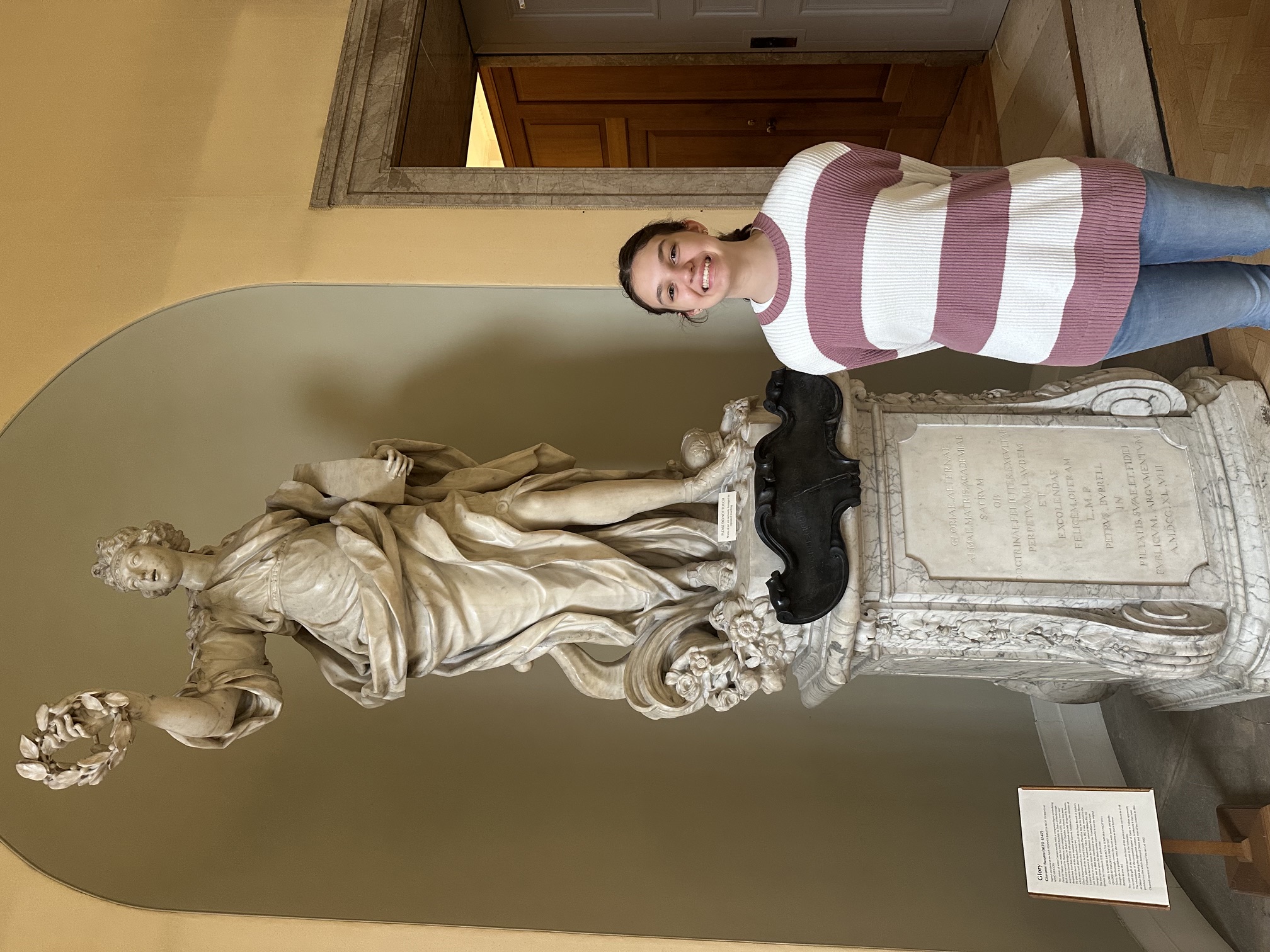
Baratta's Glory, holding out a laurel wreath to nobody.
Greek and Roman
Daylight, wooden floors, and cases you can walk around. These are the best-lit ancient rooms I have been in.
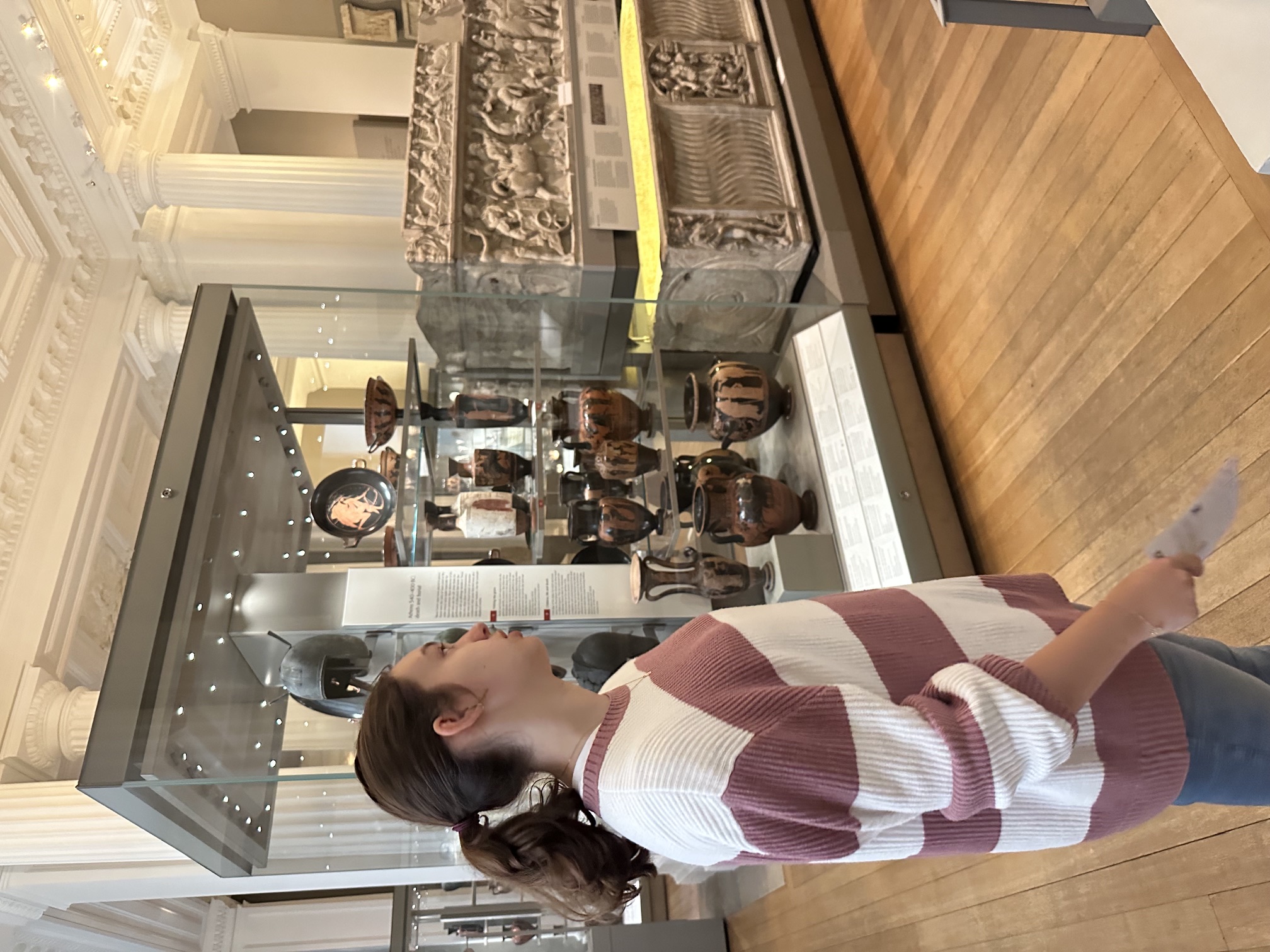
Athens, 540–400 BC, death and burial. There are four shelves, and you can see all four sides of each object.
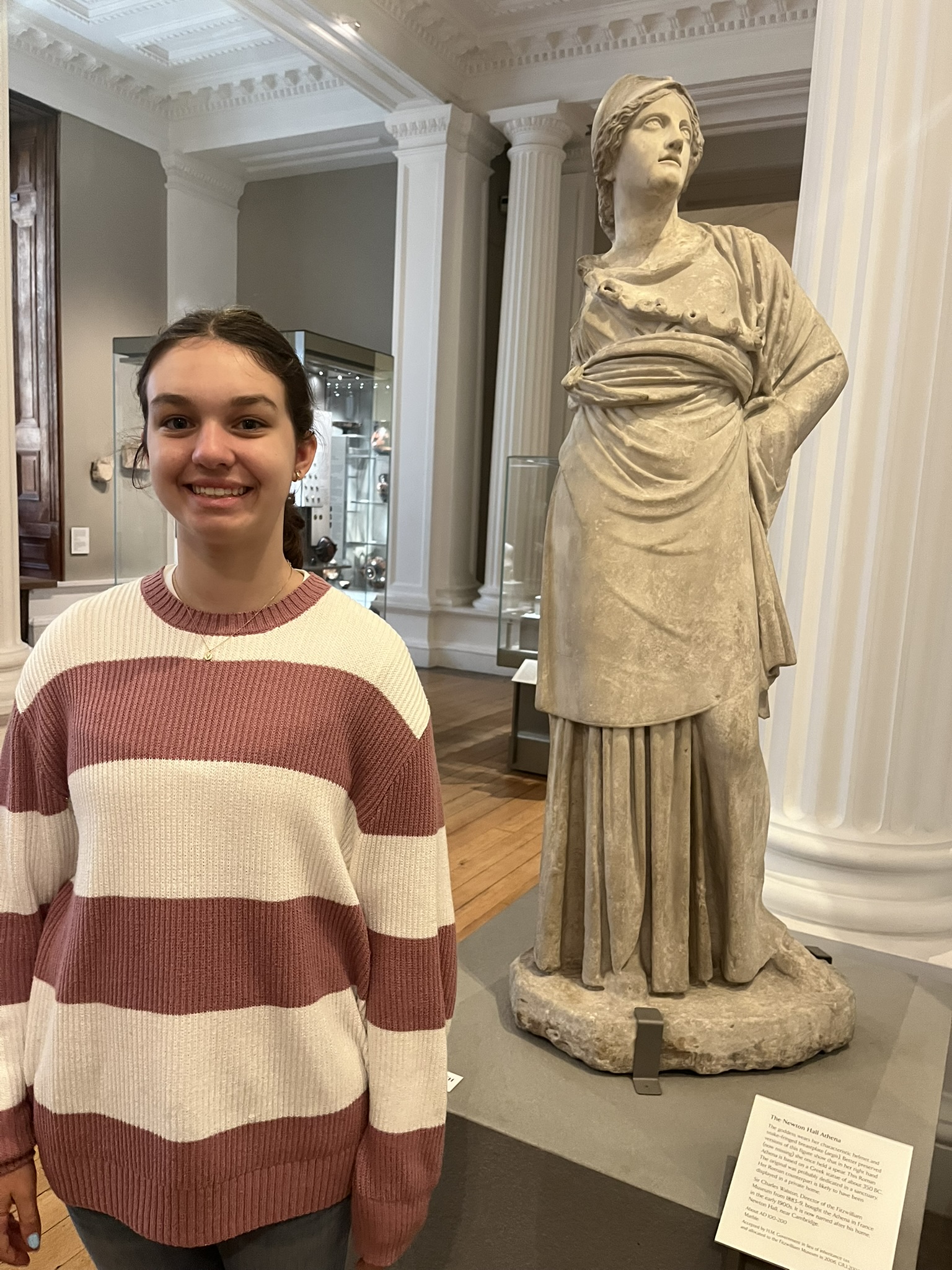
The Newton Hall Athena — a Roman version of a Greek statue from about 350 BC, named after a house near Cambridge.
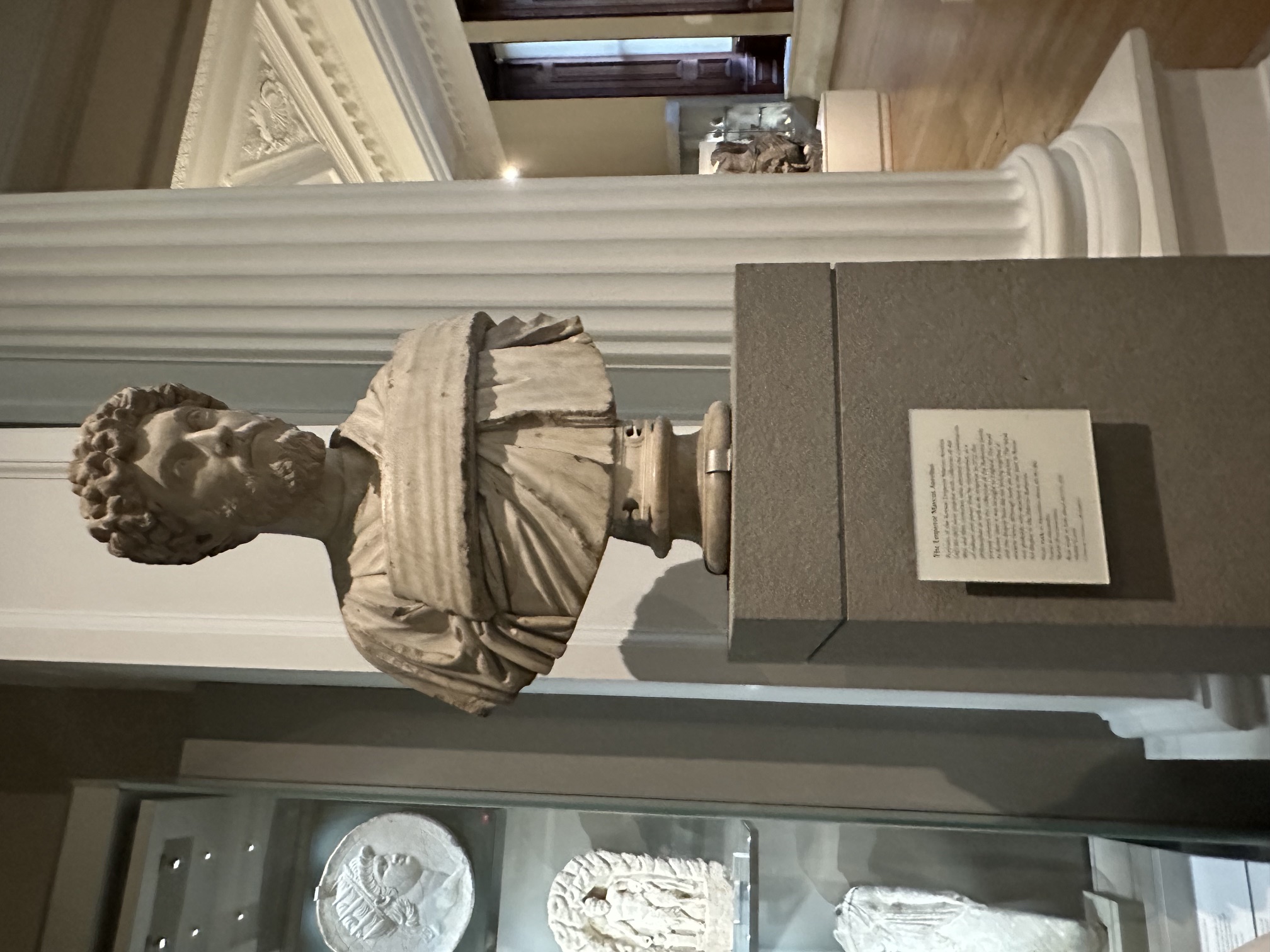
Marcus Aurelius. The head was carved in Alexandria and the bust was carved in Italy, and the two were joined together in the eighteenth century.
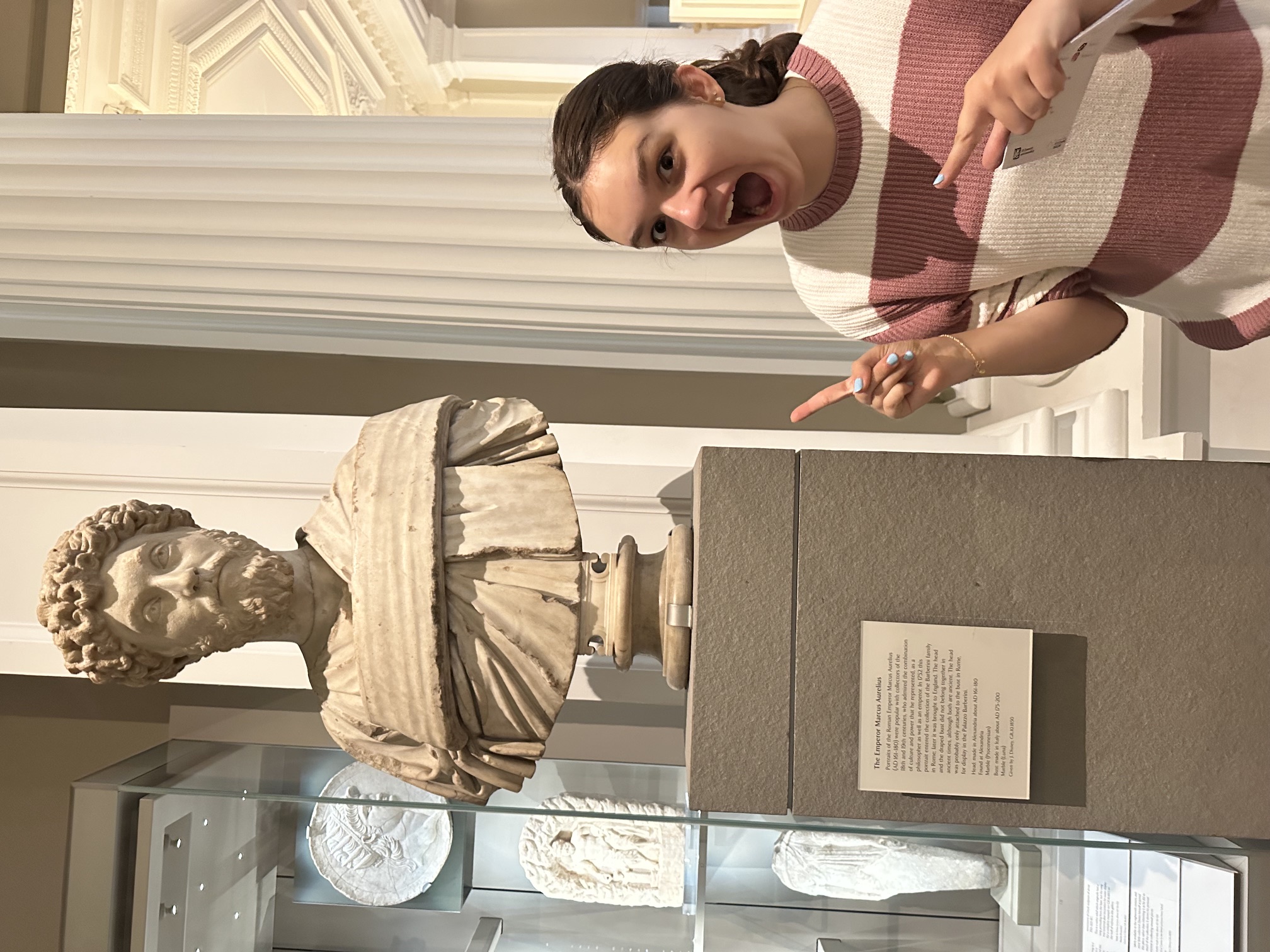
The head and body were never meant to go together. My expression in this photo shows how I felt about that.
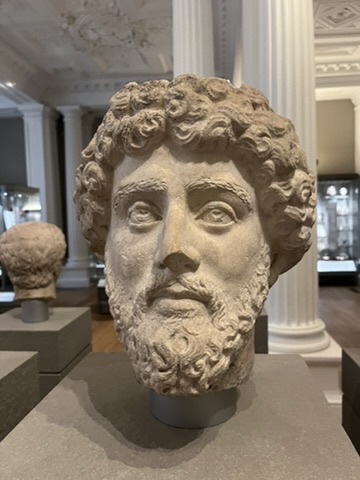
A bearded portrait head with drilled curls, from the second century. He looks very confident.
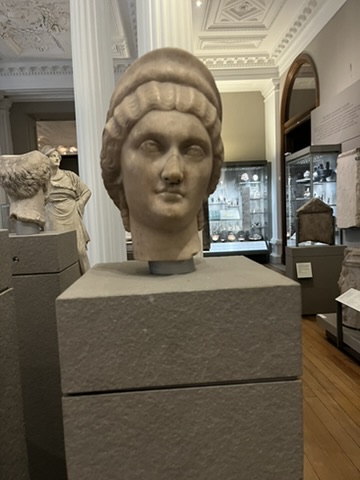
An imperial woman whose hairstyle can be dated to the decade. That hair would have taken a whole morning to arrange.
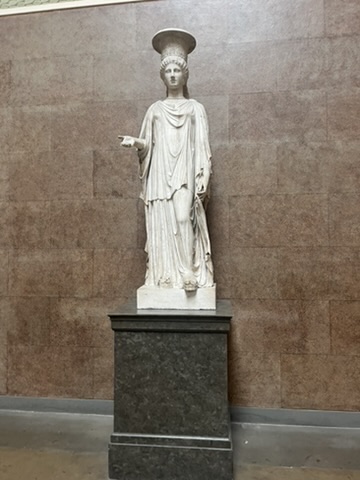
A caryatid on a dark base, still carrying her basket on her head.
Roman Britain: the Ribchester Hoard
A clogmaker’s son found this in 1796 while digging behind his father’s house in Lancashire. It is a cavalry parade set that was boxed up and buried under a barracks floor around AD 120. I think about the boy finding it almost as much as I think about the helmet itself.
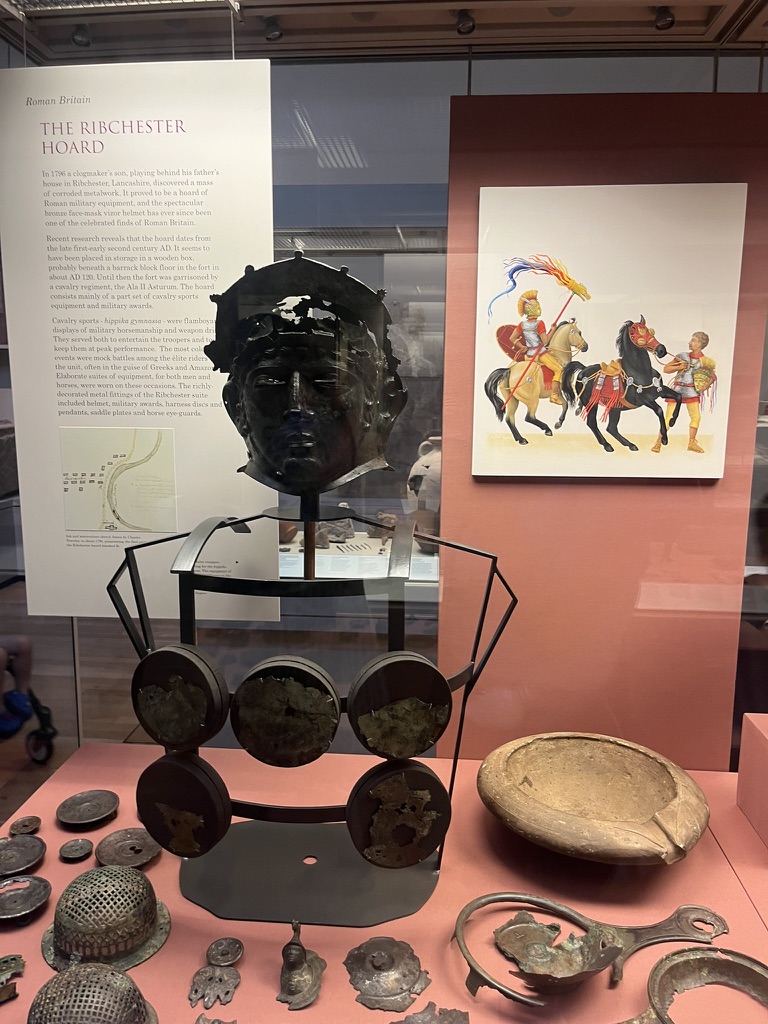
The face-mask helmet, with the rest of the horse gear laid out below it on pink linen.
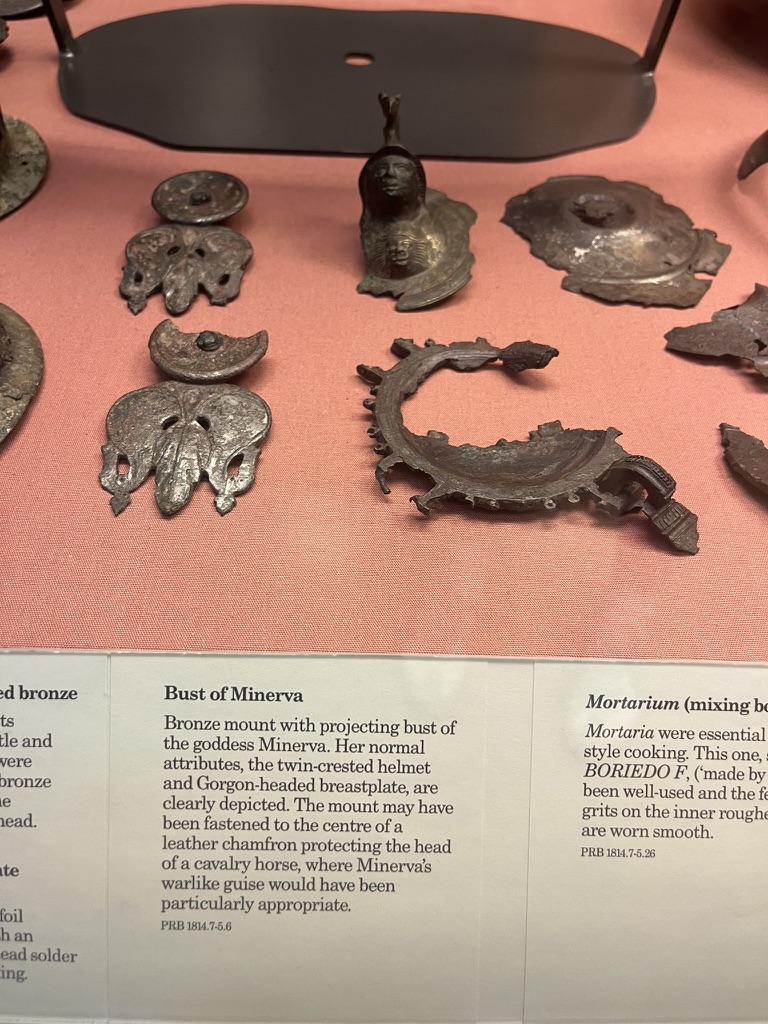
A bust of Minerva that was attached to the armor protecting a horse’s face. It has the helmet, the gorgon, and all the details.
On the way out
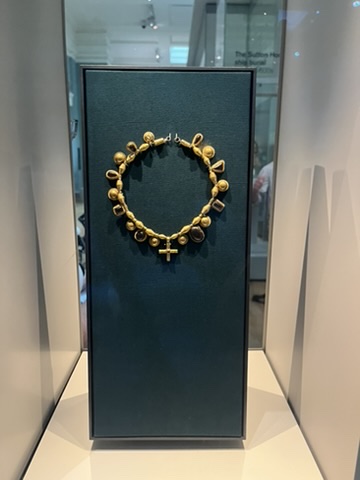
A gold necklace with a cross, alone in a dark green case. Someone wore this every day.
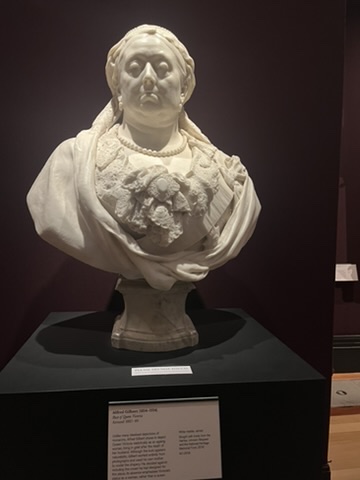
Lace, pearls, and roses, all carved in marble, two thousand years after the busts upstairs were made.
{{ iiifCaption }}
I walked out past the caryatids and into the rain. If I ever get a gallery of my own, I am going to copy these cases: low, freestanding, lit from above, with nothing down at ankle height. Vases are meant to be walked around.