The Roman Baths
Aquae Sulis, and a hot spring that is still running
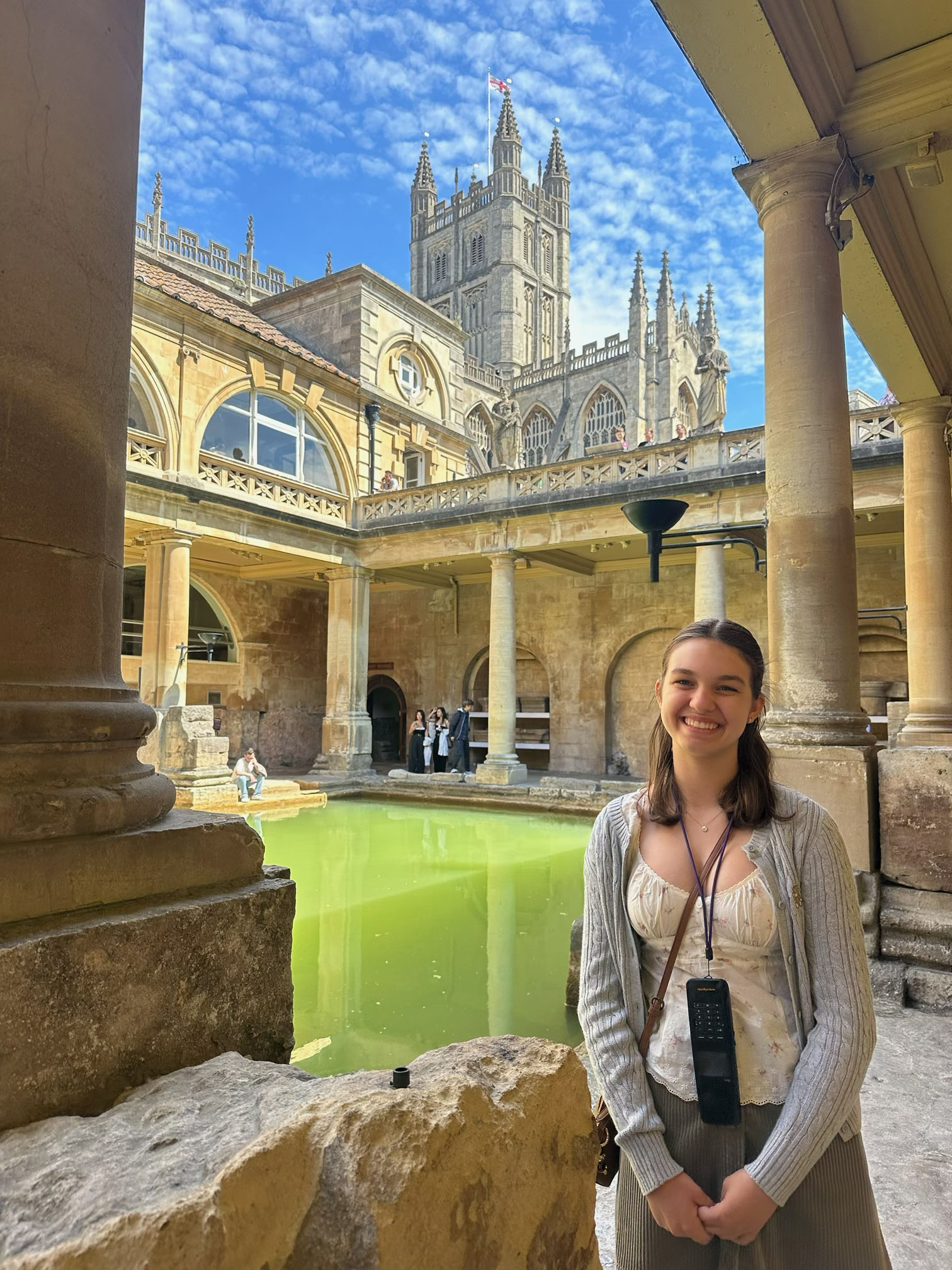
The Great Bath at midday, with Bath Abbey behind it. The water is green from algae because the Roman roof is gone and the pool is open to the sun.
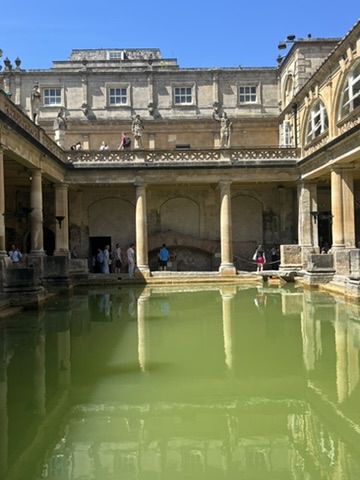
The full length of the pool. The statues along the top were added in the 1800s.
About a million liters of hot water come up from the spring every day at 46°C. It was doing that before the Romans arrived, and it has not stopped since. That was the thing I kept coming back to. The buildings are ruins, but the water is the same water.
The Romans called the town Aquae Sulis, after the local goddess Sulis. Instead of replacing her, they combined her with their own goddess Minerva. The lead pipes still carry the water, and the pavement around the Great Bath is the original Roman pavement. Everything above about knee height was added in the 1700s and 1800s in a Roman style.
The Great Bath
A rectangular pool lined with lead. It originally had a roof about forty feet high. The statues around the top are Victorian.
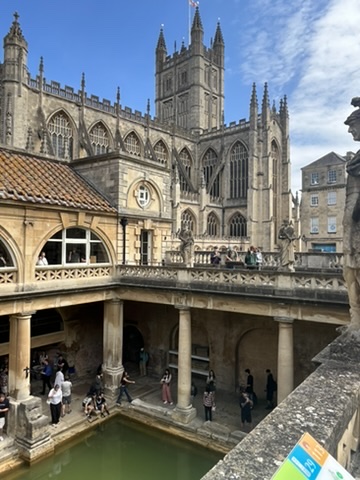
Bath Abbey rising directly behind the terrace.
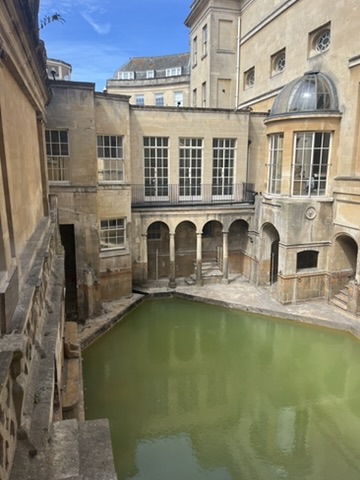
The King’s Bath. The spring itself is underneath this water.
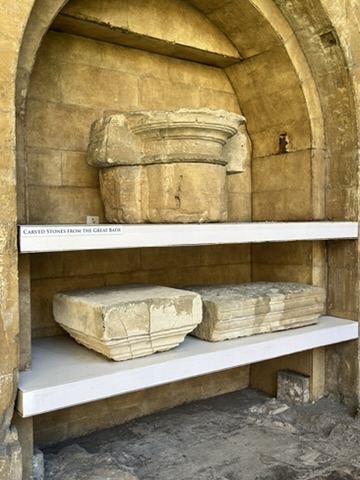
Carved stones from the Great Bath, stacked on shelves in an alcove.
The temple of Sulis Minerva
The temple pediment is the best thing in the museum. In the center is a large head, usually called a Gorgon, although Gorgons are female and this one has a moustache. It has snakes and wings around it and two Victories holding it up. The design is Roman, but the carving was done by local British craftsmen, and you can see both influences in it.
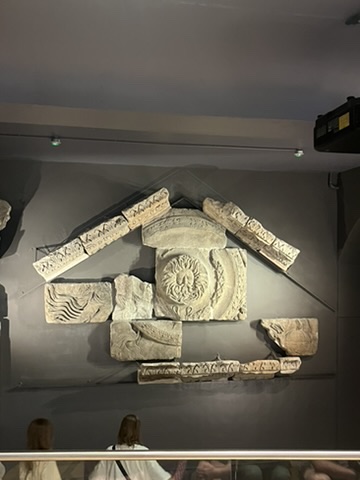
The temple pediment, mounted high on the wall. The missing pieces are left blank instead of being filled in.
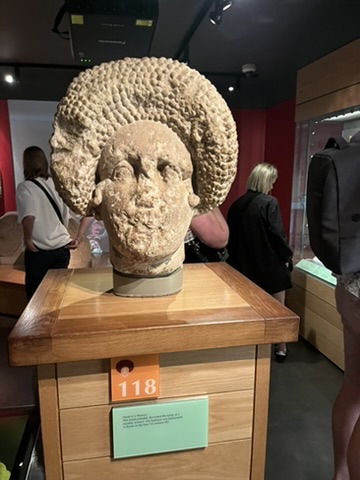
A head from the temple area. Each curl was drilled separately.
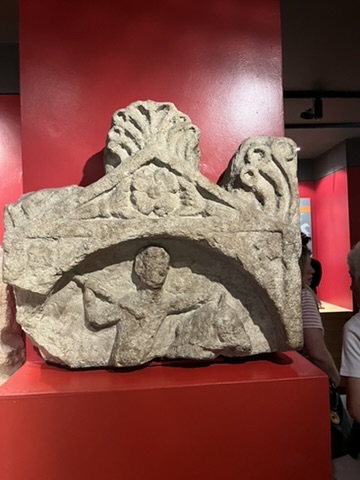
A small pediment with a reclining figure under a rosette.
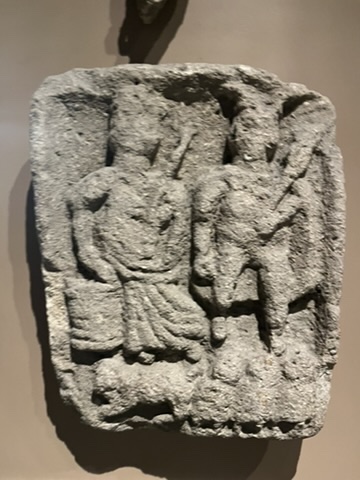
Two gods in a worn relief. Small carvings like this were common in Roman Britain.
Coins and a lead coffin
In 2007, 17,500 coins were found on a building site on Beau Street. It is one of the largest hoards ever found in a British town. The display holds the coins on pins so they appear to float in the case.
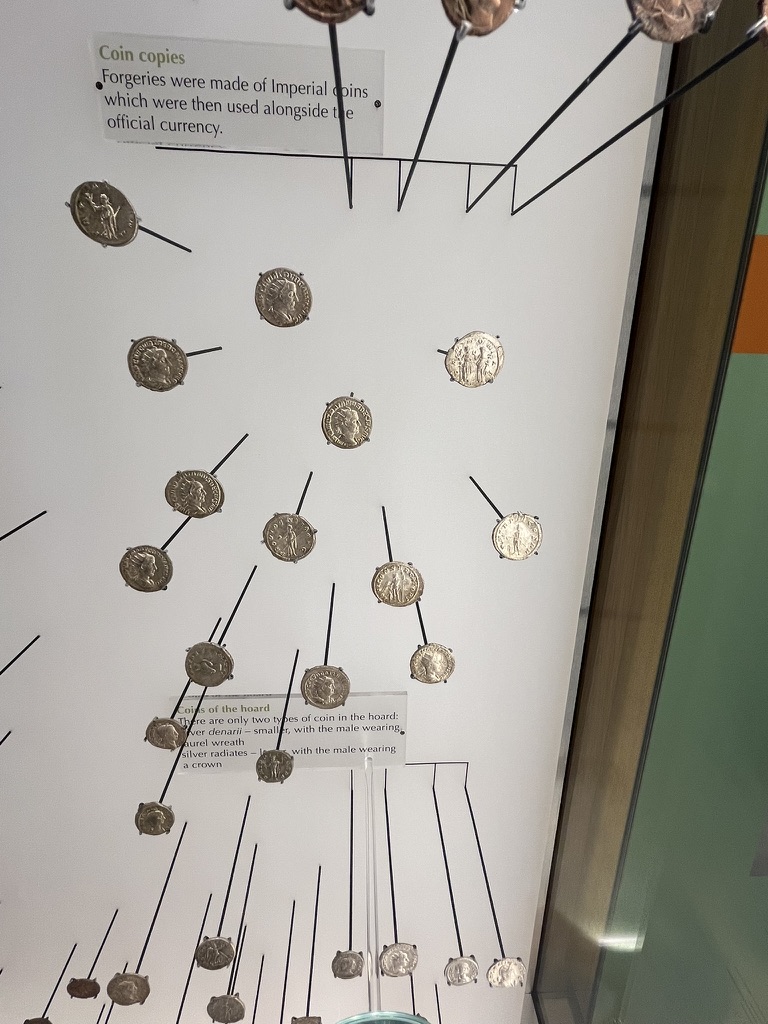
Denarii and radiates on pins. The hoard included forgeries mixed in with real coins.
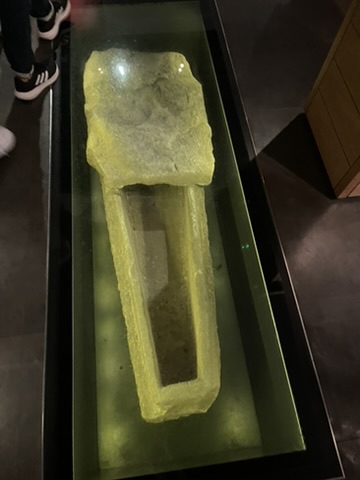
A lead coffin under a glass floor. Lead from the nearby Mendip Hills lined the pool, was used for the pipes, and was also used for coffins.
{{ iiifCaption }}