The Kelsey Archaeology Museum
University of Michigan
Everyday objects from real excavations by University of Michigan students.
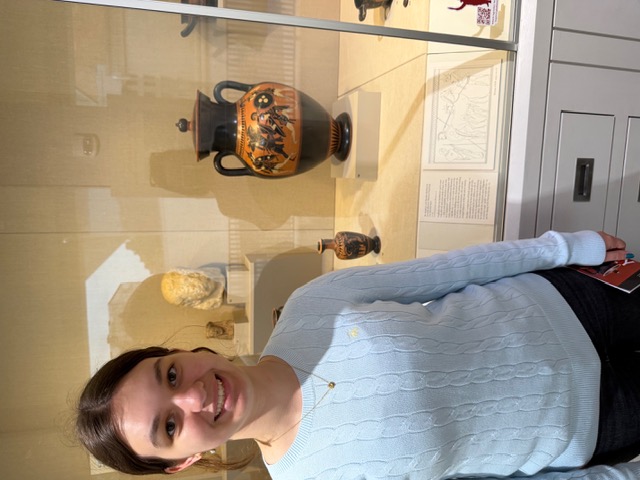
Me with a black-figure amphora, just inside the door.
The Kelsey is a small museum that runs its own digs. Most of what is in these cases came out of the ground on Michigan excavations at Karanis in Egypt, Seleucia on the Tigris, and Carthage in Tunisia. That means almost everything here has a findspot instead of a dealer, and it changes how the room feels. These are not things someone bought because they were pretty. They are things someone used and then dropped, buried, or left behind.
I collect old spoons for exactly this reason, so I knew I would love a museum full of other people’s everyday objects.
The Apulian volute krater
This vase is from southern Italy, fourth century BC, and it is the object I spent the most time on. A woman sits inside a painted shrine on the belly of the pot while people approach from both sides with offerings. The neck above her is covered in vines and palmettes, and the handles end in little faces that seem to watch you as you walk around the case.
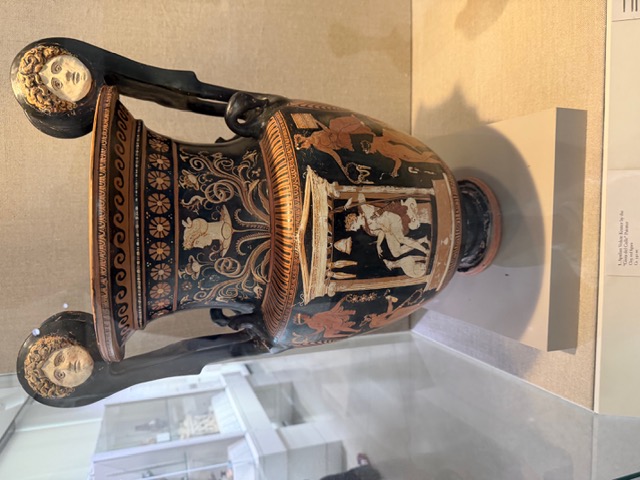
The Apulian volute krater, fourth century BC. A seated figure in a little white shrine, with scrolled handles ending in small heads.
The painted pots
It is not a big vase collection, but it is a good one, and every piece is close enough to the glass that you can see the brushstrokes. All of these went into the Vase Explorer on the drive home.
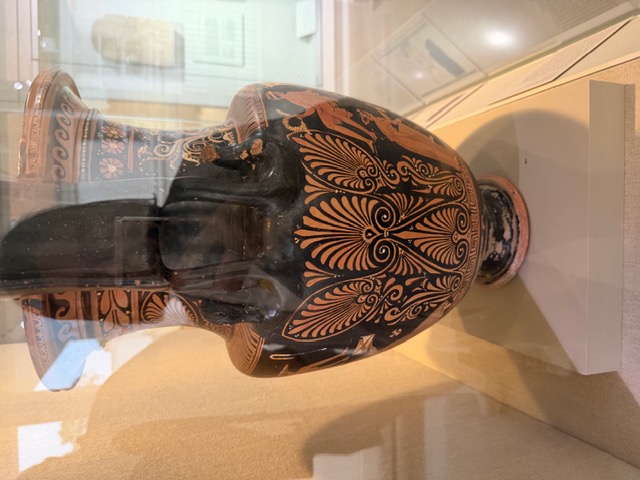
A hydria with one giant palmette covering the whole back. Someone painted the side that nobody was going to see, and did it beautifully.
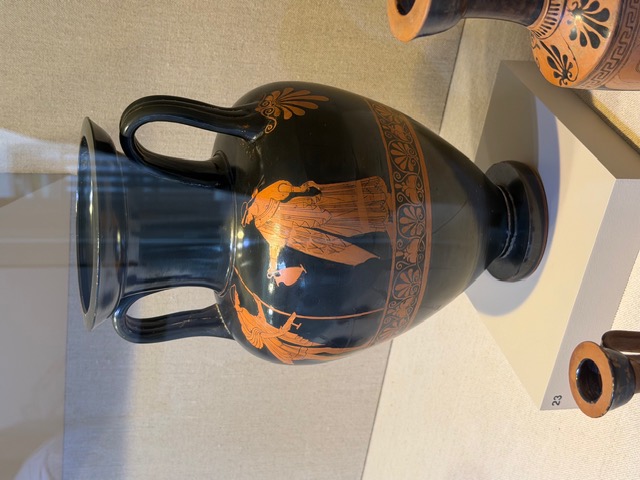
Two figures on a black amphora, one handing something to the other. The whole scene is about six inches tall.
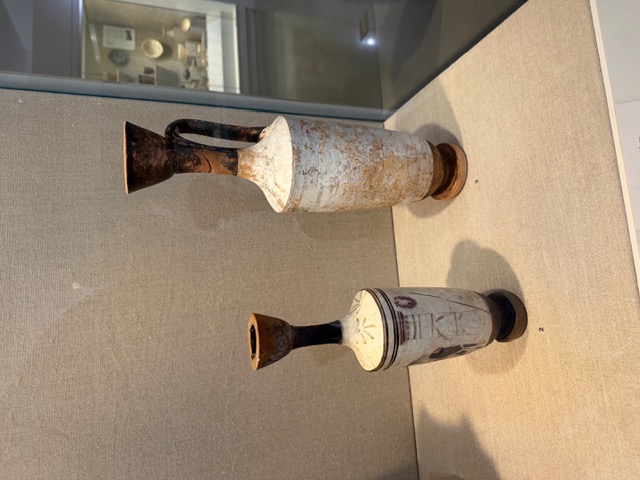
Two white-ground lekythoi, which are oil flasks made for the dead. The paint was never meant to last, and most of it has not.
Sculpture fragments
There are three sculptures here, and none of them are whole. There is a headless girl in a chiton whose dress still looks like it is moving. There is a river god with the belly of a man who has been the Nile for a long time. And there is one head on a purple wall, lit so well that you stop noticing the rest of her is missing.
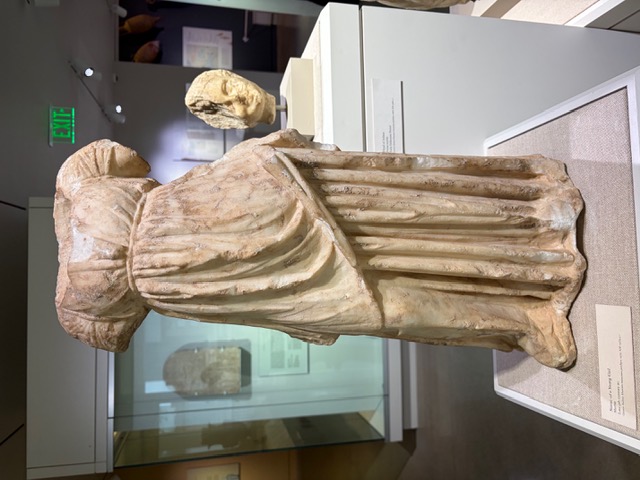
Statue of a young girl. She has no head or arms, but the folds of her dress still show how she was standing.
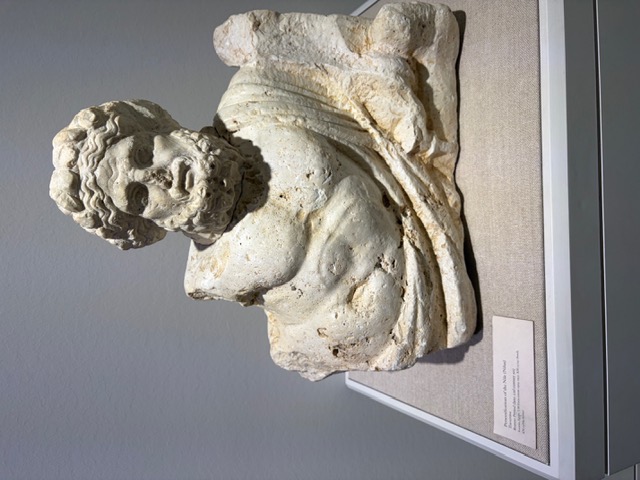
The Nile shown as a bearded man lying on his own flood. It is Roman, from Egypt, and he looks calm despite his missing half.
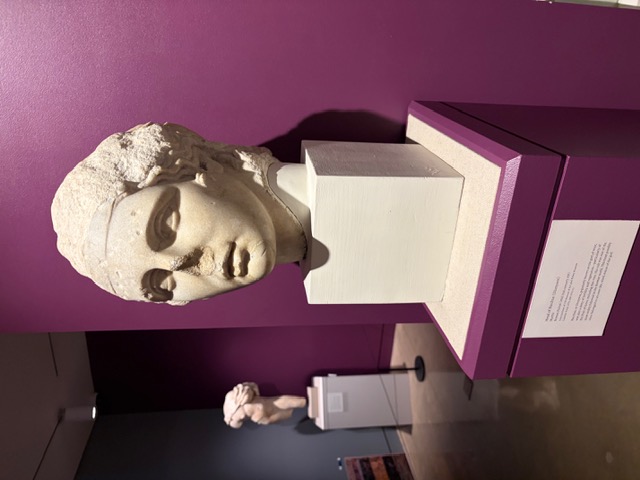
A head against a purple wall. It is the best-lit object in the building.
Small finds from the digs
These are the cases I like best in any museum, and the ones most people walk past. There are building tiles with their paint still on, mosaic panels lifted out of Carthage in pieces, and a theater mask in colored stone. Nothing here is a masterpiece, but all of it is evidence.
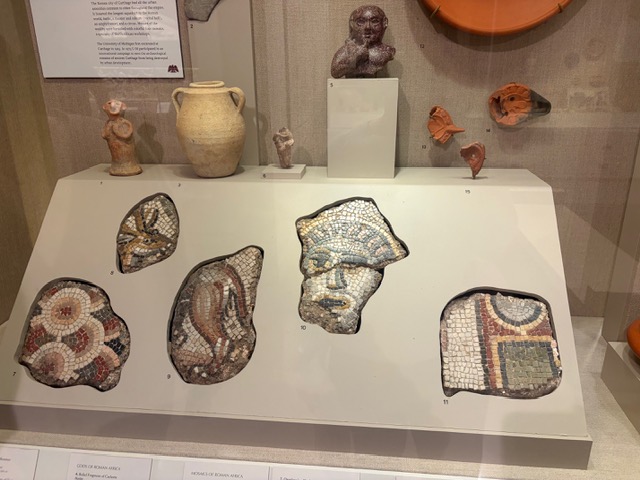
Finds from Michigan’s Carthage dig: a mosaic face in a Phrygian cap, a fish, a panel of rosettes, and the lamps that were found with them.
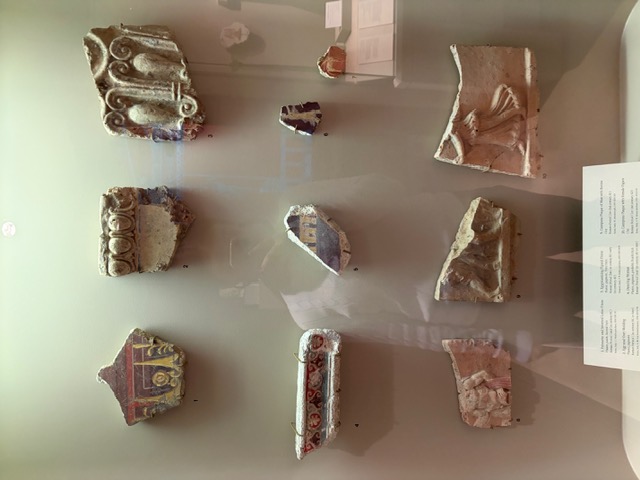
Etruscan and Roman building tiles, several with red and blue paint still on them. Ancient buildings were painted, and this case proves it.
Egypt and two coffins
The Egyptian rooms have the Karanis finds and, at the end, the two coffins of Djehutymose. The inner and outer coffins are opened up so you can read the columns of text down the inside. Someone wrote all of that by hand for one man to lie inside.
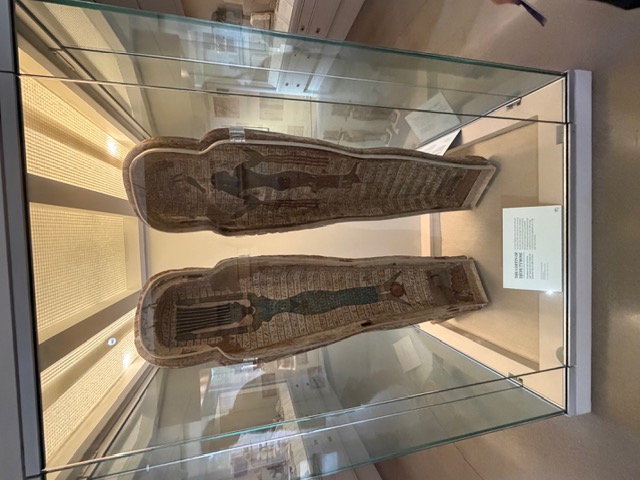
Both coffins opened up, with columns of text running from head to foot.
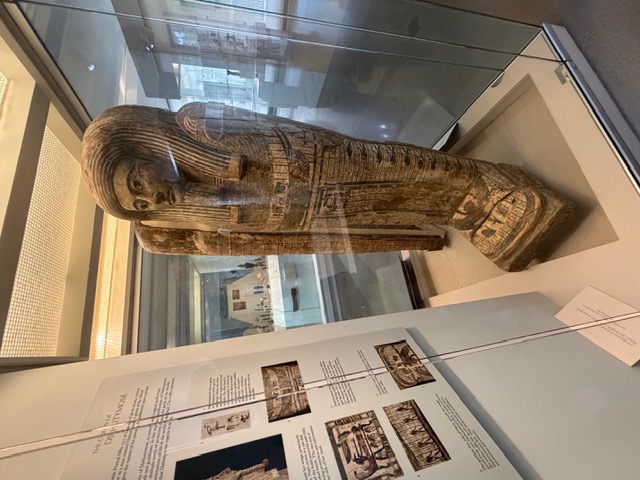
The outer lid standing up in its case. The wig and the painted eyes are still there.
The Villa of the Mysteries room
These are full-size watercolors of the frieze from the Villa of the Mysteries at Pompeii. Maria Barosso painted them on site in the 1920s, and they hang here at the size of the real wall. You walk into a room full of red, and the color is the whole point. The real frescoes have faded since she painted them, so in a way this copy is better evidence than the wall itself.
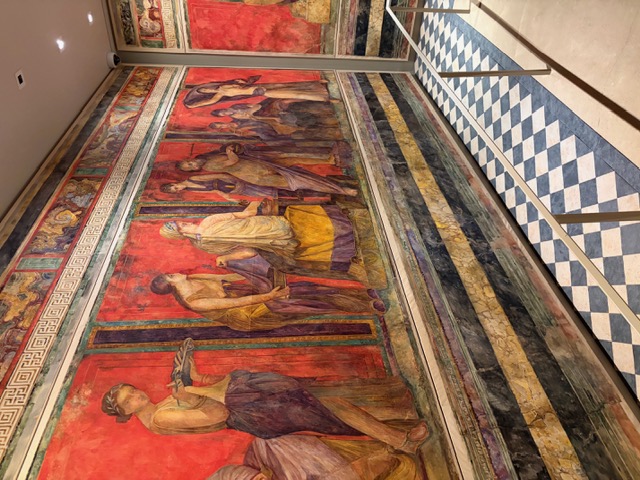
Maria Barosso’s Villa of the Mysteries at full height. She spent two years on scaffolding to make it.
{{ iiifCaption }}
What I keep thinking about is the Karanis material, which is not in these photos because it is small and behind glass, and my phone could not capture it well. There was a wooden door key, a child’s sock, and a letter from a man asking his brother to send the good wine and not the other wine. Two thousand years later, families still argue about the same things.