The British Museum
The Parthenon friezes, the Caryatid from the Erechtheion, and many other sculptures
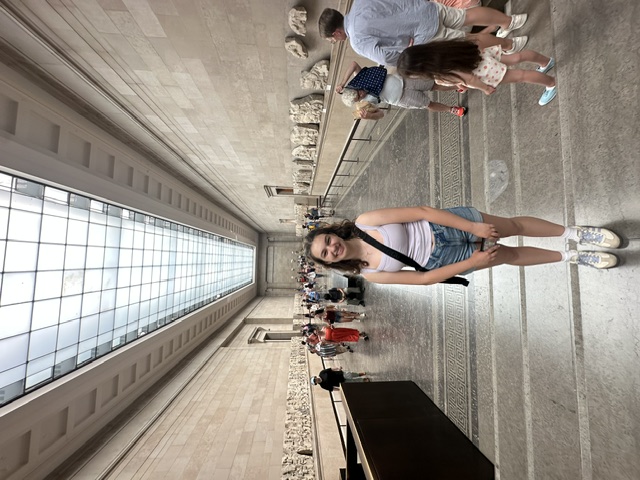
The Parthenon gallery in the morning. The frieze runs the full length of both walls.
Even though it was very hot that day, I loved visiting this museum. Many of the artifacts here were taken from other countries, but the collection holds an enormous amount of history, and I learned a lot from it. I learned how the Greeks used myth and history together to build a story about their past, which Rome later did as well.
Room 18 — the Parthenon Friezes
There is a museum in Athens with empty spaces on the wall where these sculptures are supposed to go. They were taken by archaeologists in the 1800s and brought to London. I believe we cannot move forward without acknowledging that history.
These sculptures are beautiful, and they come from the height of Greek society and culture.
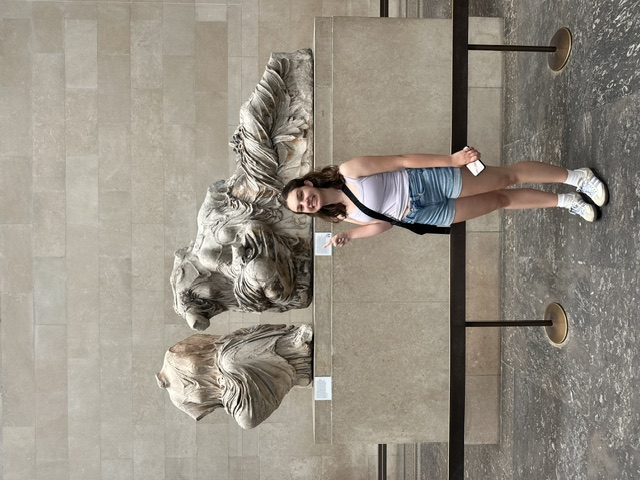
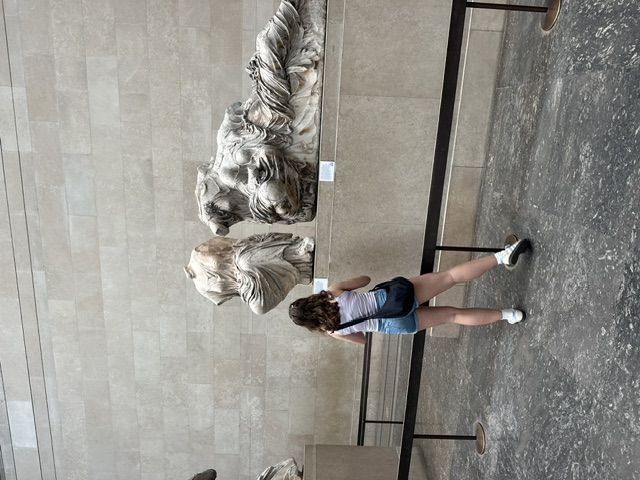
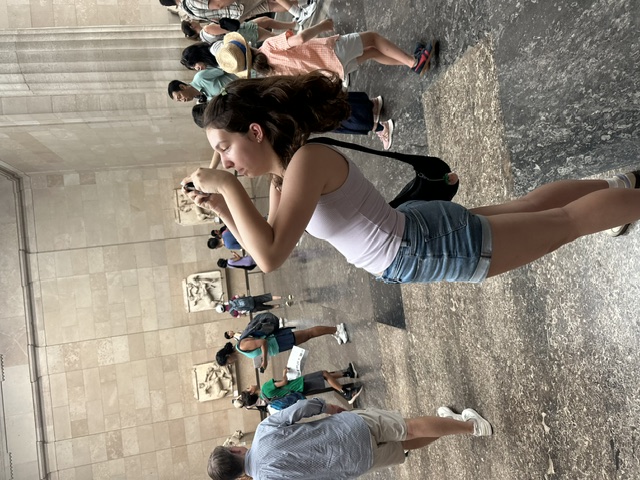
#dedicated to photography
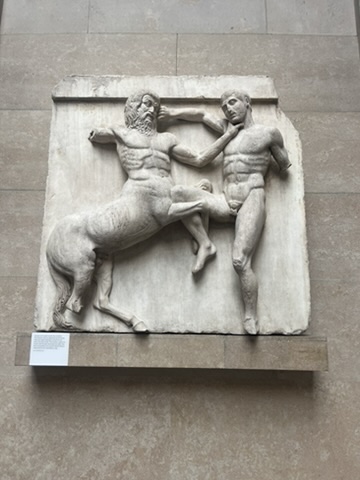
A south metope showing a Lapith losing a fight to a centaur.
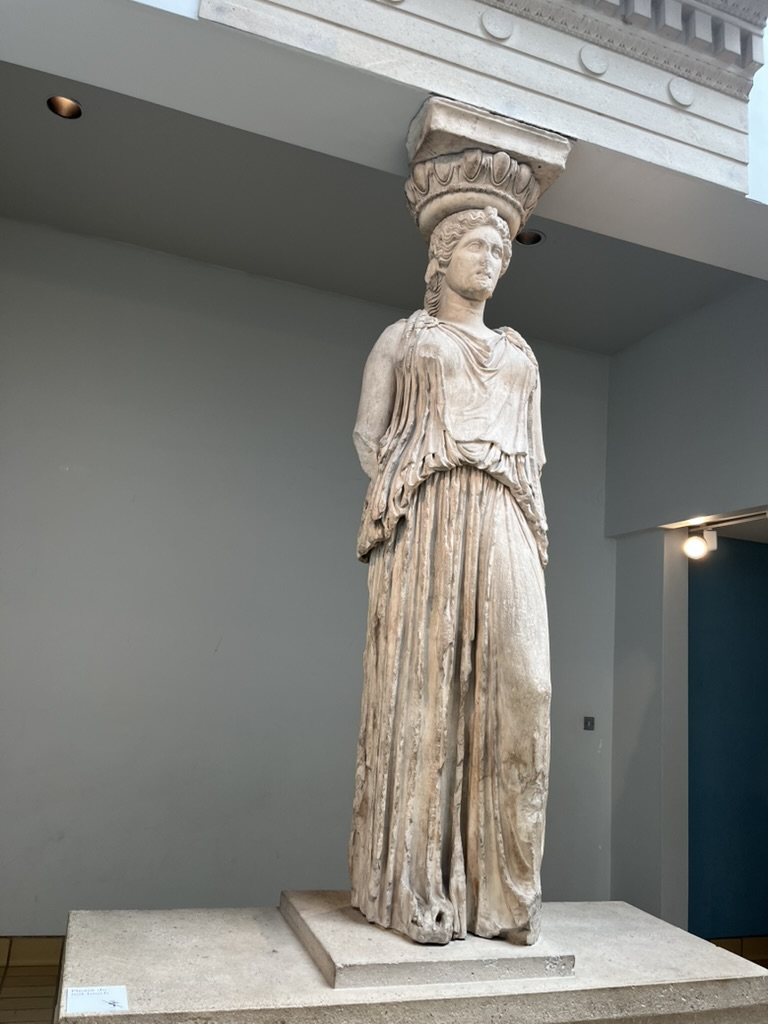
The caryatid from the Erechtheion. Her five sisters are still in Athens.
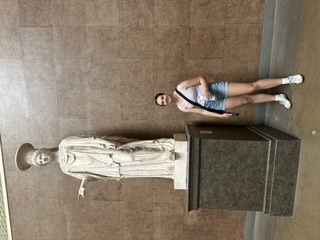
Athena
The Mausoleum at Halikarnassos
This room was amazing. It is filled with huge, beautiful sculptures.
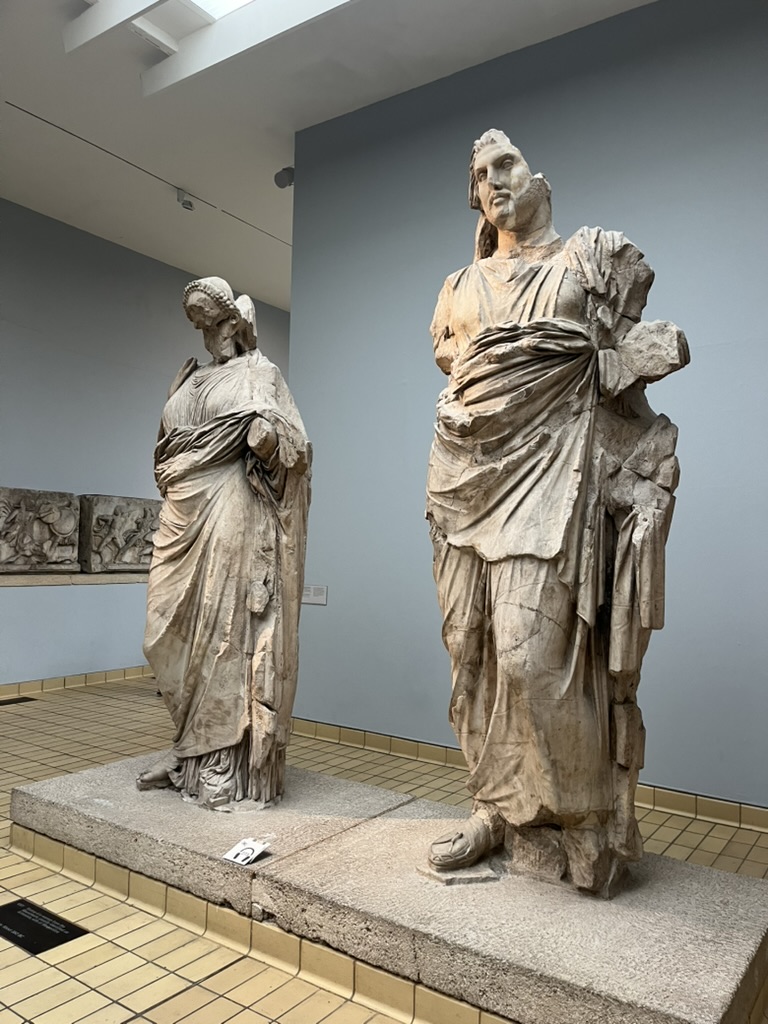
The two colossal figures, which are sometimes identified as Maussollos and Artemisia.
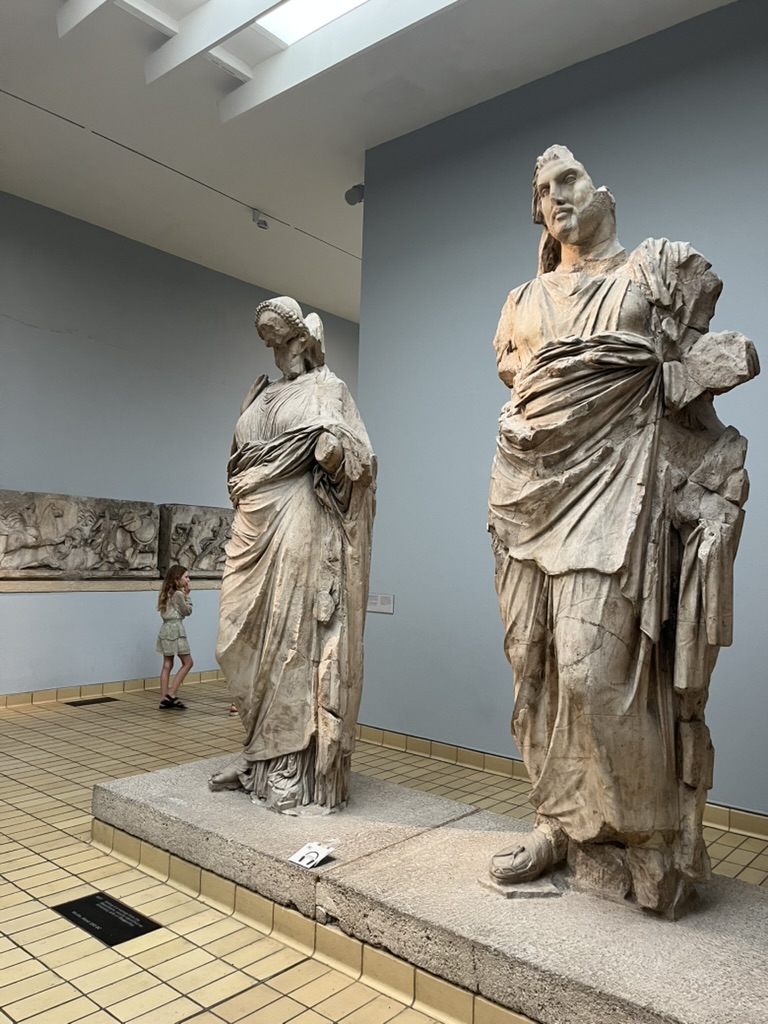
Ten feet tall marble statues
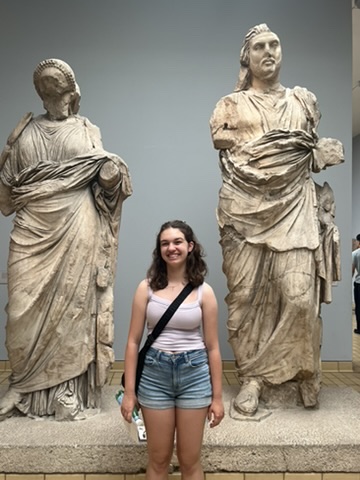
Me posing with the sculptures
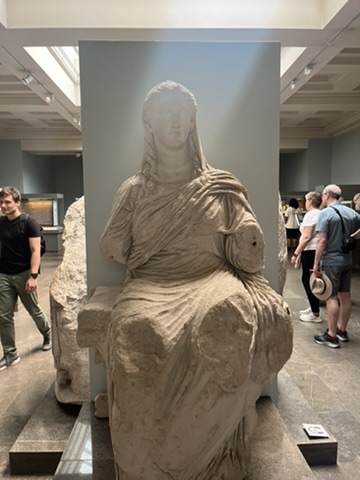
A seated goddess
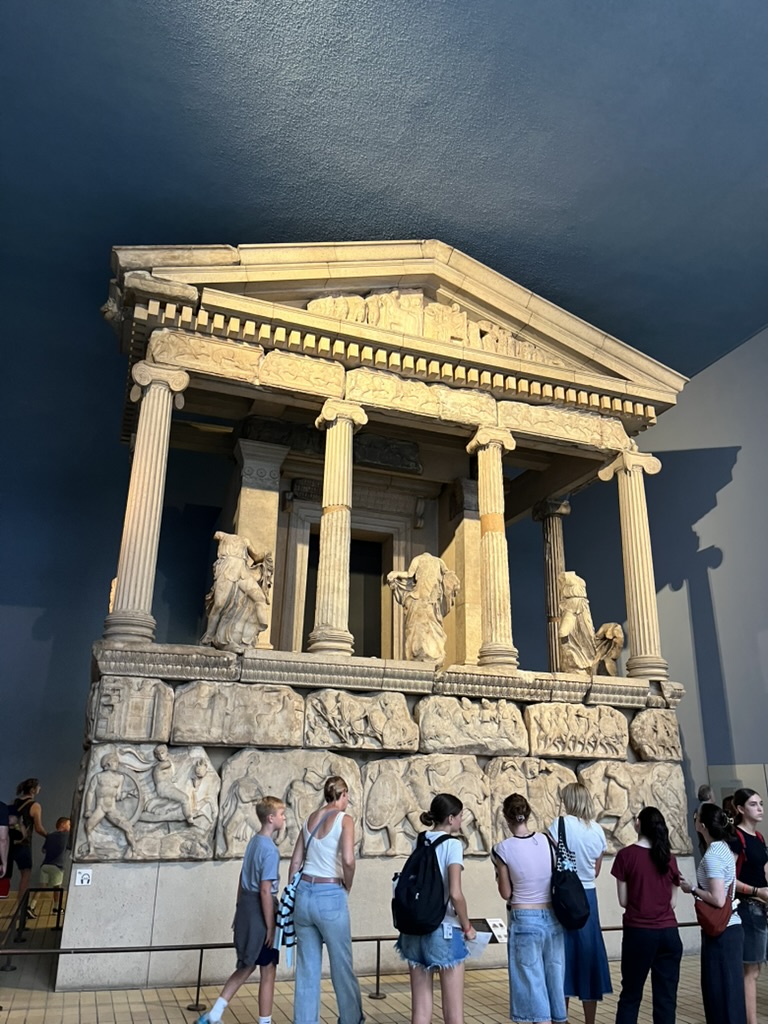
Copy of the Nereid Monument from Xanthos
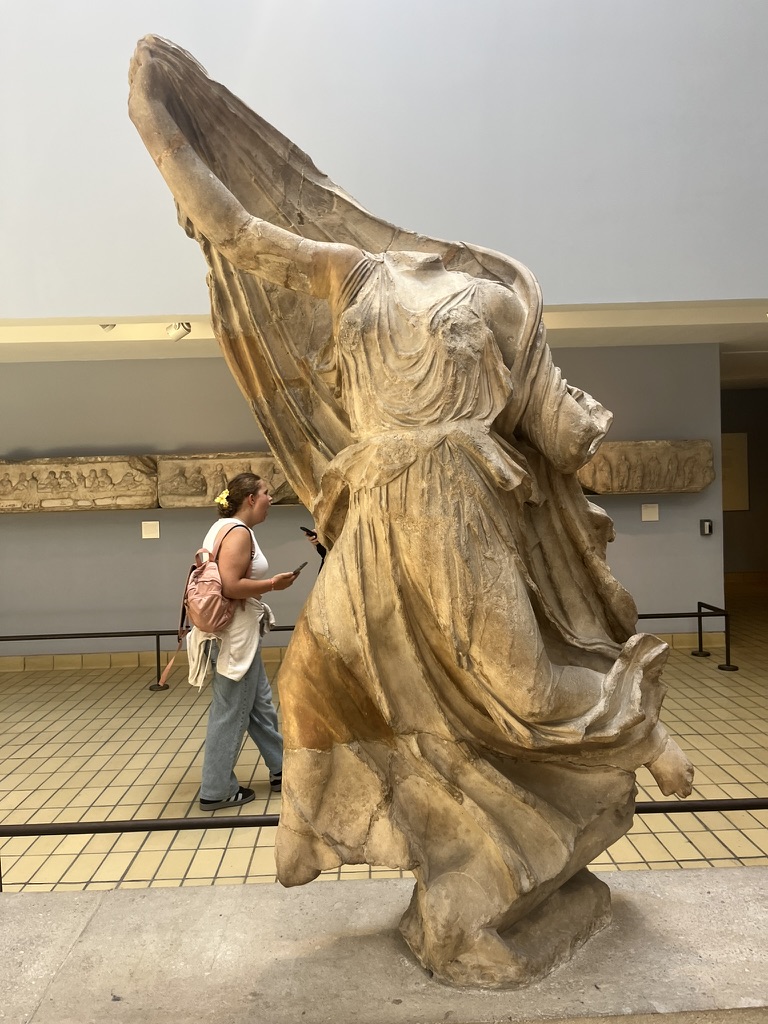
A Nereid running, with her dress blown flat against her body. It was carved around 380 BC.
Faces
These are mostly Roman copies of Greek portraits, so the artists never saw the people they were carving. Homer had been dead for five hundred years before these were made.
Homer and a Hellenistic philosopher.
Perikles, with his helmet pushed back and his name carved across his chest.
Demosthenes.
Two heads of Alexander the Great. He died at 32, so he is always shown as a young man.
Between rooms.
Hercules. This statue was found near Vesuvius and repaired by an English sculptor.
Vases and small finds
This was probably my favorite set of rooms, because I love Classical pottery and metalwork. I have a whole database to prove how much I love the pottery!
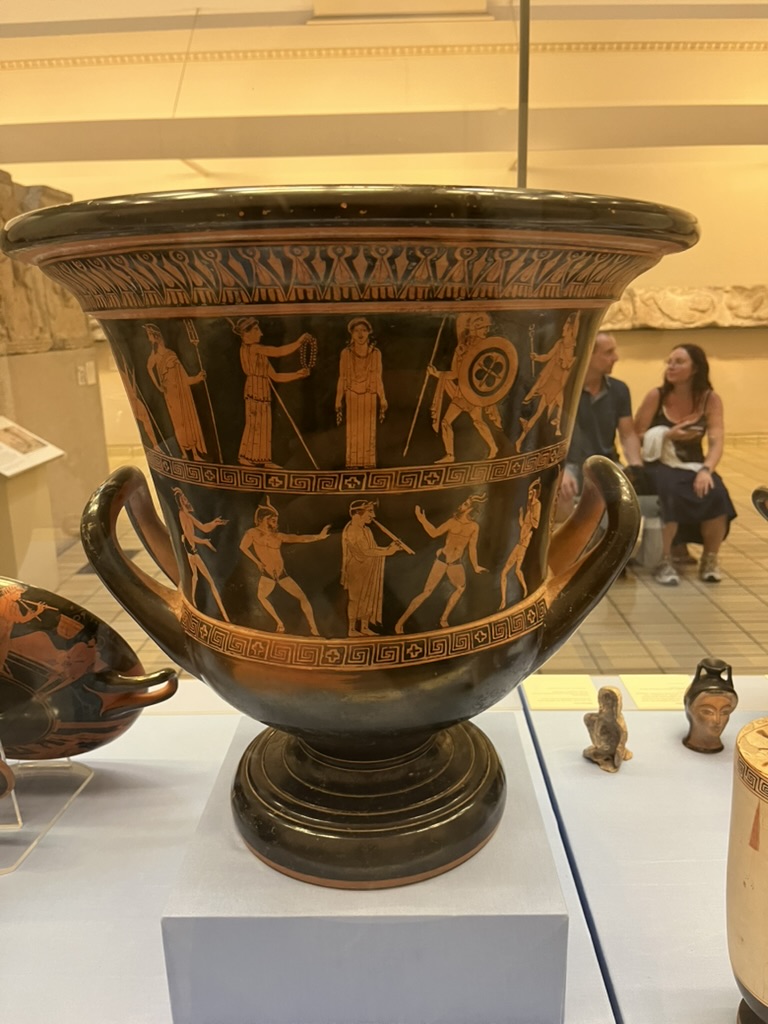
A calyx krater with two rows of figures framed by meander bands.
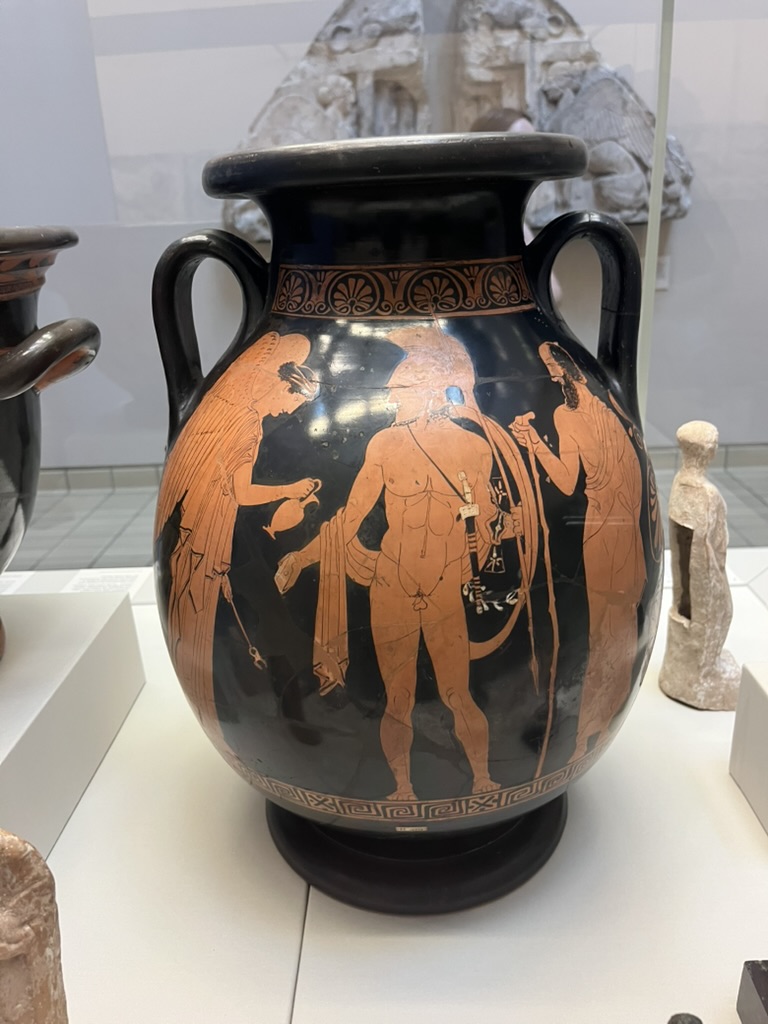
A soldier leaving home. The farewell drink has been poured, and he already has his sword on.
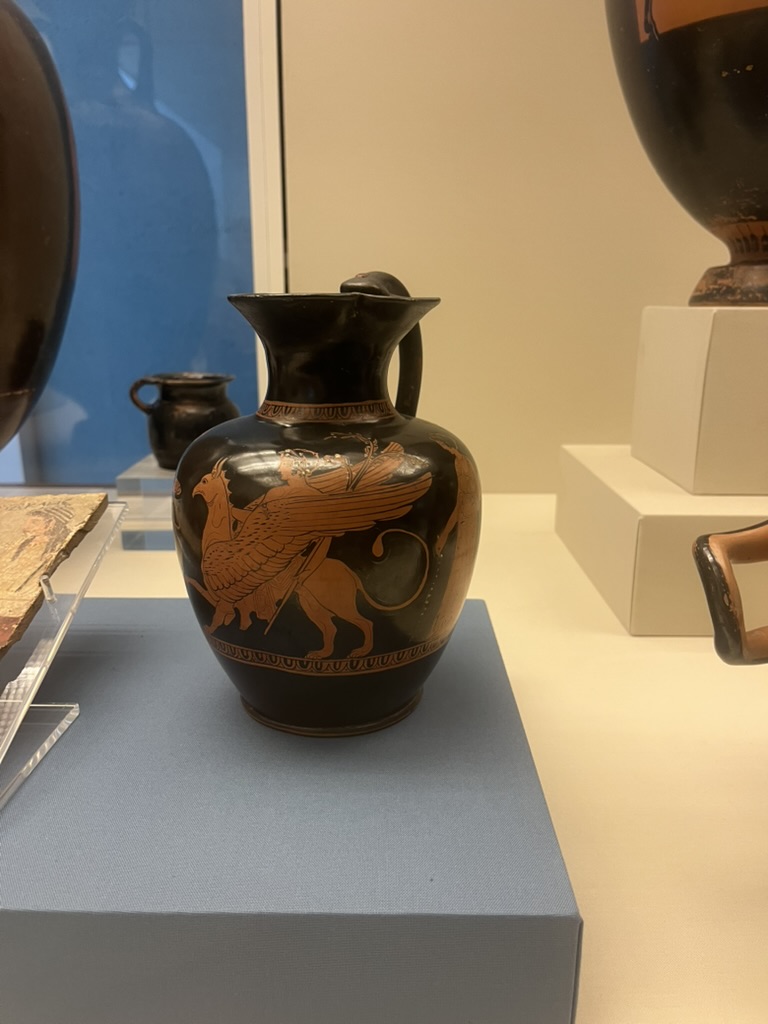
A jug with a griffin on it. This was my favorite object in the case.
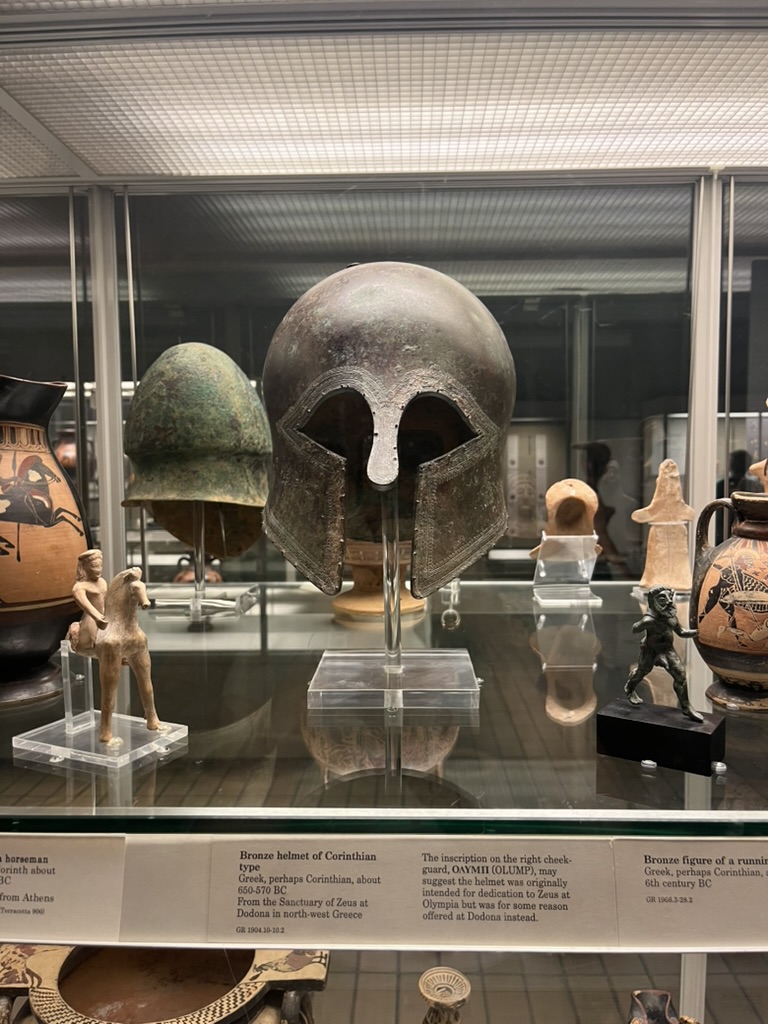
A Corinthian helmet from around 650–570 BC. It was dedicated at the sanctuary of Dodona.
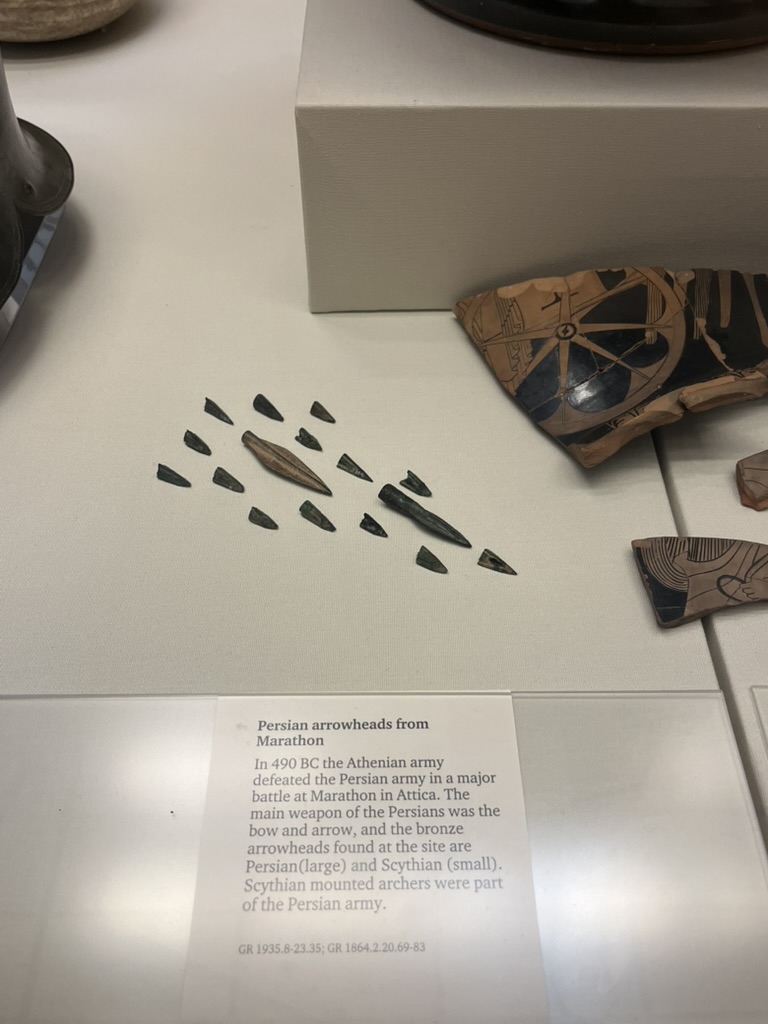
Persian and Scythian arrowheads collected at Marathon. The battle took place in 490 BC.
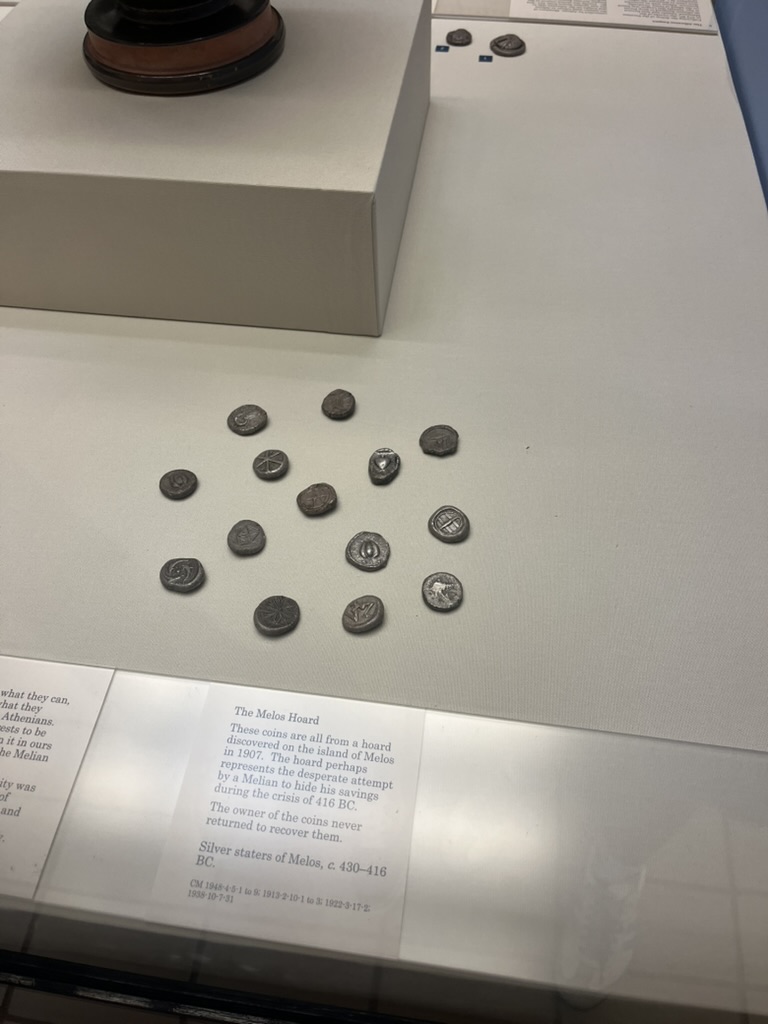
The Melos hoard, buried around 416 BC.
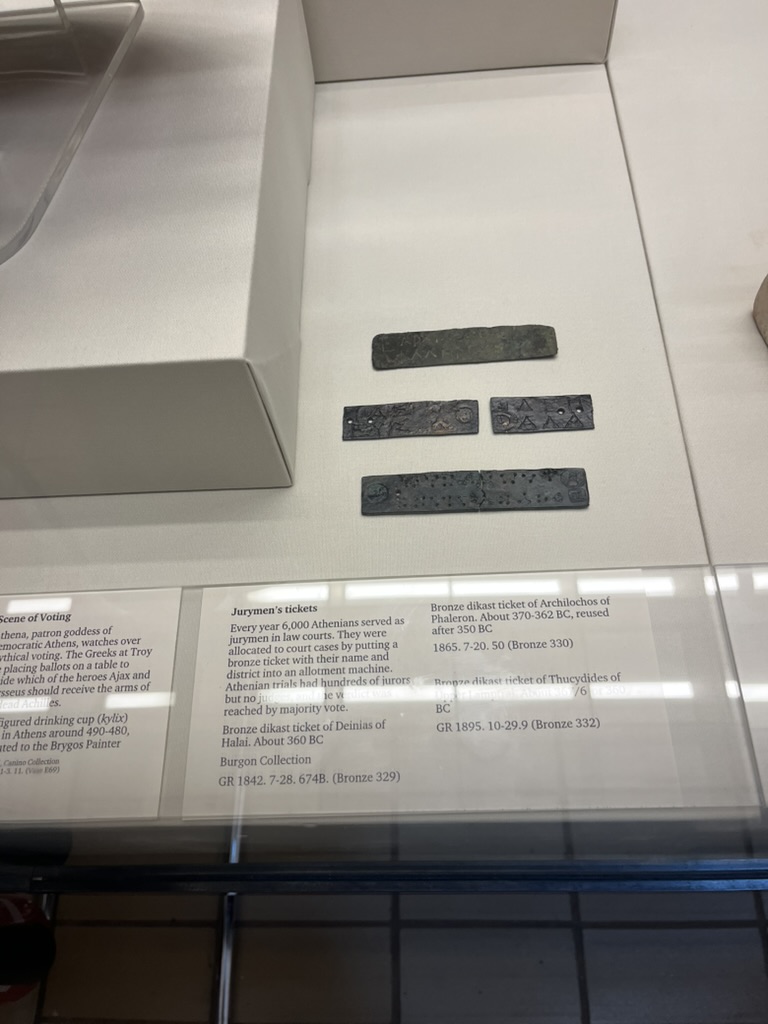
Jury tickets. They are bronze strips with names punched into them.
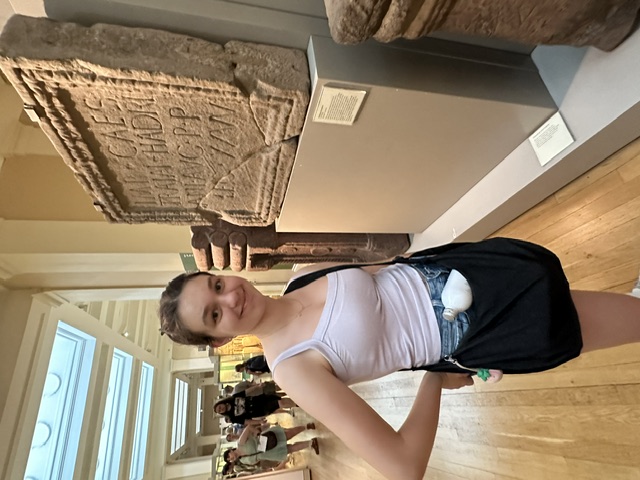
A building inscription with Hadrian's name in it.
The King's Library and the Rosetta Stone
The statues are shelved right alongside the books, which reflects how people in the 1700s thought about the ancient world.
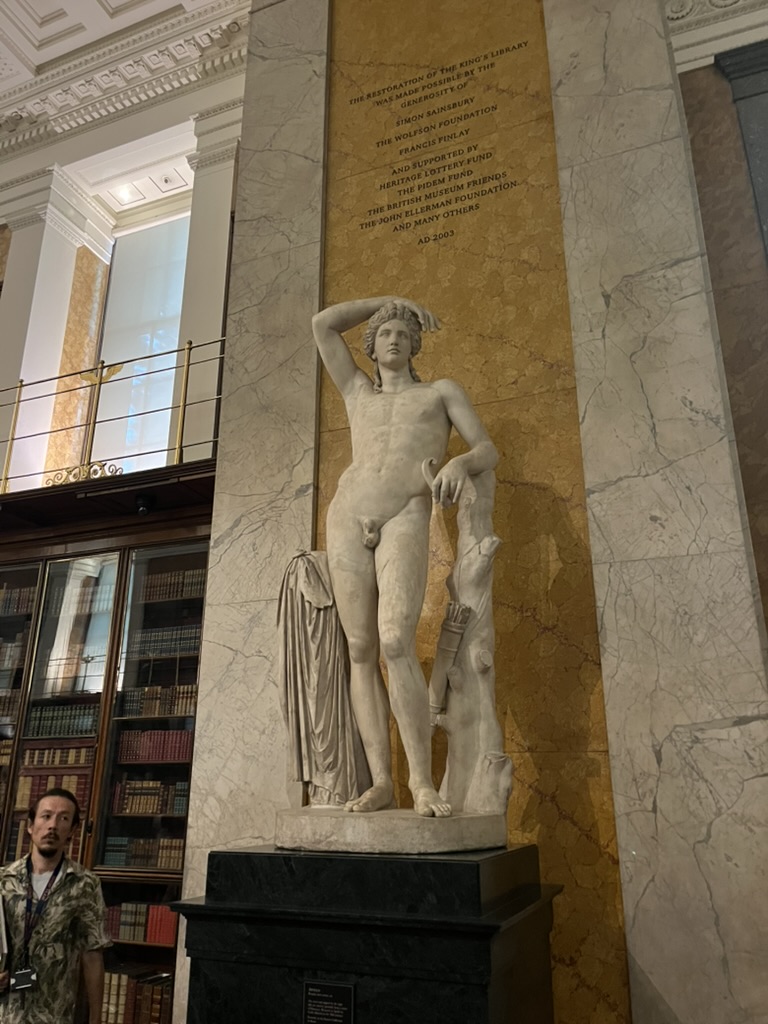
Apollo in front of gilded marble, with the donors’ names carved above his head.
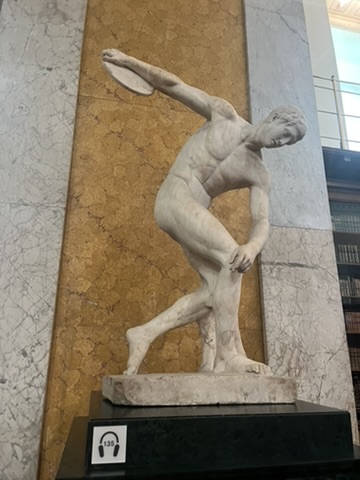
The Discobolus. This copy was made in the second century AD, and he has been frozen mid-throw ever since.
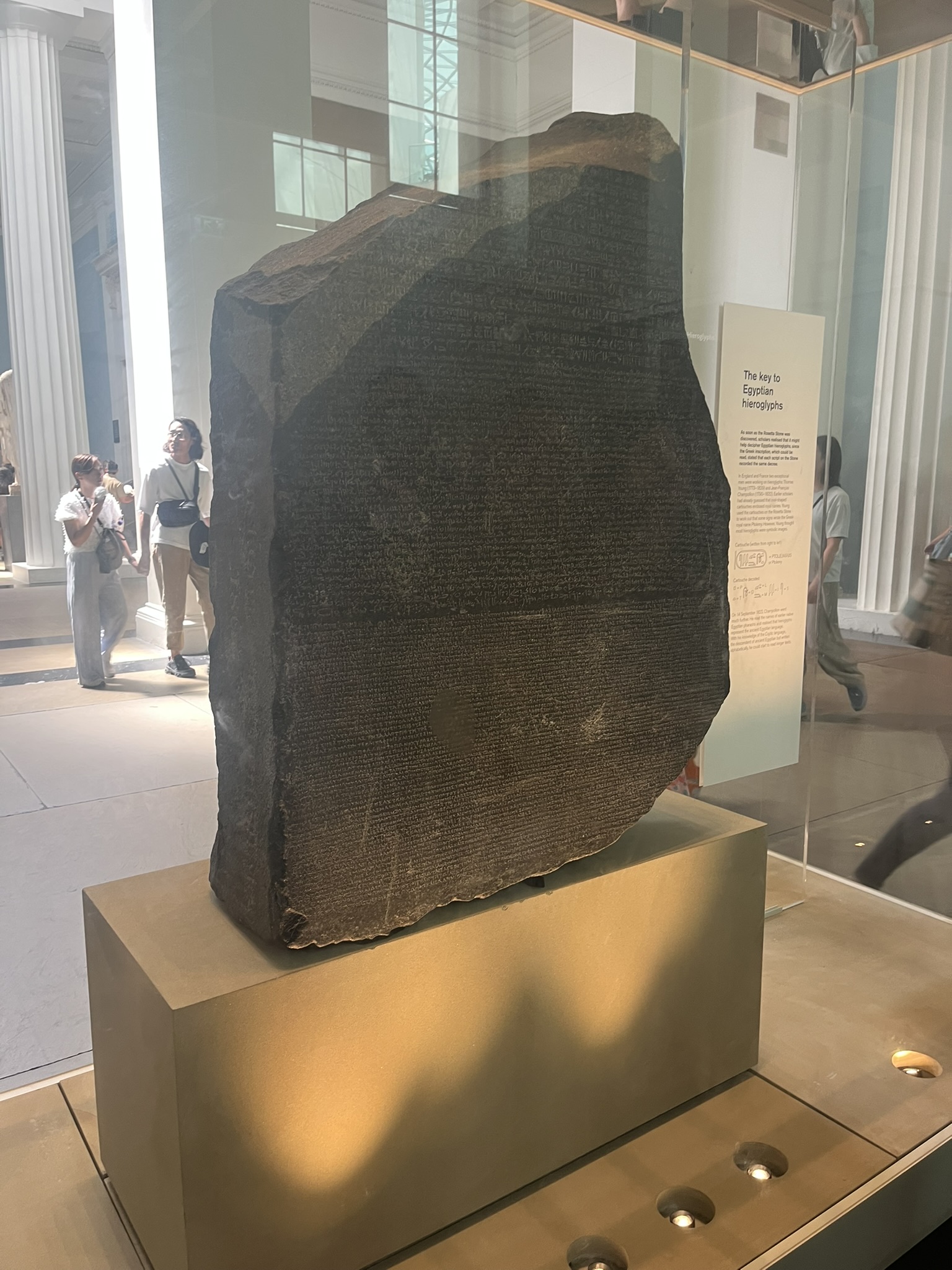
The Rosetta Stone, which has taught us so much about language and how to read ancient texts.
{{ iiifCaption }}
xxxxxxxxxxxxxxxxxxxxxxxx
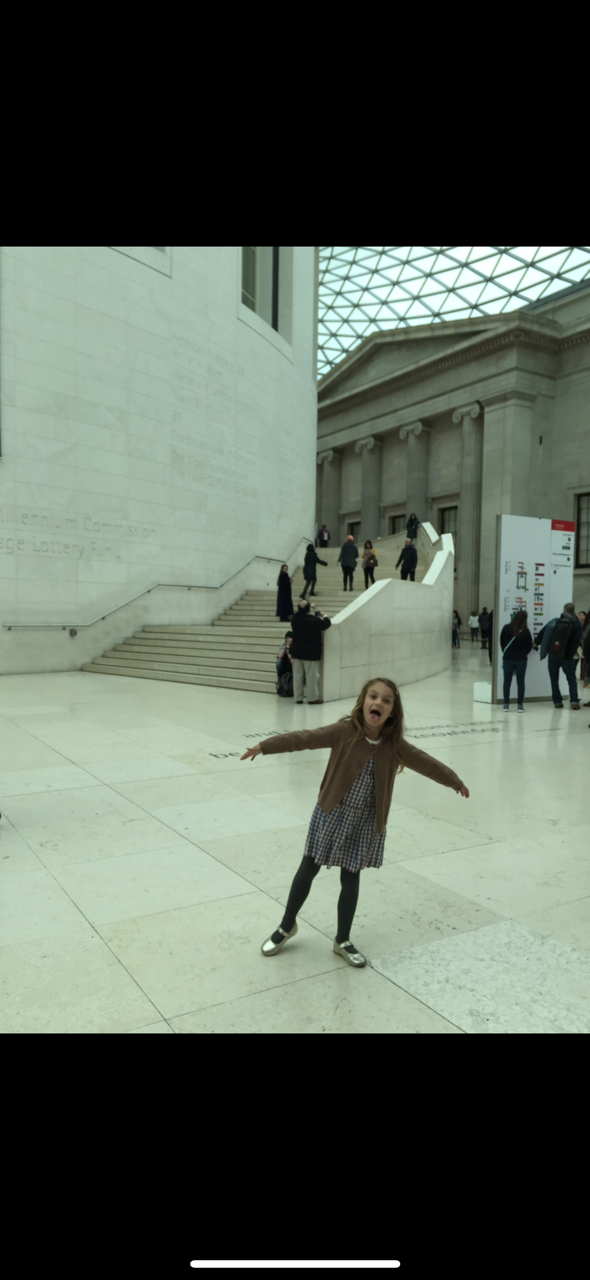
My first visit to the British Museum!
This is the same building about twelve years earlier. I was five years old, it was raining, and it was my first time in London. I remember being amazed by the scale of everything. Now I want to study the art in this museum one day as an archaeologist.