Research Intern, Getty Villa
Working with Dr. Shelby Brown in the Education department
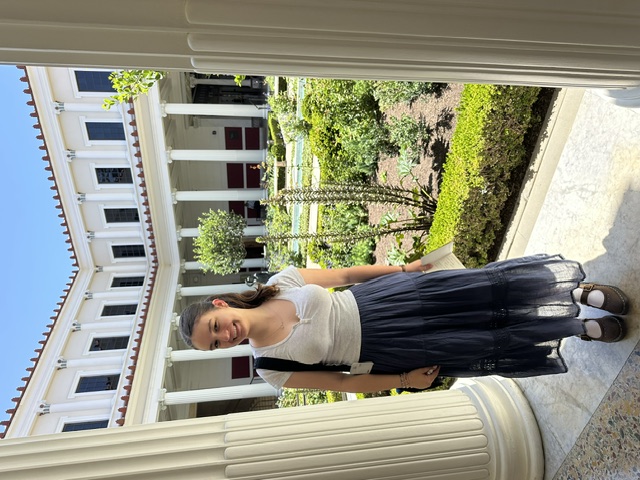
Between the columns on a work day.
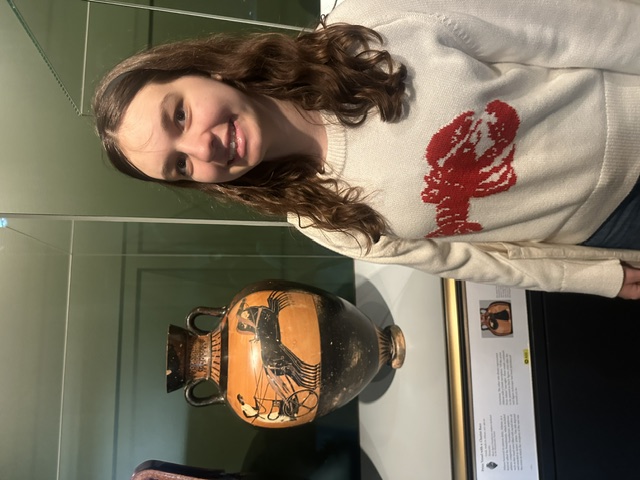
Here I am with a Panathenaic prize amphora. There is a four-horse chariot at full speed on the front. This vase is one of the objects on the scavenger hunt.
I started at the Getty Villa in spring 2026 as a research intern with Dr. Shelby Brown, an archaeologist and the head of education. The Villa is the Getty’s museum for Greek, Roman, and Etruscan art. It was built as a copy of a Roman country house that was buried by Vesuvius in 79 AD. I first visited the Villa as a guest, and now I work there.
My job is to help people understand the objects. That means writing scripts for the docents who lead tours and designing activities that get visitors to look closely instead of walking past. Most of my work right now is for College Night, an evening event for university students that the Villa holds every year.
What I do
I do three kinds of work, and all of it is about how visitors experience the objects.
I research an object or a gallery, check the facts against the Getty’s own records, and write what a docent can say about it in three or four minutes. The hardest part is deciding what to leave out.
Hero scavenger hunts on the vases. Visitors get a list of heroes, such as Herakles, Theseus, Perseus, and Achilles, and go through the galleries finding each one painted on a pot. I write the clues and pick the vases.
College Night is an evening event for university students. I am helping plan the stations, write the material for them, and figure out how to keep people moving through the galleries.
The galleries
This is where I spend my days. The Villa is arranged by theme rather than by date, so a tour can start almost anywhere.
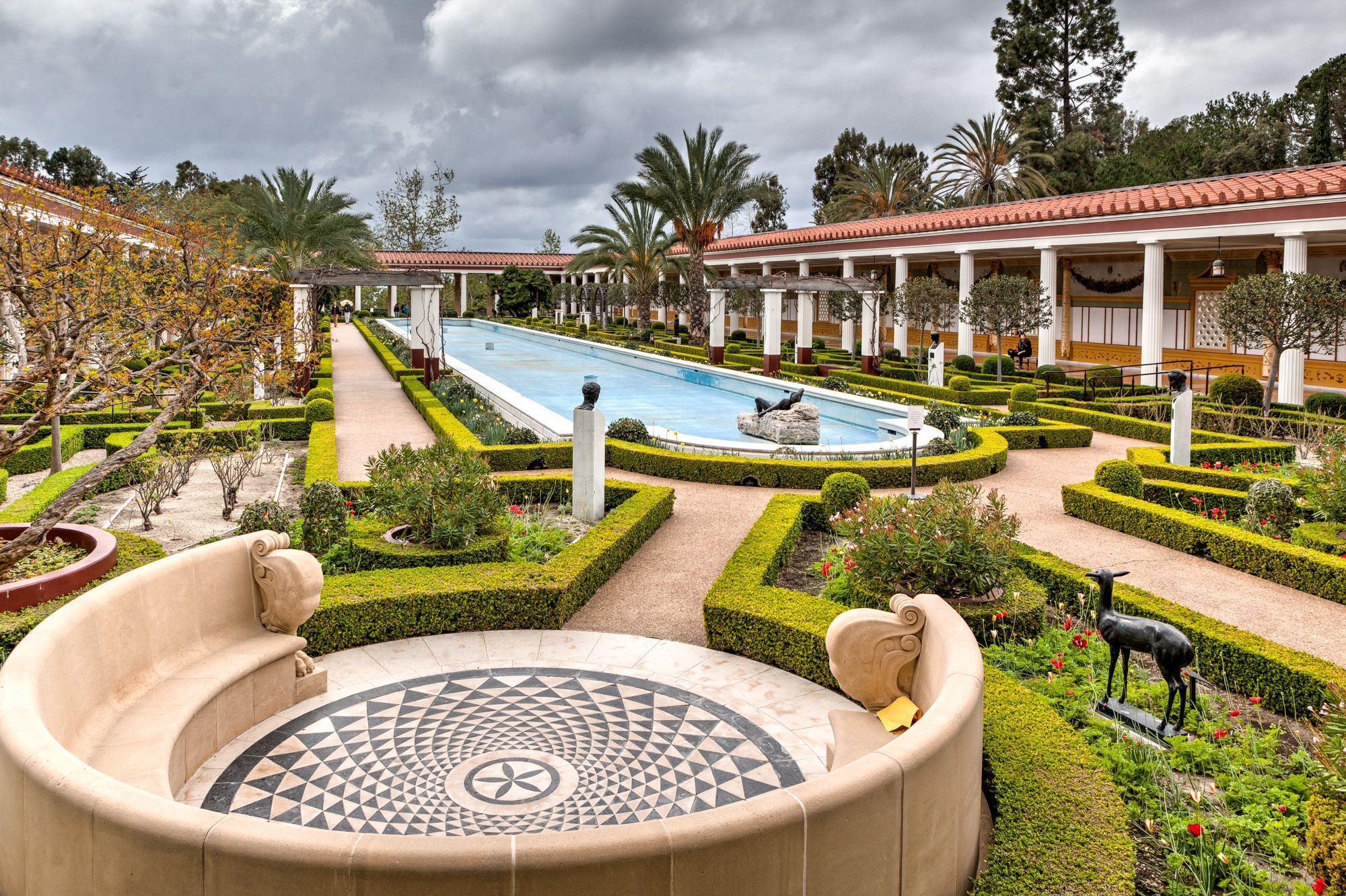
The outer peristyle has a 220-foot pool, clipped hedges, and bronze copies of statues found at the Villa dei Papiri in Herculaneum. Tours usually start here.
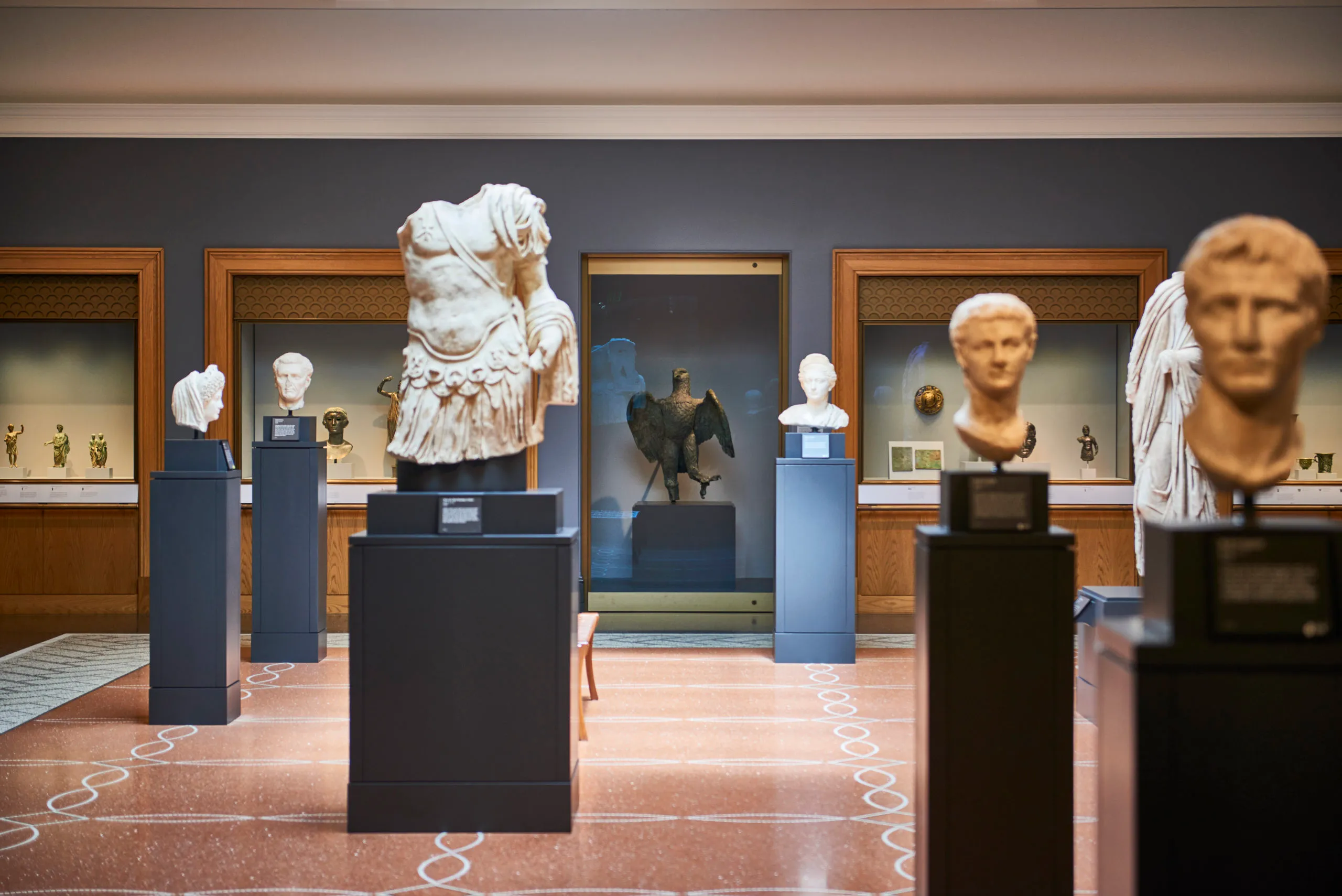
The Roman portraits gallery has emperors, empresses, and a bronze eagle. This room is a good place to talk about what a face was supposed to say about a person.
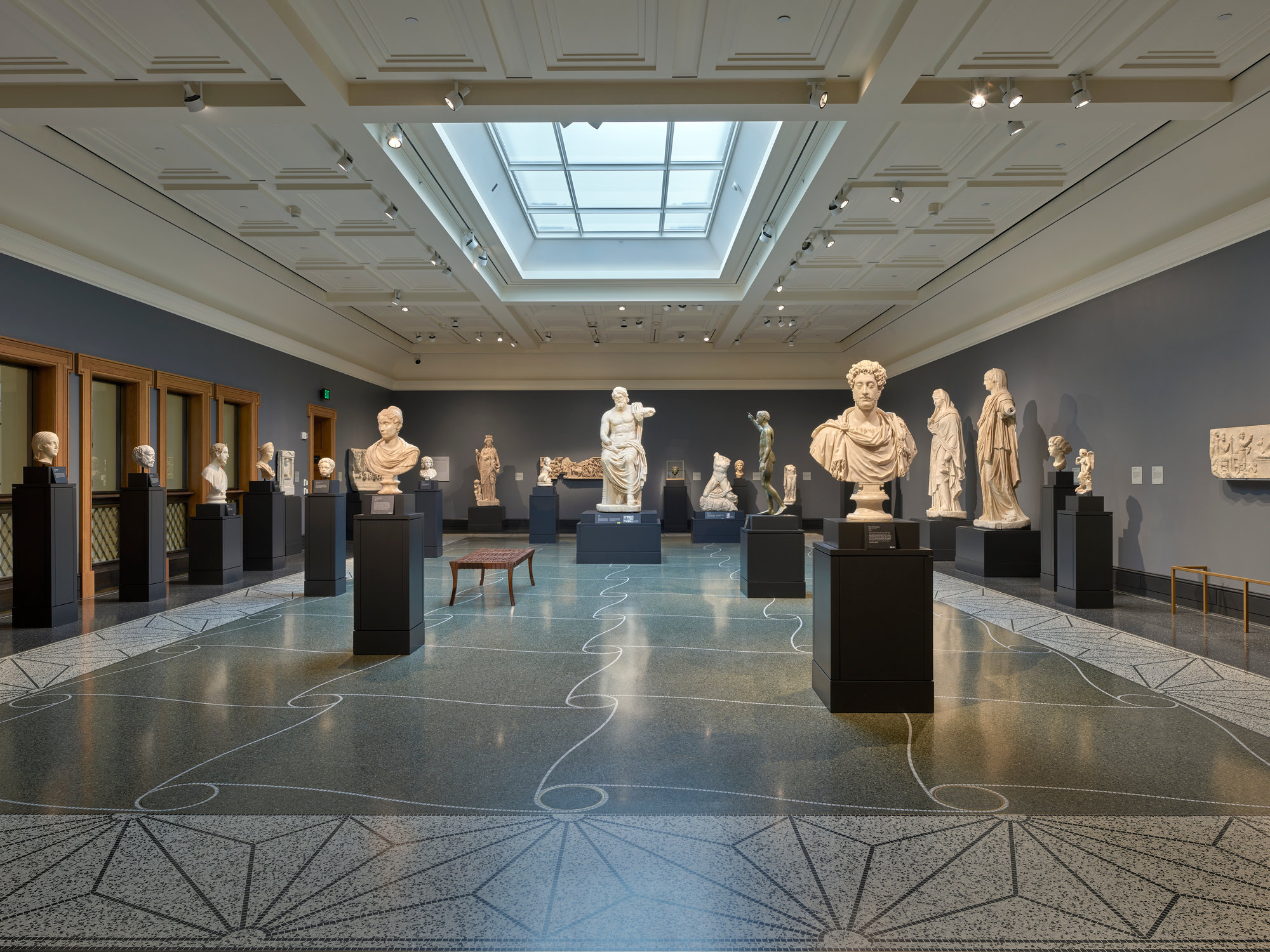
The main sculpture hall sits under a skylight. The seated Zeus is in the middle, and the Victorious Youth is off to the right.
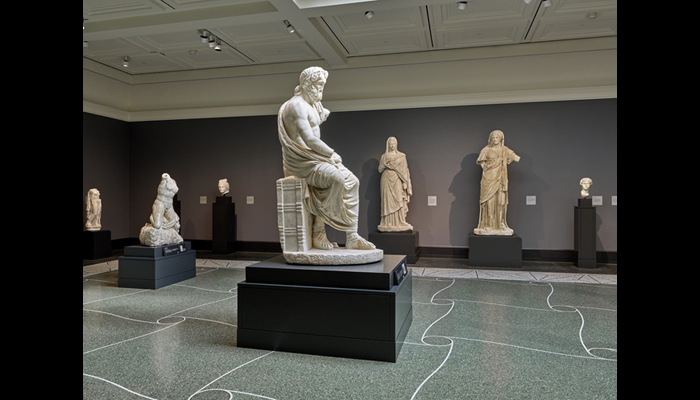
The gods and goddesses gallery. The seated Zeus is here with his eagle, along with a row of standing figures along the wall.
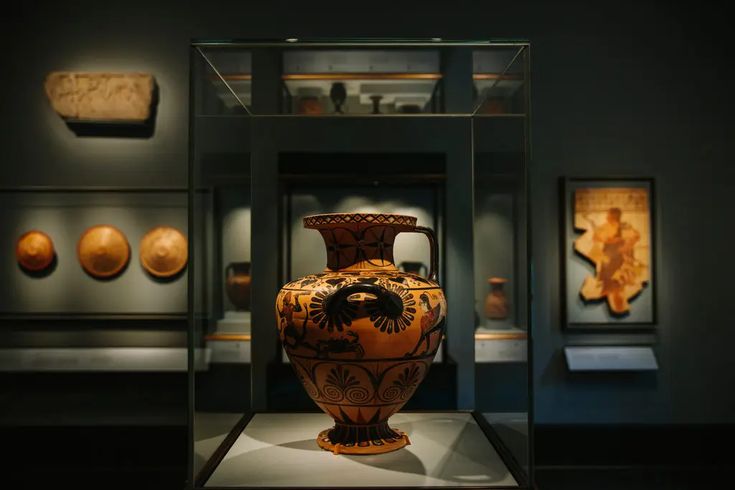
A black-figure hydria in its own case. Vases are the objects I write about most often.
.jpg)
The treasury room holds gold wreaths, silver cups, and a bronze portrait head, displayed in front of a photograph of the site they came from.
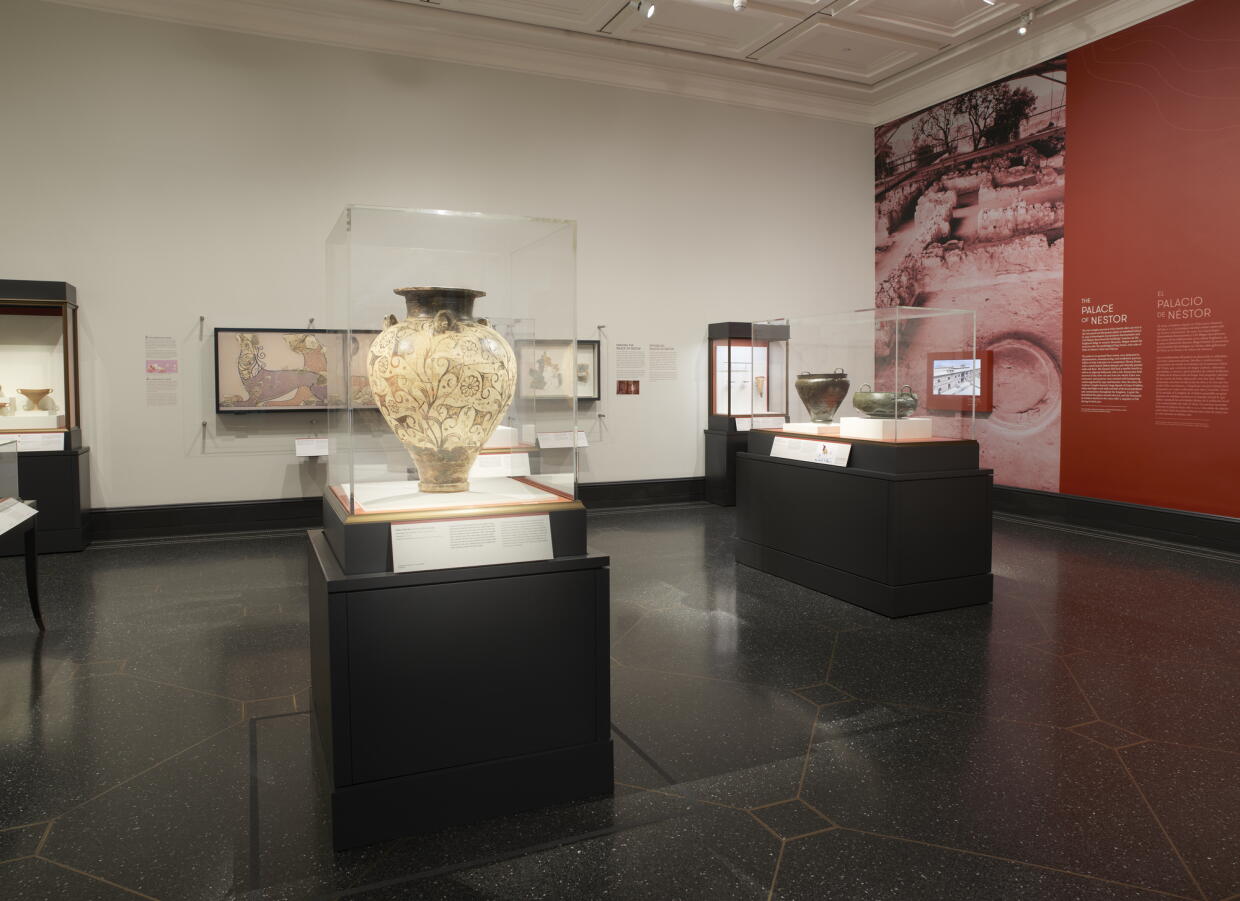
A gallery on the Palace of Nestor. It includes a Mycenaean jar painted with an octopus and a wall of finds from the site.
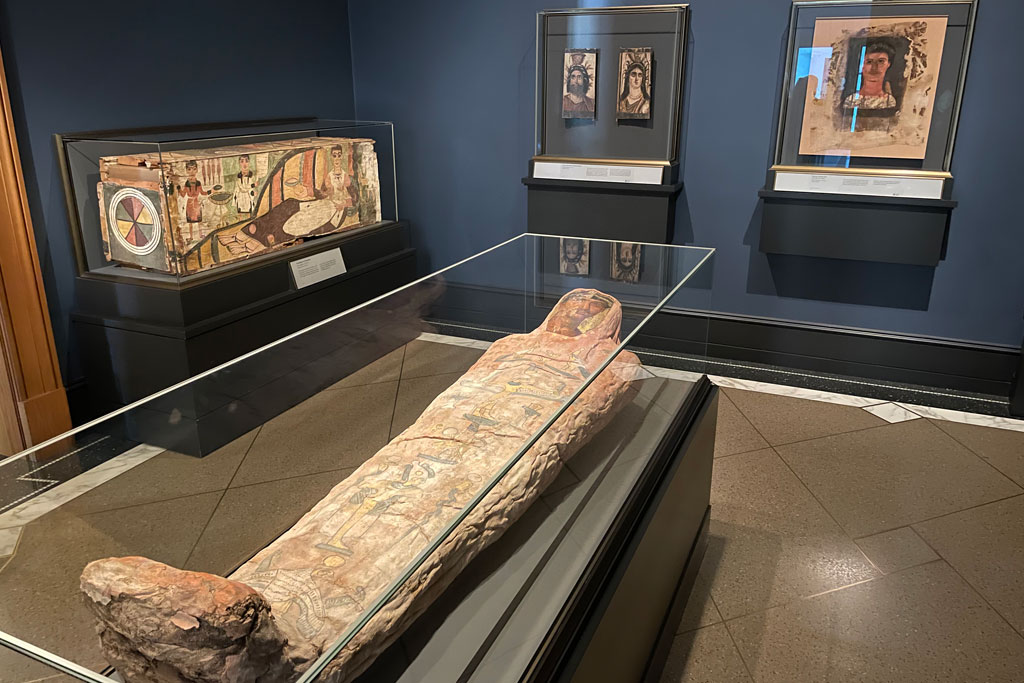
A mummy from Roman Egypt, with painted portraits on the wall behind it. Visitors are often surprised to find Egypt here, so it is a good place to explain how far Rome’s reach extended.
.webp)
A quiet gallery with a marble basin and a small bronze boy. I like using the smaller rooms for activities because people tend to slow down in them.
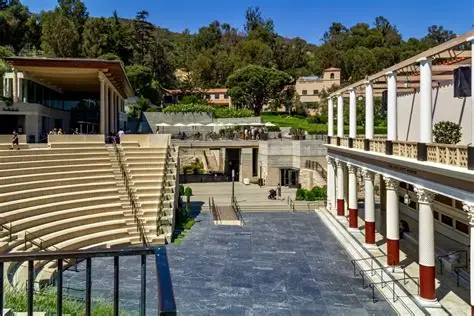
The outdoor theater and the entrance. Plays are staged here in September, and College Night uses this space too.
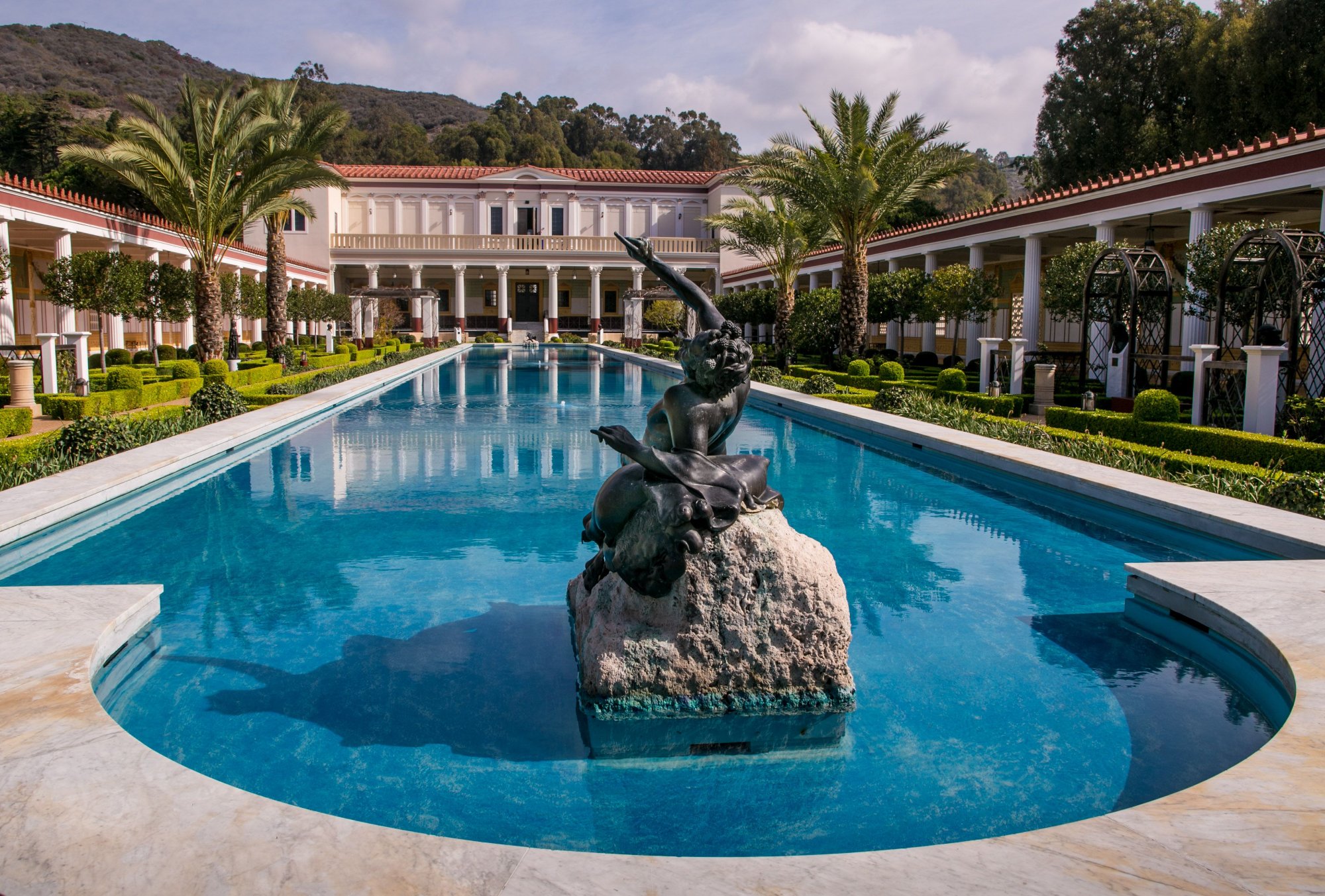
The pool seen from the far end, looking back at the house. This is the view most people photograph, and it is easy to see why.
A walk through the Villa
An exhibit I built from the Getty’s own photographs. You can click through the slides.
Created with Exhibit.so
Objects I work with
These are the pieces that come up most often in the scripts and activities.
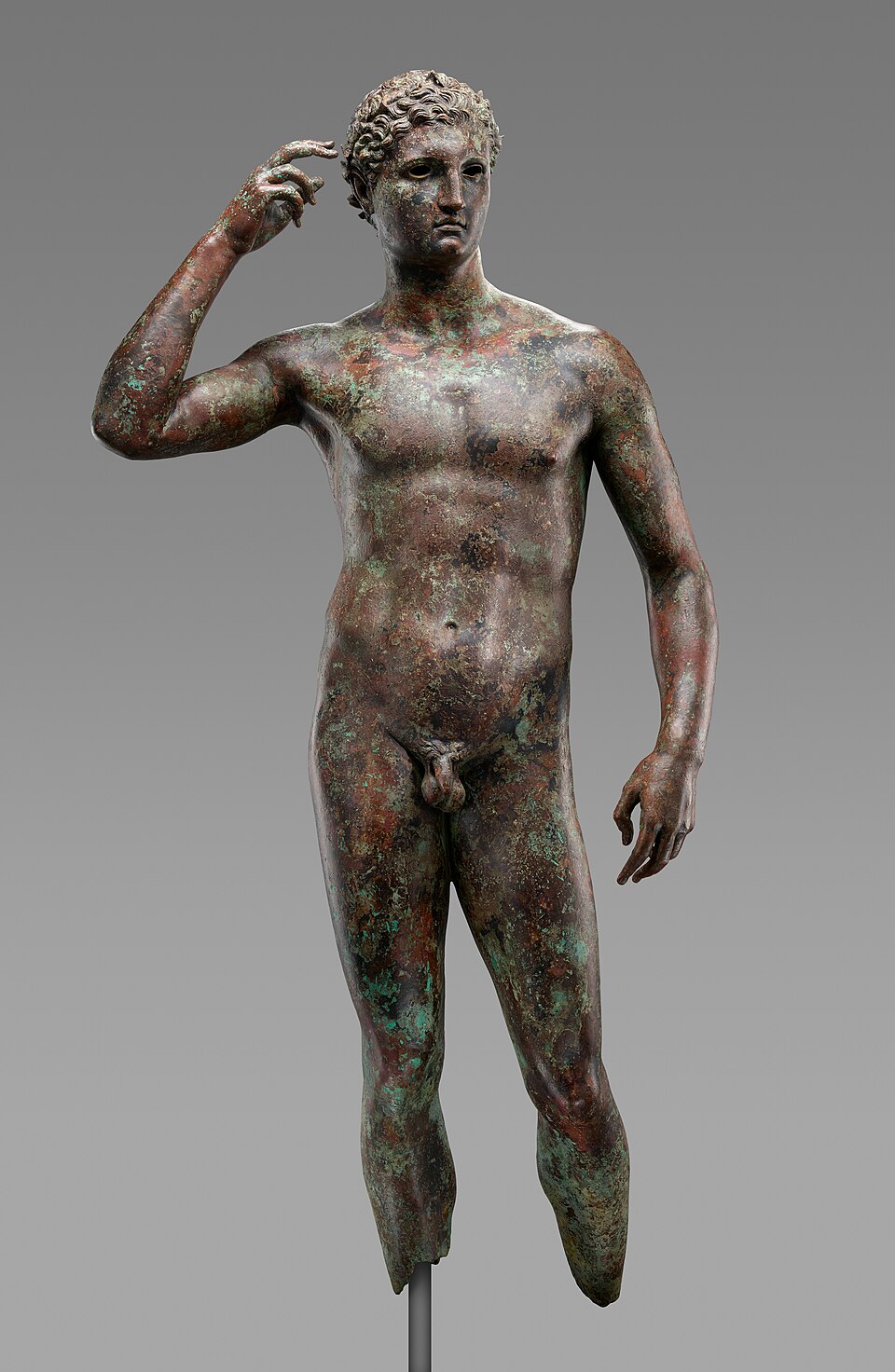
The Victorious Youth is a Greek bronze that fishermen pulled out of the Adriatic Sea in 1964. He is reaching up to touch his victory wreath. Italy has been asking for the statue back since 2007.
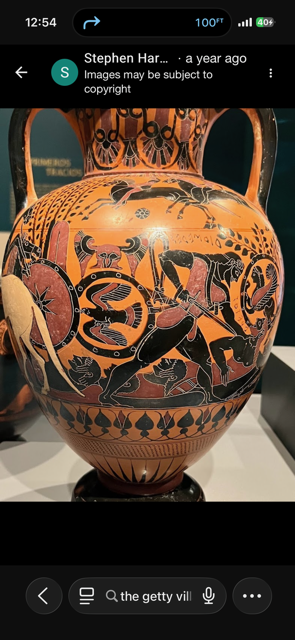
A black-figure amphora showing warriors fighting over a fallen man, with shields painted with a bull and a tripod. It is good for showing how much detail a painter could fit on one vase.
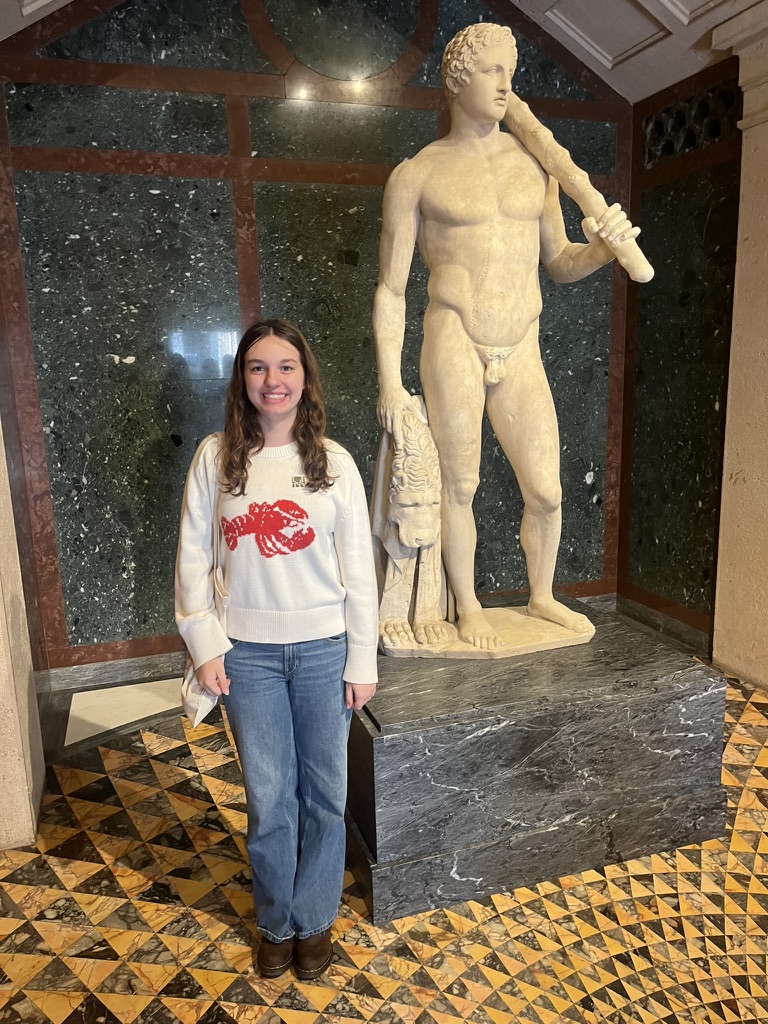
The Lansdowne Herakles was found at Hadrian’s villa in 1790, sold to an English lord, and bought by Getty in 1951. Every tour stops here.
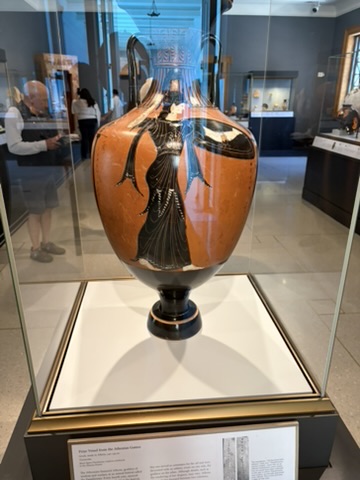
A Panathenaic prize amphora. It held the olive oil given to winners at the Athenian games, and Athena is painted on the front. It is good for explaining what vases were actually used for.
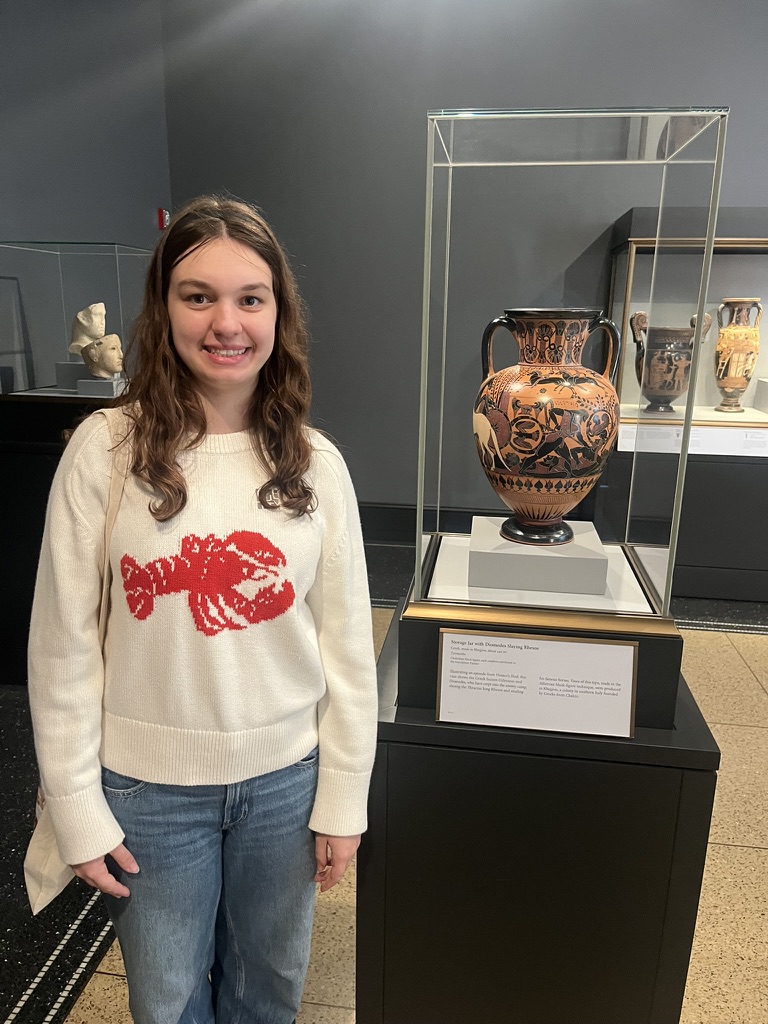
A storage jar showing Diomedes killing Rhesos, a scene from Book 10 of the Iliad. I use it to show how a vase can tell a story.
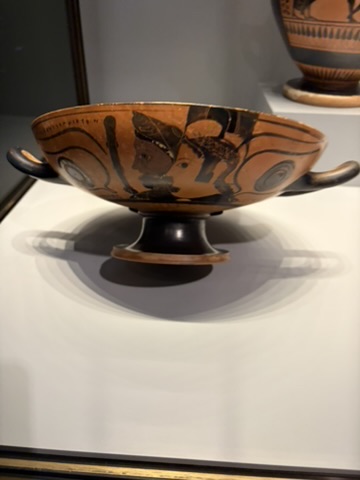
An eye cup. When you lift it to drink, the painted eyes look out at the rest of the table. Visitors enjoy this one once they notice it.
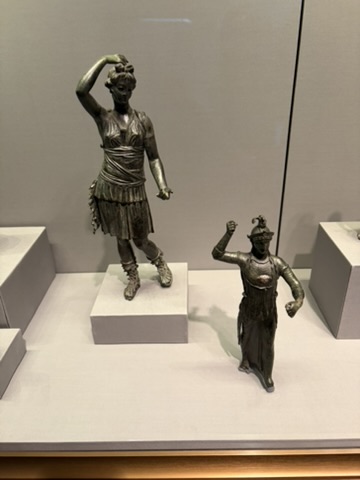
Two small bronzes: a huntress and a helmeted goddess. Small objects work well for close looking.
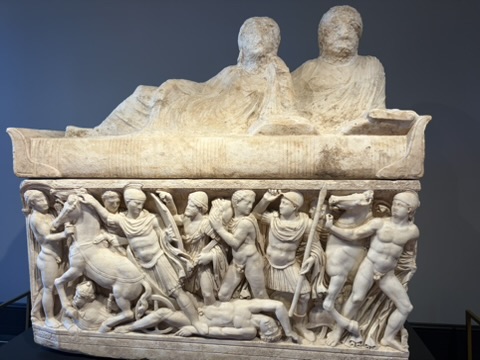
A battle sarcophagus. There is a fight scene on the front, and the couple who paid for it are shown lying on the lid.
People I have learned from
Dr. Shelby Brown is an archaeologist who has excavated in Italy and Greece and now runs education at the Villa. She reads every script I write and sends it back with questions in the margins. Most of them are some version of “how do you know that?” Because of this, I have learned to check the object record before I write a sentence.
The docents know the galleries better than anyone. I have sat in on their tours to hear which objects people ask about and which ones they walk past. What works on paper does not always work in a real room.