The Coin Project
forty-five late Roman bronze coins, weighed, measured, and read
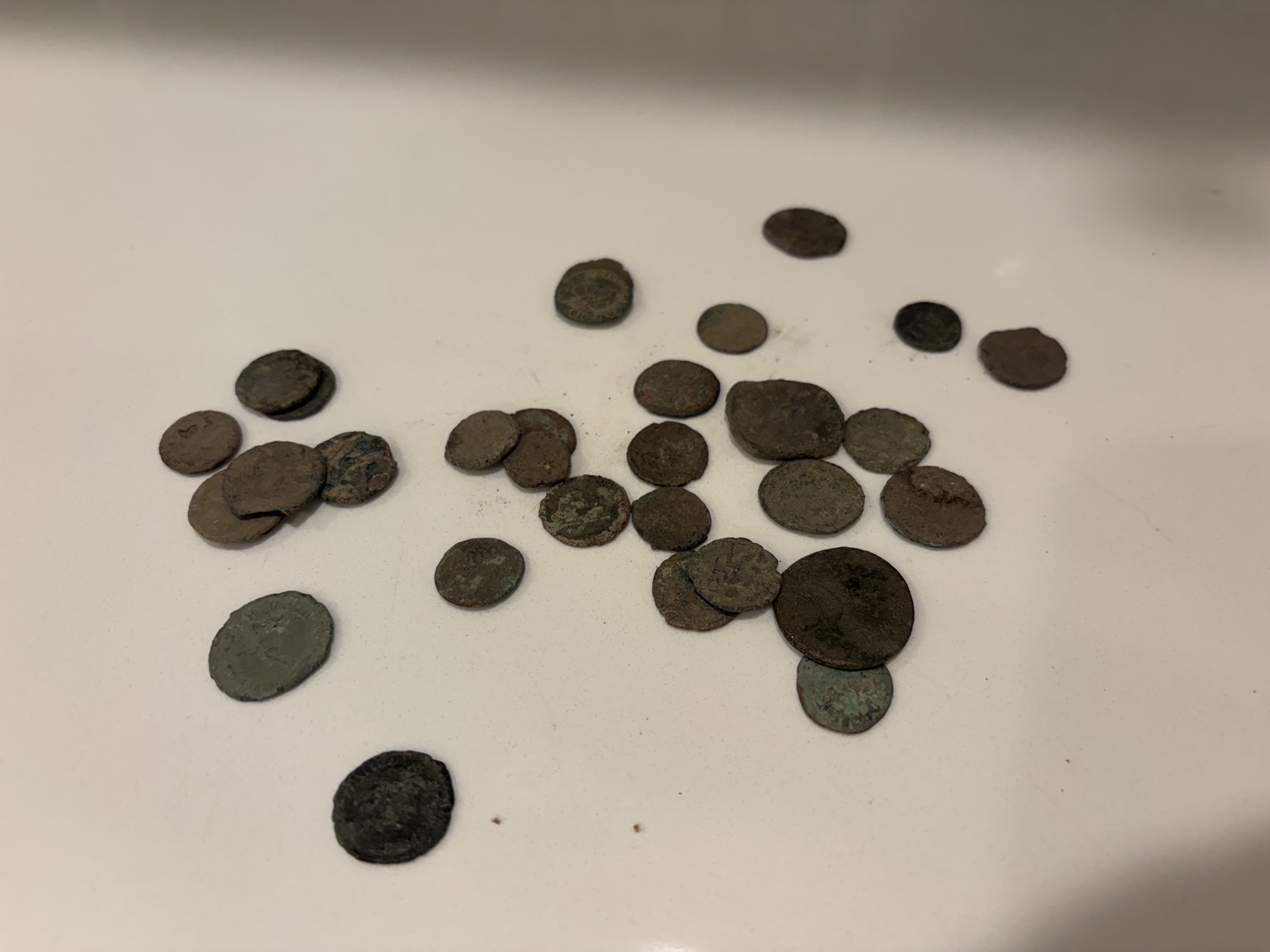
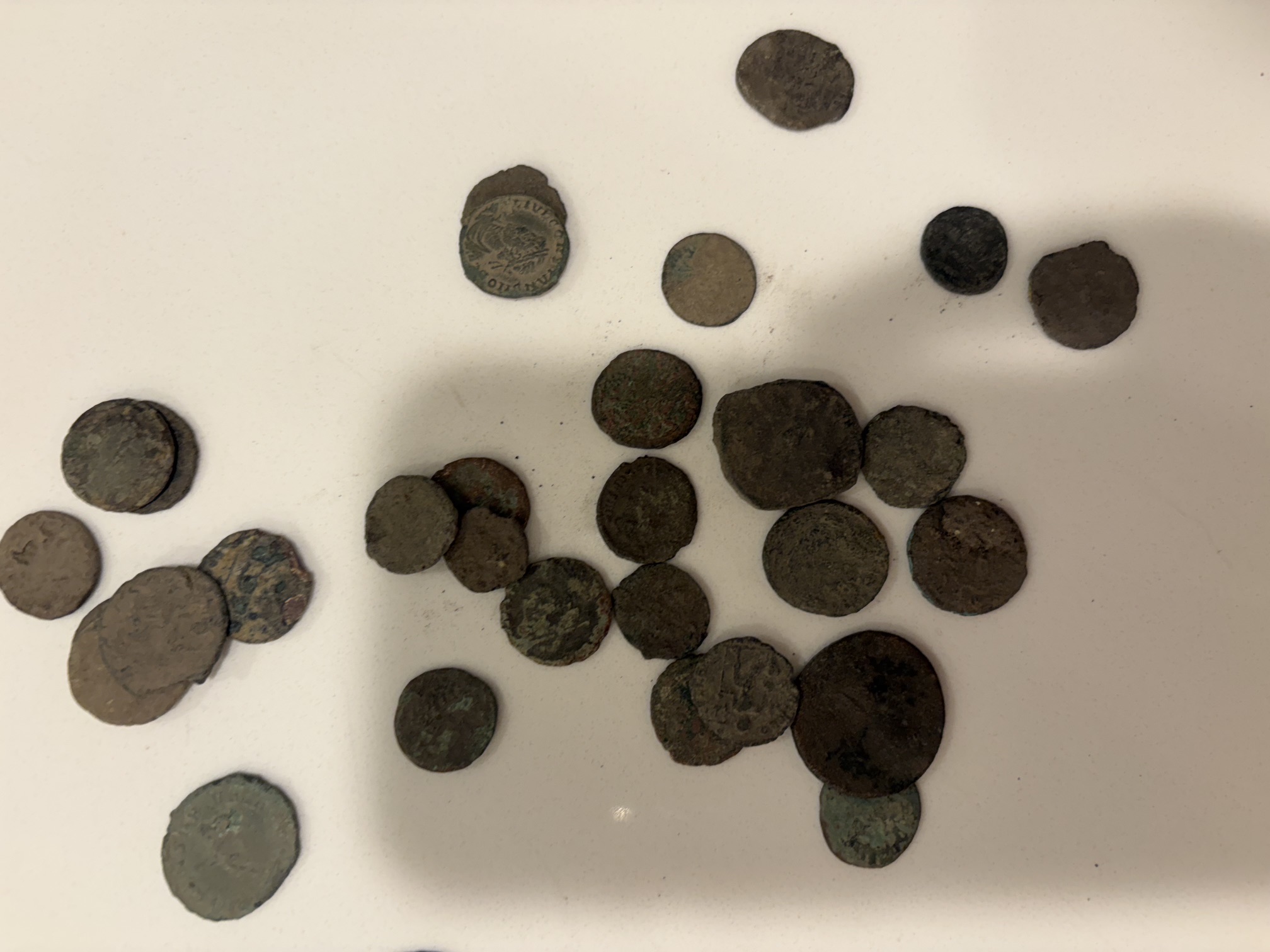
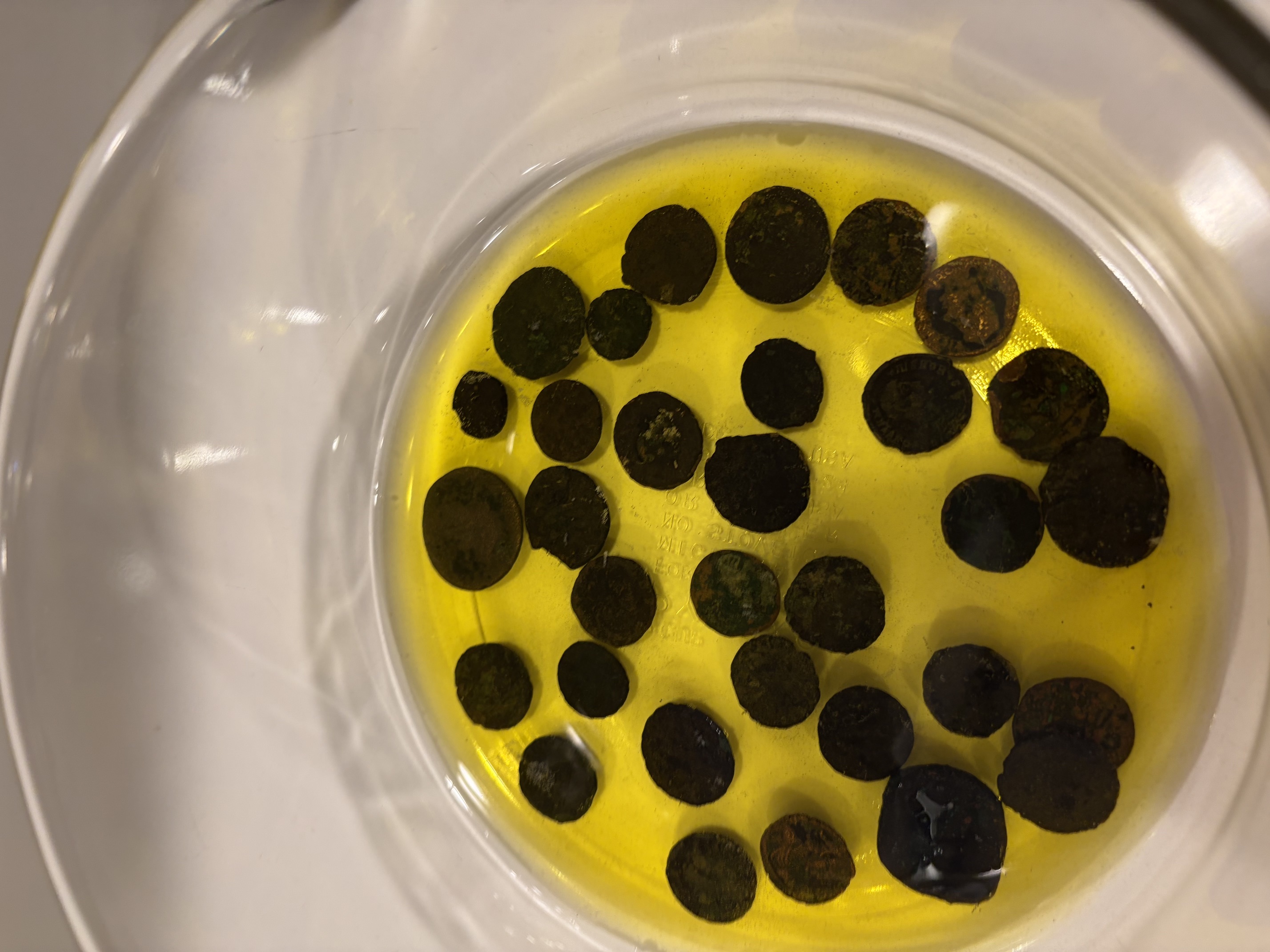
This is a catalogue of forty-five small bronze coins. They came from eBay as a lot of uncleaned coins, covered in 1,800 years of dirt and sediment, and at first you could not tell one from another. I soaked them in extra virgin olive oil for two weeks, which loosens the crust without damaging the metal. Then I scrubbed them with a soft bristle brush and distilled water and soaked them again. After a few rounds of this, portraits and letters started to appear.
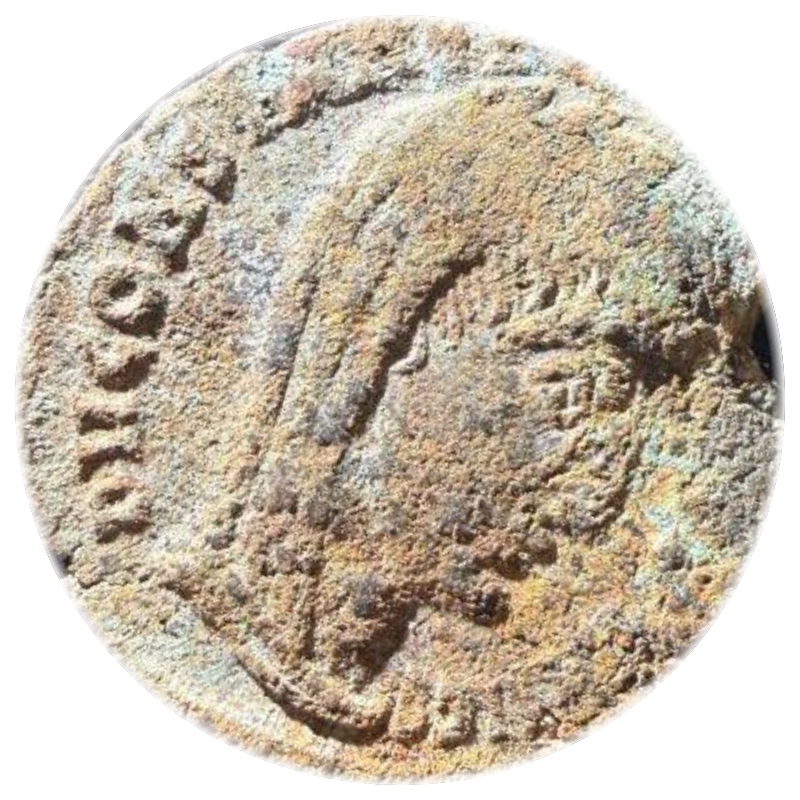
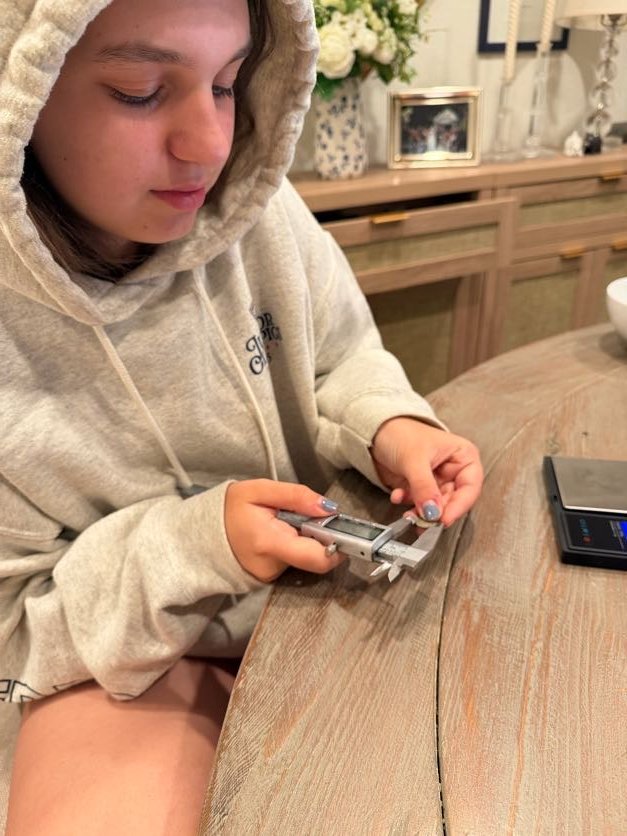
Once I could tell the coins apart, I weighed each one on a jeweler’s scale, measured it with digital calipers, and photographed the front and the back. Then I went through the photos with a handbook and tried to read what was left on each coin. Most of them are worn almost smooth. A few still have their legends, and one names Constantine by the title he was given after his death.
Even when I could not read a coin, its size and weight told me something. Late Roman bronze coins got smaller over time, so a coin that is 14 mm across and weighs about a gram and a half is probably from the end of the 4th century. I marked those coins as tentative in the catalogue. I am still adding entries, and I correct them when I learn something new.
Purpose
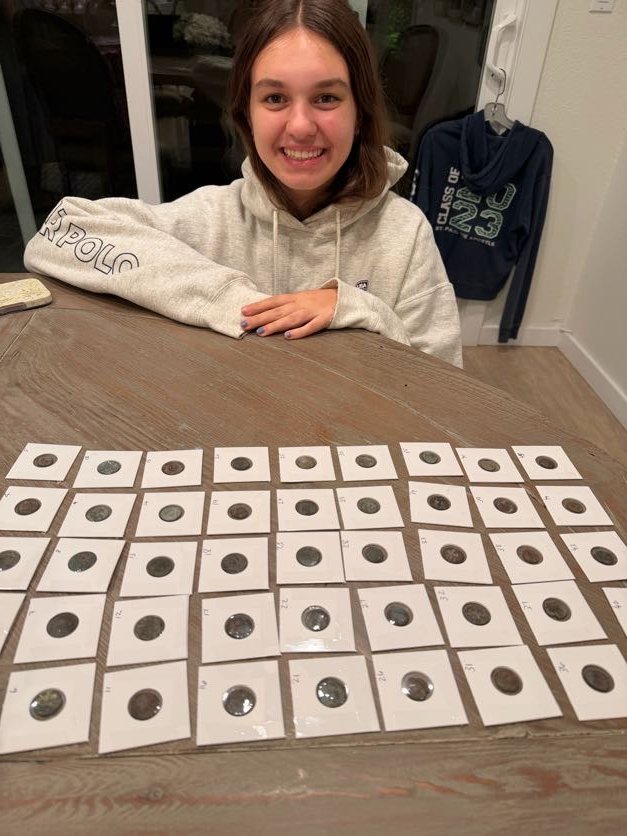
I wanted to do fieldwork this summer, but no dig would take a 16-year-old. So I made a project for myself. I wanted to find out what I could learn from handling real ancient objects: how to clean them, how to record them, and how to try to identify them.
I was a little disappointed by the condition of the coins when they arrived. Most of them are worn almost flat. But that was a lesson in itself. This is what most of the ancient world actually looks like when it comes out of the ground.
Cleaning
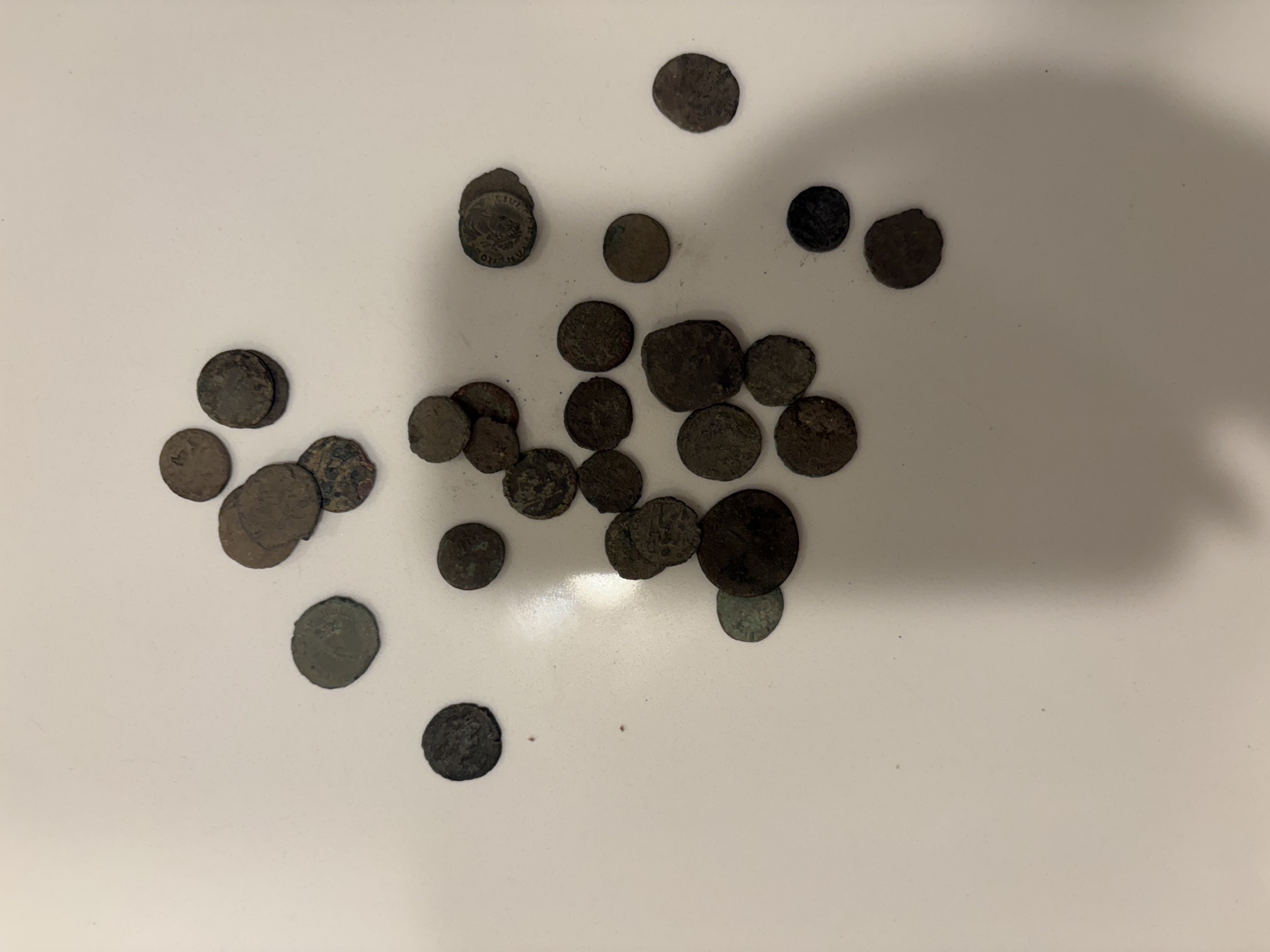
The coins arrived from eBay uncleaned. This is what they looked like out of the envelope, and then while soaking in the oil.
Measuring and cataloging
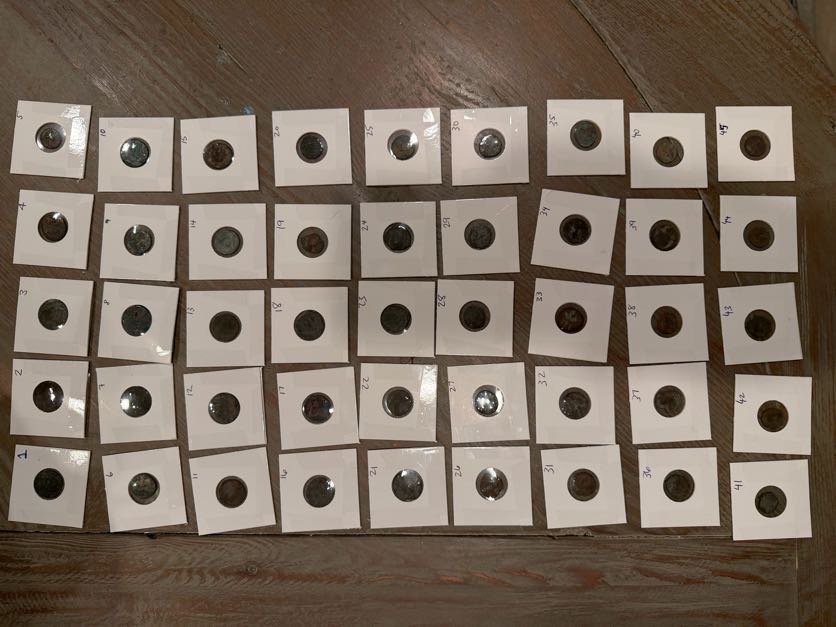
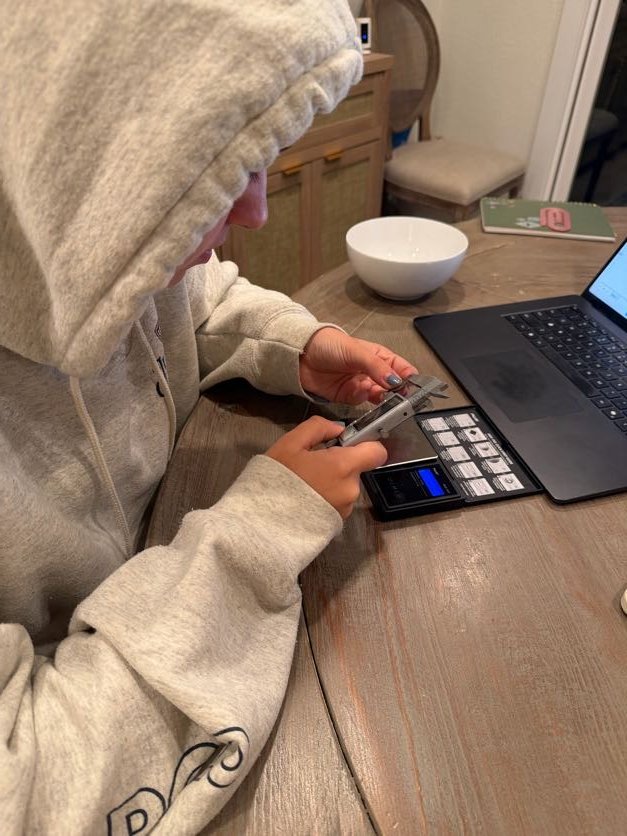
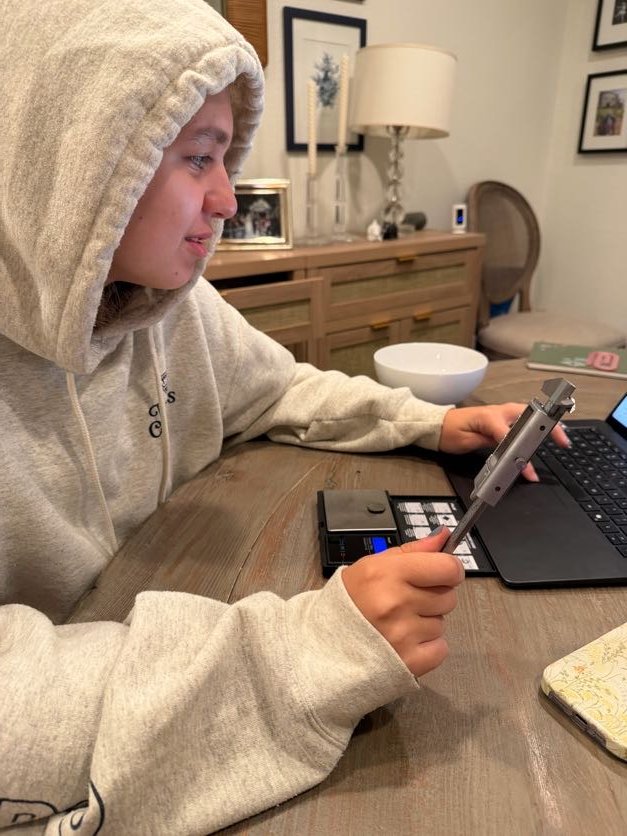
Each coin was weighed on a jeweler’s scale, measured with digital calipers, and recorded in the spreadsheet before it went back into its numbered holder.
Reference types
Late Roman bronze coins were made in huge numbers from a small set of designs, so a worn coin can usually be matched to a type even when the emperor’s name is gone. These are the nine types I found in my lot. Each one links to clean, published examples so you can compare them with mine.
I have not given exact RIC numbers. A RIC number depends on the mint mark at the bottom of the reverse, and on my coins those letters are worn off. The volume number tells you where to look.
Two soldiers face each other, each holding a spear and resting a hand on a shield. Between them stand two standards (330–335) or one standard (335–341). The mint letters sit below the ground line.
The front shows a veiled head of Constantine facing right. On the back, the emperor stands veiled, with VN on the left and MR on the right. These coins were made by his sons in the three years after he died.
The letters VOT XX appear in two lines inside a laurel wreath, with DN CONSTANTINI MAX AVG or a similar legend running around the outside.
Two Victories stand facing each other, each holding up a wreath. Sometimes there is a palm branch or a letter between them.
Four lines of letters inside a laurel wreath. The front shows the emperor wearing a plain or pearl diadem, and the legend ends with P F AVG.
A soldier on foot spears a horseman who has fallen from his horse. This is the most common late Roman bronze type. The early ones are large, but by the 350s they had shrunk to the size of a fingernail.
The reverse shows either Victory walking left with a wreath and palm, or the emperor walking right, dragging a captive by the hair and holding a standard. Both types were made together at every mint.
Victory walks left with a trophy over her shoulder, dragging a captive behind her. There is usually a Christian chi-rho sign in the left field.
Four lines of letters inside a wreath on a very small coin, usually under 14 mm. The emperors of this family used the same design for decades, which is why the name is hard to pin down.
Catalogue
There is one card per coin, in the order I numbered them. The photo circles are drawn at each coin’s real relative size. Both sides of each coin are shown, with the obverse first.
- Weight
- 2.3 g
- Diameter
- 17.72 mm
- Date
- c. AD 330–341 · AE3/AE4 nummus
Front: a bust facing right wearing a diadem. The lettering is worn off. Back: two soldiers facing each other with a standard between them. This is the GLORIA EXERCITVS type, which means “the glory of the army.”
Constantine or one of his sons. The name is not readable.
Type: GLORIA EXERCITVS · compare ↗
- Weight
- 7.6 g
- Diameter
- 24.81 mm
- Date
- 1st–3rd c. AD · tentative
Worn smooth on both sides. There is a faint raised shape on the front that might be a bust. It is thick copper with an orange patina.
Cannot be identified.
- Weight
- 3.2 g
- Diameter
- 18.83 mm
- Date
- c. AD 318–378 · AE3 · tentative
Still heavily crusted. There is probably a bust on the front, and the back might show a standing figure.
Cannot be identified.
- Weight
- 2.1 g
- Diameter
- 16.83 mm
- Date
- c. AD 364–395 · AE3 · tentative
Front: a bust facing right with traces of lettering on the left. Back: there is something under the crust, possibly a standing figure.
Cannot be identified.
- Weight
- 1.3 g
- Diameter
- 14.27 mm
- Date
- c. AD 383–395 · AE4
Front: a bust facing right with a pearl diadem. The lettering is worn. Back: VOT X MVLT XX in four lines inside a wreath, very clear. This marks the emperor’s ten-year anniversary and wishes him twenty more years.
House of Theodosius. Theodosius I, Arcadius or Honorius. The name is not readable.
Type: VOT X MVLT XX · compare ↗
- Weight
- 2.2 g
- Diameter
- 15.49 mm
- Date
- c. AD 320–324 · AE3, reduced follis
Front: a bust facing right, heavily crusted. Back: VOT XX in two lines inside a wreath, with lettering partly visible around it.
Constantine I or Licinius I. The name is not readable.
Type: VOT XX in wreath · compare ↗
- Weight
- 2.0 g
- Diameter
- 20.45 mm
- Date
- c. AD 260–318 · tentative
Front: a bust facing right with traces of lettering. I cannot tell whether the crown is made of rays or laurel. Back: a standing god or goddess holding a staff, with lettering around the edge. It is a large, thin coin.
Cannot be identified. Probably late 3rd century.
- Weight
- 9.7 g
- Diameter
- 22.94 mm
- Date
- 1st–3rd c. AD · tentative
Thick and irregular, with red cuprite. Back: a standing figure facing left, holding a dish and a staff. There may be a letter in the right field.
This one cannot be identified. It is probably earlier than the rest, maybe from the 1st to 3rd century.
- Weight
- 1.9 g
- Diameter
- 16.10 mm
- Date
- c. AD 330–400 · AE3/AE4 · tentative
Crusted on both sides. A faint figure on the back.
Cannot be identified.
- Weight
- 2.2 g
- Diameter
- 18.95 mm
- Date
- c. AD 351–361 · AE3
Front: a bust facing right with a pearl diadem, wearing armor and drapery. Some lettering is visible. Back: a soldier spearing a fallen horseman. This is the FEL TEMP REPARATIO type, which means “happy days are back.” The letters at the bottom are there, but I cannot read them.
Most likely Constantius II, but it could be Constantius Gallus or Julian.
Type: FEL TEMP REPARATIO · compare ↗
- Weight
- 2.1 g
- Diameter
- 17.03 mm
- Date
- c. AD 330–395 · AE3 · tentative
Crusted. There is possibly a bust on the front. The back is unclear.
Cannot be identified.
- Weight
- 2.3 g
- Diameter
- 18.27 mm
- Date
- c. AD 330–395 · AE3 · tentative
Worn. There is possibly a bust on the front and a standing figure on the back.
Cannot be identified.
- Weight
- 1.4 g
- Diameter
- 16.99 mm
- Date
- c. AD 341–348 · AE4
Front: a worn bust. Back: two figures facing each other, probably two Victories holding wreaths, with “AVGG” visible in the lettering at the top.
Probably Constans or Constantius II.
Type: VICTORIAE DD AVGG Q NN · compare ↗
- Weight
- 1.5 g
- Diameter
- 16.86 mm
- Date
- c. AD 383–408 · AE4 · tentative
The two photos seem to be swapped. One side shows a figure, probably Victory or the emperor with a captive, with some letters at the bottom. The other side is a worn bust.
Probably from the House of Theodosius. The name is not readable.
Type: SALVS REIPVBLICAE · compare ↗
- Weight
- 2.2 g
- Diameter
- 18.06 mm
- Date
- c. AD 330–395 · AE3 · tentative
Heavily corroded on both sides. The back may show one or two standing figures.
Cannot be identified.
- Weight
- 2.7 g
- Diameter
- 17.46 mm
- Date
- c. AD 318–378 · AE3 · tentative
Worn. The back might show a standing figure or a camp gate.
Cannot be identified.
- Weight
- 1.8 g
- Diameter
- 16.81 mm
- Date
- c. AD 364–408 · AE3/AE4 · tentative
One side shows a figure walking or standing, with letters below. The other side is unclear, but it may be a bust.
Cannot be identified.
- Weight
- 2.0 g
- Diameter
- 18.60 mm
- Date
- c. AD 330–395 · AE3 · tentative
Corroded. The back may show two figures or two standards.
Cannot be identified.
- Weight
- 1.0 g
- Diameter
- 15.20 mm
- Date
- c. AD 379–395 · AE4
Front: a bust facing right with a pearl diadem. Back: VOT MVLT lettering inside a wreath. The numbers are unclear, and the coin is ragged and uneven.
House of Theodosius, so either Theodosius I, Arcadius, or Honorius. The name is not readable.
Type: VOT X MVLT XX · compare ↗
- Weight
- 2.0 g
- Diameter
- 15.17 mm
- Date
- c. AD 330–335 · AE3/AE4
Front: worn blank. Back: two soldiers facing each other with two standards between them. This is the GLORIA EXERCITVS type.
Constantine or one of his sons. The name is not readable.
Type: GLORIA EXERCITVS · compare ↗
- Weight
- 2.3 g
- Diameter
- 19.47 mm
- Date
- c. AD 260–395 · tentative
Worn smooth and cracked. There are faint traces of lettering on the back.
Cannot be identified.
- Weight
- 2.0 g
- Diameter
- 16.90 mm
- Date
- c. AD 351–361 · AE3
Front: a bust facing right with a diadem. “AVG” is visible in the lettering. Back: a soldier spearing a fallen horseman. This is the FEL TEMP REPARATIO type, with part of the lettering visible on the right.
Most likely Constantius II, but it could be Constantius Gallus or Julian.
Type: FEL TEMP REPARATIO · compare ↗
- Weight
- 2.8 g
- Diameter
- 17.43 mm
- Date
- c. AD 364–378 · AE3 · tentative
Front: a bust facing right with lettering around it. Back: a figure standing or walking, with lettering around the edge. It is probably Victory or the emperor holding a captive.
Probably Valentinian I, Valens or Gratian.
- Weight
- 2.6 g
- Diameter
- 16.84 mm
- Date
- c. AD 330–395 · AE3 · tentative
Front: a clear bust facing right. Back: worn, with a faint standing figure.
Cannot be identified.
- Weight
- 1.3 g
- Diameter
- 15.25 mm
- Date
- c. AD 340–410 · AE4 · tentative
Worn smooth on both sides.
Cannot be identified.
- Weight
- 1.6 g
- Diameter
- 14.57 mm
- Date
- c. AD 347–348 · AE4
Front: a bust facing right with a pearl diadem, wearing armor and drapery. “NS P F AVG” is readable on the right. Back: probably VOT XX MVLT XXX inside a wreath, with letters at the bottom.
Constans. The lettering fits CONSTANS PF AVG, though Constantius II is also possible.
Type: VOT XX MVLT XXX · compare ↗
- Weight
- 1.7 g
- Diameter
- 15.29 mm
- Date
- c. AD 340–410 · AE4 · tentative
Worn smooth on both sides.
Cannot be identified.
- Weight
- 1.9 g
- Diameter
- 14.67 mm
- Date
- c. AD 335–341 · AE4
Front: a bust facing right with a diadem. “DN” is visible on the left. Back: two soldiers on either side of a single standard. This is the GLORIA EXERCITVS type.
Constantine or one of his sons. The name is not readable.
Type: GLORIA EXERCITVS · compare ↗
- Weight
- 1.3 g
- Diameter
- 14.63 mm
- Date
- c. AD 337–340 · AE4
Front: a veiled head facing right wearing a laurel wreath. “DV CONS” is readable on the left, which is the start of DIVUS CONSTANTINUS. Back: the emperor standing, veiled, with the letters VN MR on either side, short for “venerable memory.”
Constantine I, struck after his death by his sons. This is the best coin in the collection.
Type: DV CONSTANTINVS · VN MR · compare ↗
- Weight
- 2.1 g
- Diameter
- 14.79 mm
- Date
- c. AD 330–400 · AE3/AE4 · tentative
Corroded on both sides. Nothing readable.
Cannot be identified.
- Weight
- 2.3 g
- Diameter
- 14.80 mm
- Date
- c. AD 330–400 · AE3/AE4 · tentative
Front: a large head facing right. Back: unclear, with a T-shaped mark and possibly a standing figure.
Cannot be identified.
- Weight
- 1.5 g
- Diameter
- 17.15 mm
- Date
- c. AD 330–400 · AE3 · tentative
Worn on both sides. Nothing readable.
Cannot be identified.
- Weight
- 1.3 g
- Diameter
- 16.46 mm
- Date
- c. AD 340–410 · AE3/AE4 · tentative
Worn smooth, with corrosion. There is a faint design on the back.
Cannot be identified.
- Weight
- 1.7 g
- Diameter
- 16.36 mm
- Date
- c. AD 364–408 · AE3/AE4 · tentative
Front: worn blank. Back: a figure holding a long spear or staff, either the emperor or Victory.
Cannot be identified.
- Weight
- 1.6 g
- Diameter
- 16.41 mm
- Date
- c. AD 347–348 · AE4
Front: a head facing right with traces of lettering. Back: probably VOT XX MVLT XXX inside a wreath.
Probably Constans or Constantius II.
Type: VOT XX MVLT XXX · compare ↗
- Weight
- 1.3 g
- Diameter
- 14.22 mm
- Date
- c. AD 383–403 · AE4
Front: a bust facing right with a pearl diadem and lettering on the right. Back: Victory walking left with a trophy over her shoulder, dragging a captive. This is the SALVS REIPVBLICAE type, which means “the safety of the state.”
House of Theodosius, so either Theodosius I, Arcadius, or Honorius. The name is not readable.
Type: SALVS REIPVBLICAE · compare ↗
- Weight
- 1.6 g
- Diameter
- 16.16 mm
- Date
- c. AD 337–340 · AE4 · tentative
Front: a veiled head facing right. It looks like the Constantine portrait on coin 29. Back: unclear.
Possibly Constantine I, struck after his death, but this is not certain.
Type: DV CONSTANTINVS · VN MR · compare ↗
- Weight
- 1.2 g
- Diameter
- 12.29 mm
- Date
- c. AD 383–395 · AE4
Front: a small bust facing right with a pearl diadem. Back: VOT X MVLT XX inside a wreath, very clear.
House of Theodosius, so either Theodosius I, Arcadius, or Honorius. The name is not readable.
Type: VOT X MVLT XX · compare ↗
- Weight
- 2.1 g
- Diameter
- 16.37 mm
- Date
- c. AD 364–408 · AE3 · tentative
Front: worn, with a faint bust. Back: a figure standing or walking with lettering above. It is either Victory with a captive or the emperor with a standard.
Cannot be identified. Late 4th century.
- Weight
- 1.1 g
- Diameter
- 13.41 mm
- Date
- c. AD 383–395 · AE4
Front: worn. Back: VOT X MVLT XX inside a wreath with a jewel at the top, very clear.
House of Theodosius, so either Theodosius I, Arcadius, or Honorius. The name is not readable.
Type: VOT X MVLT XX · compare ↗
- Weight
- 0.8 g
- Diameter
- 12.85 mm
- Date
- c. AD 383–450 · AE4 · tentative
Worn, and very small.
Cannot be identified.
- Weight
- 1.2 g
- Diameter
- 14.95 mm
- Date
- c. AD 347–348 or 383–395 · AE4
Front: a bust facing right with a diadem. Back: four lines of VOT lettering inside a wreath. The last line is unclear, so I cannot tell which anniversary it marks.
Constans or Constantius II, or possibly the House of Theodosius, depending on what the numbers say.
Type: VOT XX MVLT XXX · compare ↗
- Weight
- 1.5 g
- Diameter
- 13.62 mm
- Date
- c. AD 347–348 · AE4
Front: a bust facing right with a diadem. “CONS” is readable on the left. Back: VOT XX MVLT XXX inside a wreath.
Constans or Constantius II. The lettering starts with CONS.
Type: VOT XX MVLT XXX · compare ↗
- Weight
- 0.7 g
- Diameter
- 13.56 mm
- Date
- c. AD 383–450 · AE4 · tentative
Worn. A faint bust outline on the front.
Cannot be identified.
- Weight
- 1.4 g
- Diameter
- 14.02 mm
- Date
- c. AD 355–361 · AE4
Front: a bust facing right with a pearl diadem and traces of lettering. Back: a soldier spearing a fallen horseman. This is the FEL TEMP REPARATIO type on a very small coin.
Constantius II or Julian. The small size means it is either a late official issue or an ancient copy.
Type: FEL TEMP REPARATIO · compare ↗
Chronology
Each bar represents one coin and the range of years in which it could have been struck. Coins that can only be dated by their size and weight get a wider, lighter bar. Two thick early coins run off the left edge of the chart. They are probably first- to third-century and are shown fading in.
Weight against diameter
Every coin is plotted by size and weight, with each dot drawn at the coin’s true relative diameter. The solid lines mark the averages. The two big coins at the top right are the early bronzes. Everything else sits in a cluster between 12 and 20 mm, which is exactly what a bag of fourth-century small change should look like.
The identifications were made from photographs and are provisional. Obv means obverse (the head side) and Rev means reverse. AE3 and AE4 are modern size classes for late Roman bronze coins, roughly 17–21 mm and under 17 mm.