Sanisera
digging at a Roman port
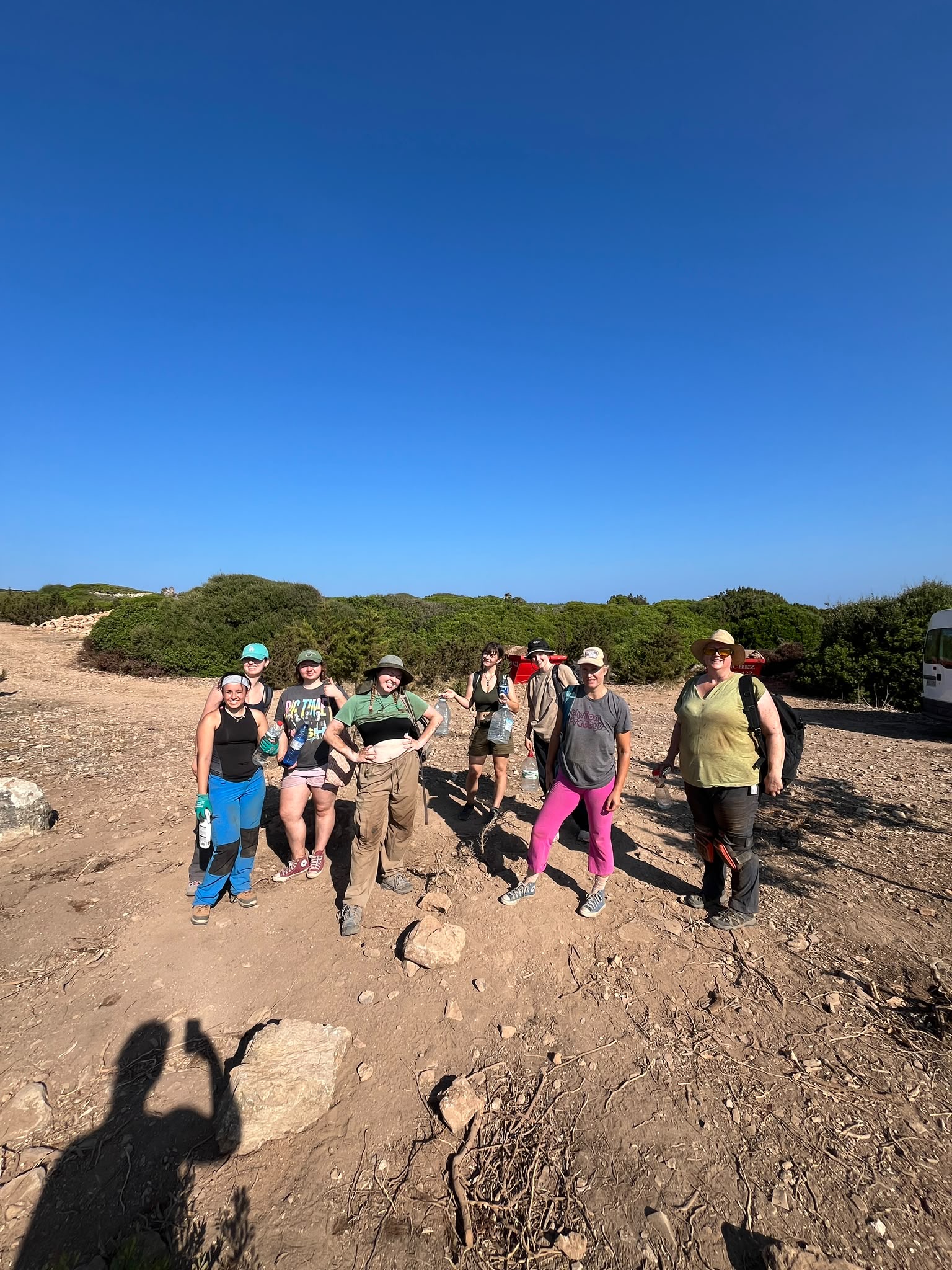
Our group at the end of a morning shift. I am the one in the turquoise Dodgers hat.
Each day we worked from 6 am to 11 am. I woke up at 5 am and took a 45-minute bus ride to the dig site. The site was an early Christian basilica with a large number of child graves. We worked to uncover a collapse that happened between the 4th and 6th centuries CE, so we could find the overall layout of the basilica and see where the central part of the collapse happened.
Each day we took a photo at the beginning and the end of our shift to show our progress. Anything we found went into our “find” bucket, which usually held pottery pieces from Africa and Greece as well as small pieces of metal and glass. We learned how to dig the correct way and how to log our information and deposit levels. It was a very formative experience, and it shaped how I see the ancient world.
Nine days in the basilica
Site STE26, Area 02 (Necrópolis 03, the Basilica), Lateral West sector, Stratigraphic Unit 5034.
My trench was on the west side of the basilica in the port of Sanitja. I worked in one stratigraphic unit, which turned out to be the top layer sitting on the collapse. Here is what happened each day, taken from the excavation forms I filled out every afternoon.
The routine was the same every day. We started with a control photo with the scale bars in the frame. Then we used a small pickaxe to break up the soil, a big trowel to loosen it, and a dustpan to move it into buckets, and we brushed the stones clean. Every full bucket went over the metal detector before we dumped it on the spoil heap. We took another photo at the end of the shift. After nine days of this, we had uncovered a wall.
The soil was dry and light brown, with stones underneath in no clear pattern. We only dug for about an hour, but that was enough to see a clear border on one side of us. We were inside it. Everything else was small, jumbled rock. On my form I guessed that we were sitting on a collapse, and the rest of the week proved me right.
We cleared stone all morning. I found a small piece of iron and a lot of terracotta. Peyton, in the next section over, pulled out a cow tooth and a bone, both of which turned out to be modern. By the end of the day we were sure we were digging a collapse.
This was mostly a brushing day. We dusted soil off the stones we had already exposed so the collapse would show up clearly in photos. The metal detector was broken, so the buckets went straight to the spoil heap. The only finds were terracotta. This was also the day I filled out the formal recording sheet for our unit: about 70% sand, 10% clay, 10% stone, and 10% root, with mostly pottery and roof tile mixed in, some shell, and one bronze nail. We called it a superficial layer. The modern iron wire in it means the top of the layer is recent, so we wrote “not certain” for the date. The building underneath is much older. Those are two different things, and that is normal.
This was a better day. The metal detector was working again. There was still terracotta everywhere, but I also found a Roman bronze nail, the first object from my section that belongs to the building instead of the last hundred years. A lot more of the border came up too. After four days I could tell the difference: the border is the only place where the stones form a line, and it is built from the biggest ones. Everything else is scattered.
No digging. Days off.
Back in the trench. We found terracotta, tile, and a modern bullet casing. There is a lot of modern material sitting on top of this ancient church. We also found more border stones, and the shape of the building is getting clearer.
A quiet day. We found a modern iron stake and more border stones. On days like this, the drawings and photos matter more than what ends up in the bucket.
The soil changed. After six days of dry, light brown dirt, my section turned moist and dark brown. You write that down carefully even if you do not know what it means yet, because a change in the soil is often the first sign that you are getting close to a new layer. We found more of the border too.
The soil was still moist and dark. We found a lot more pottery than before, along with more border stones. You can clearly see the collapse and the wall line in the photos now.
This was our last day of digging, and the best one. Along with more pottery and more of the border, we uncovered a second wall and what looks like the entrance to the basilica. After nine days of clearing loose stone, the building suddenly had a doorway. It was a great way to end.
Most of what I found was recent: tile, terracotta, a bullet casing, an iron stake, a cow tooth. The bronze nail is the exception. It is Roman, it is very old, and it is the one object from my section that belongs to the building. But the point of our unit was never the objects. It was figuring out where the walls are, learning to tell built stone from fallen stone, and recording the layer well enough that whoever digs under it next season knows exactly what we took out. The wall and the doorway on the last day made all of that work worth it.
The nail
My first find. A Roman nail about as long as my finger, from the rubble layer in my square. It is not an impressive object, but someone hammered it into something almost two thousand years ago, and I was the one who found it.
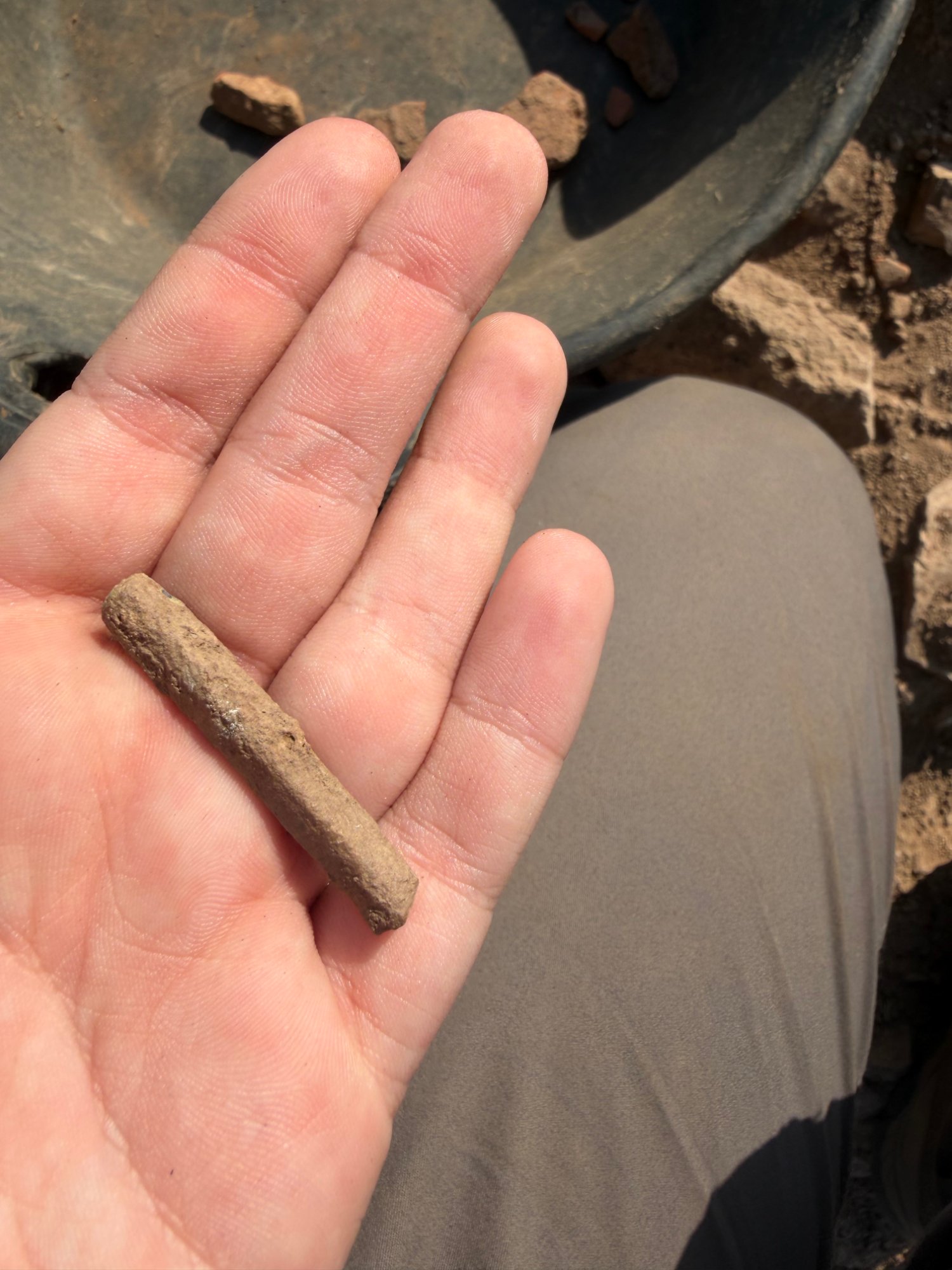
Straight out of the dirt, before we cleaned it.
The trench
Our area is at the top of the hill, above the harbor. Stone walls run in every direction. Most of them are Roman and some are later, and figuring out which is which is a big part of the job. The red and white sticks are half a meter long and are there for scale in the photos.
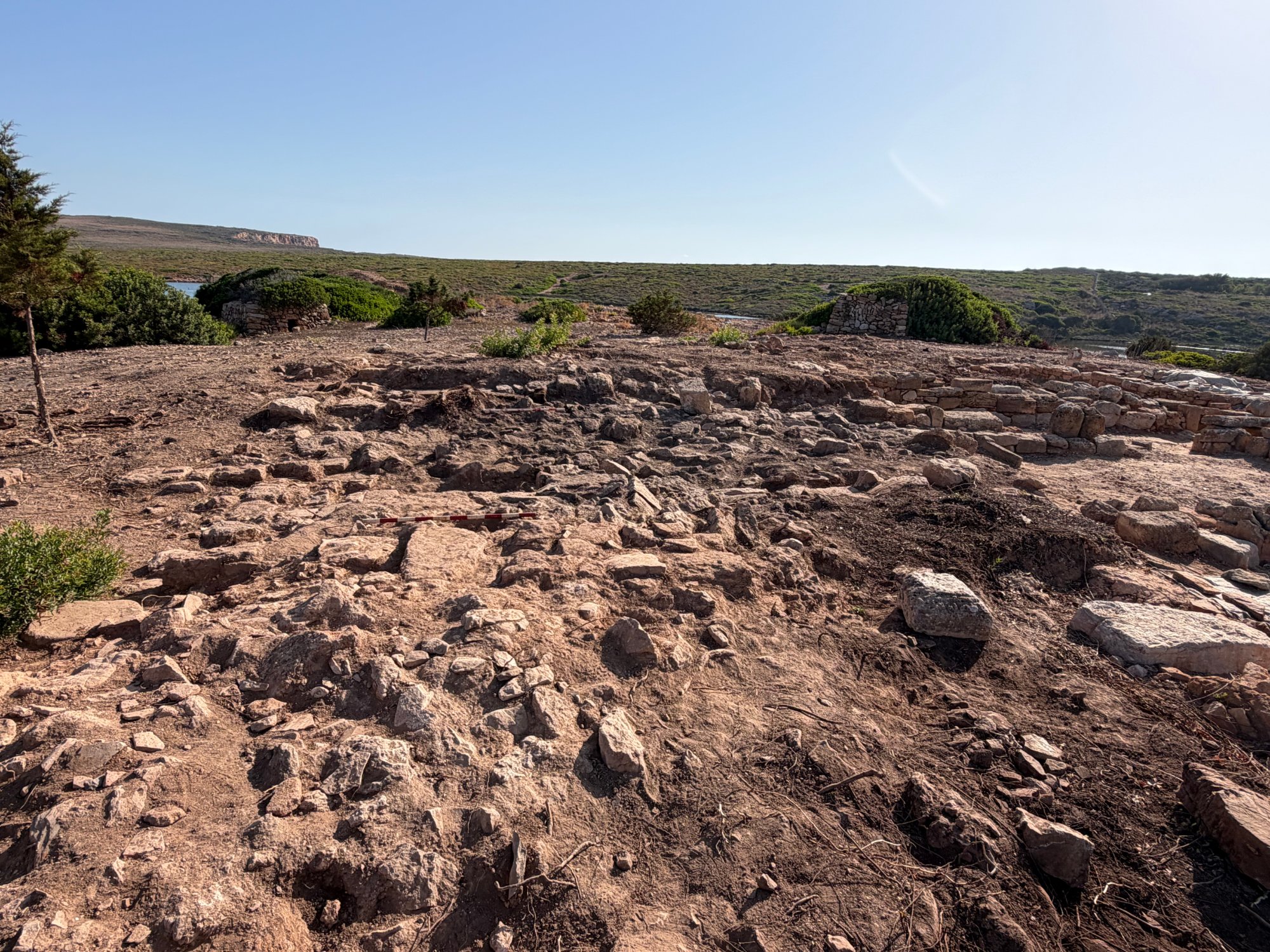
The whole area from the top. The little stone huts in the distance are modern. The walls in front of them are not.
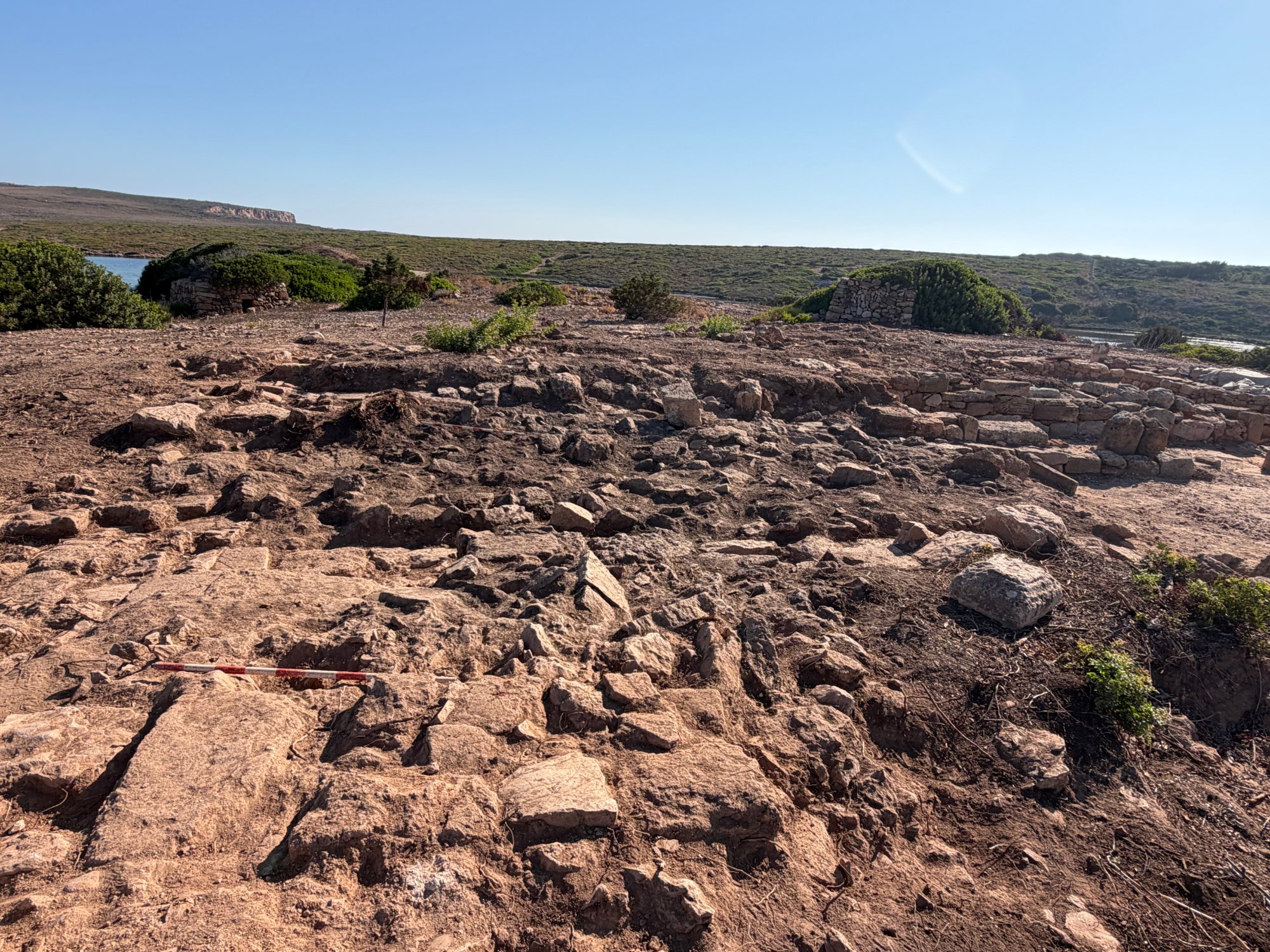
Morning, before it got hot.
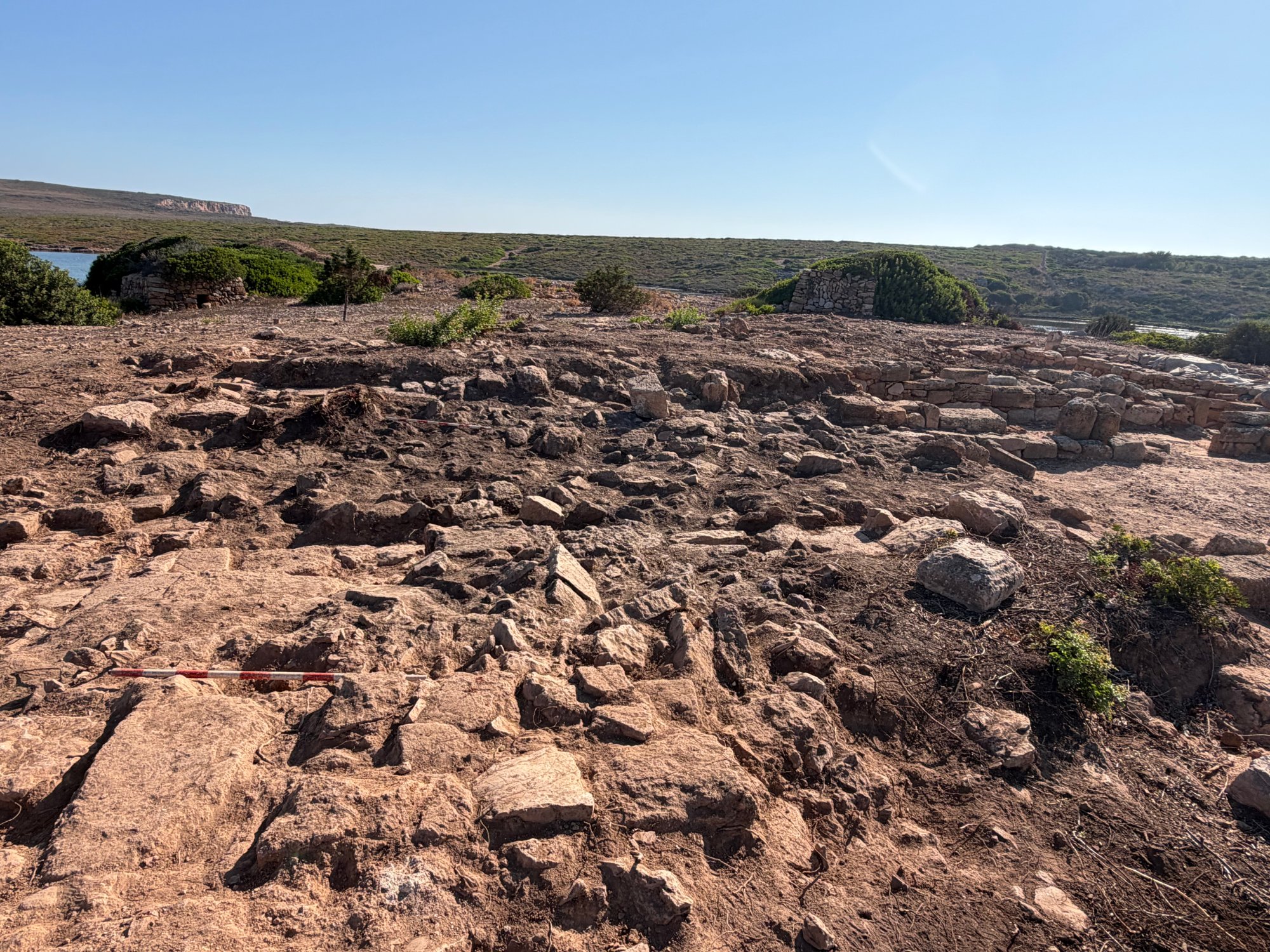
A column base, sitting where it fell.
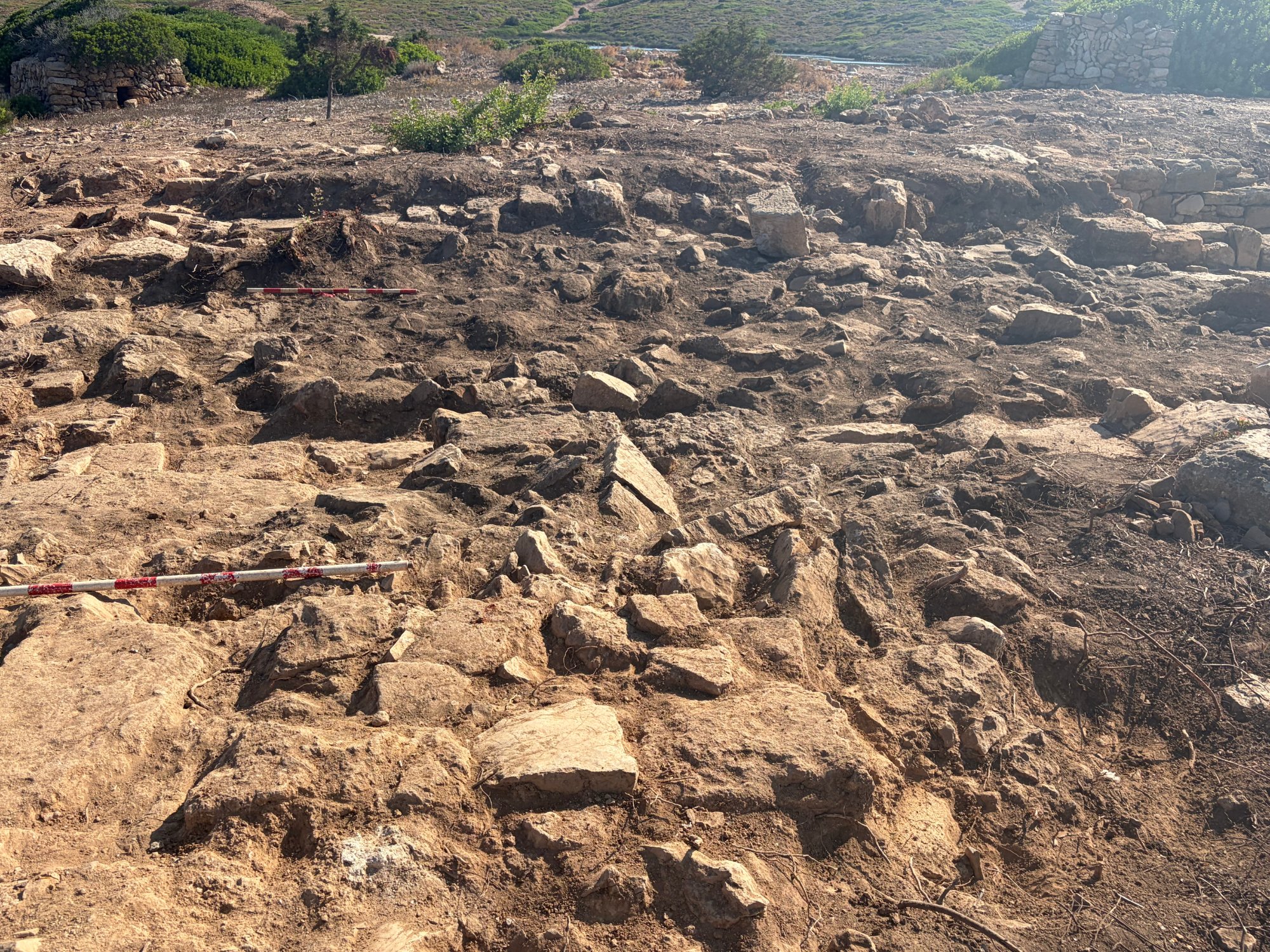
Two scale bars, two walls, and one very confusing corner.
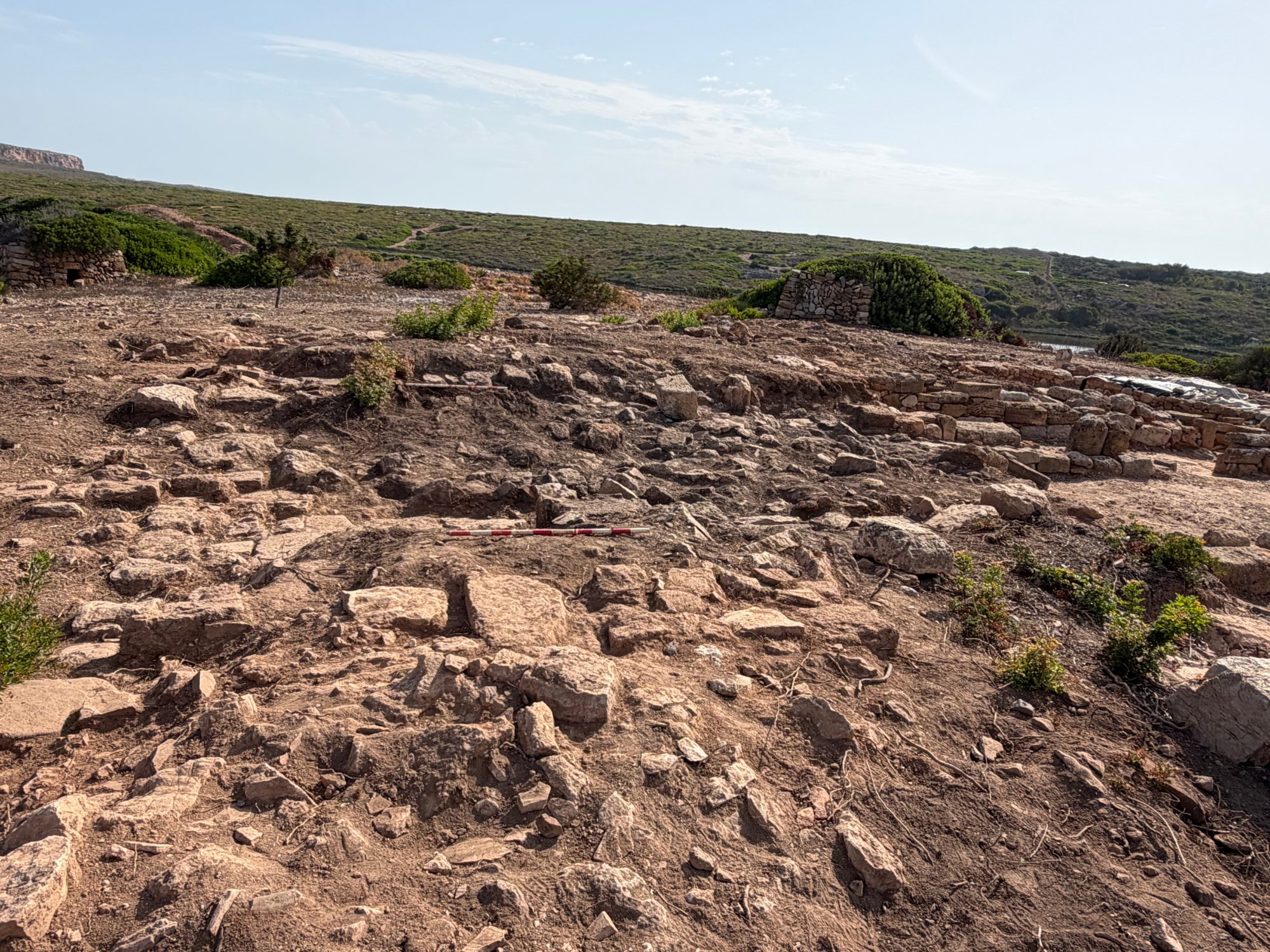
The square block is a threshold. There used to be a door here.
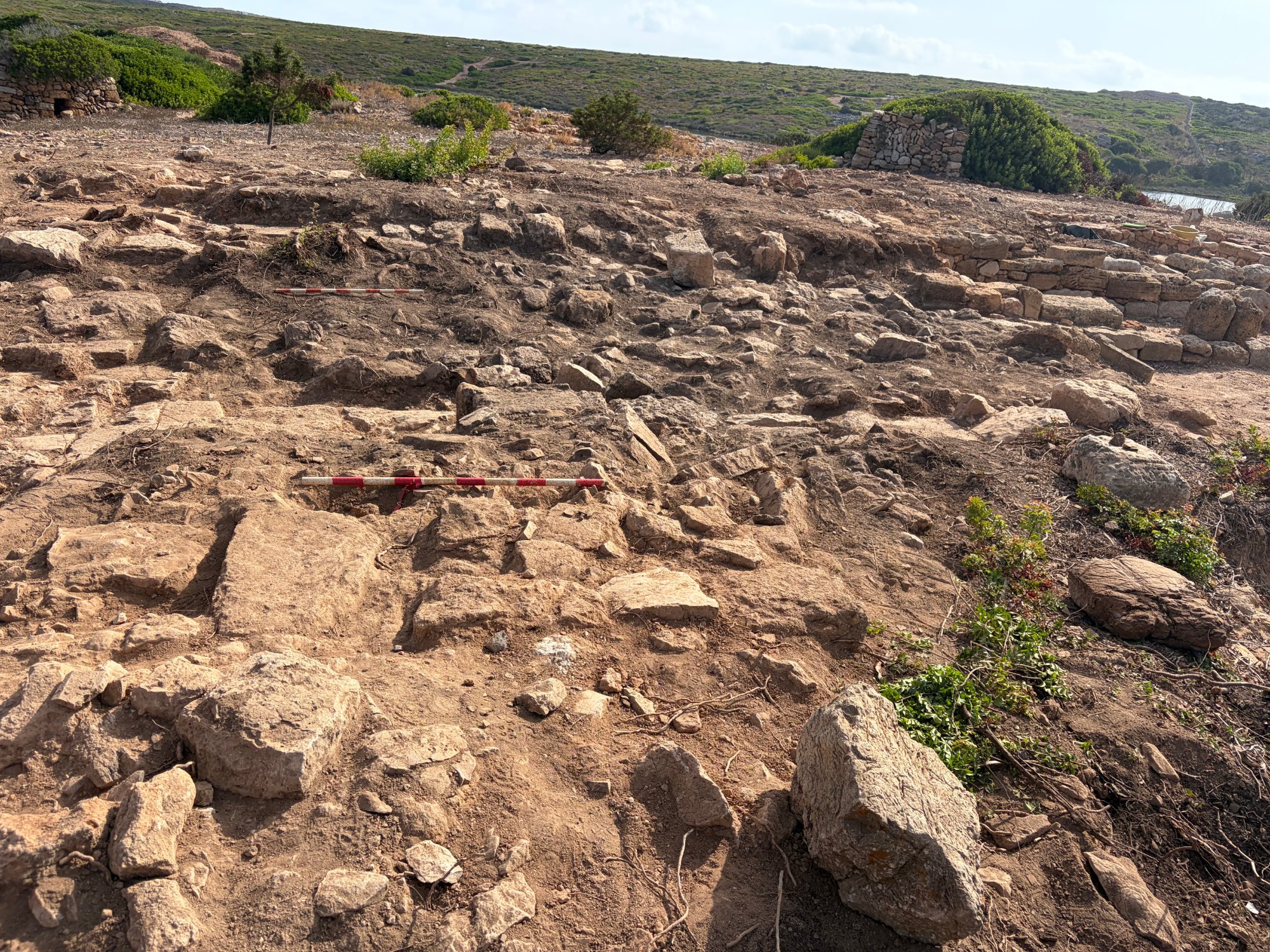
The same corner a week later, about ten centimeters lower.
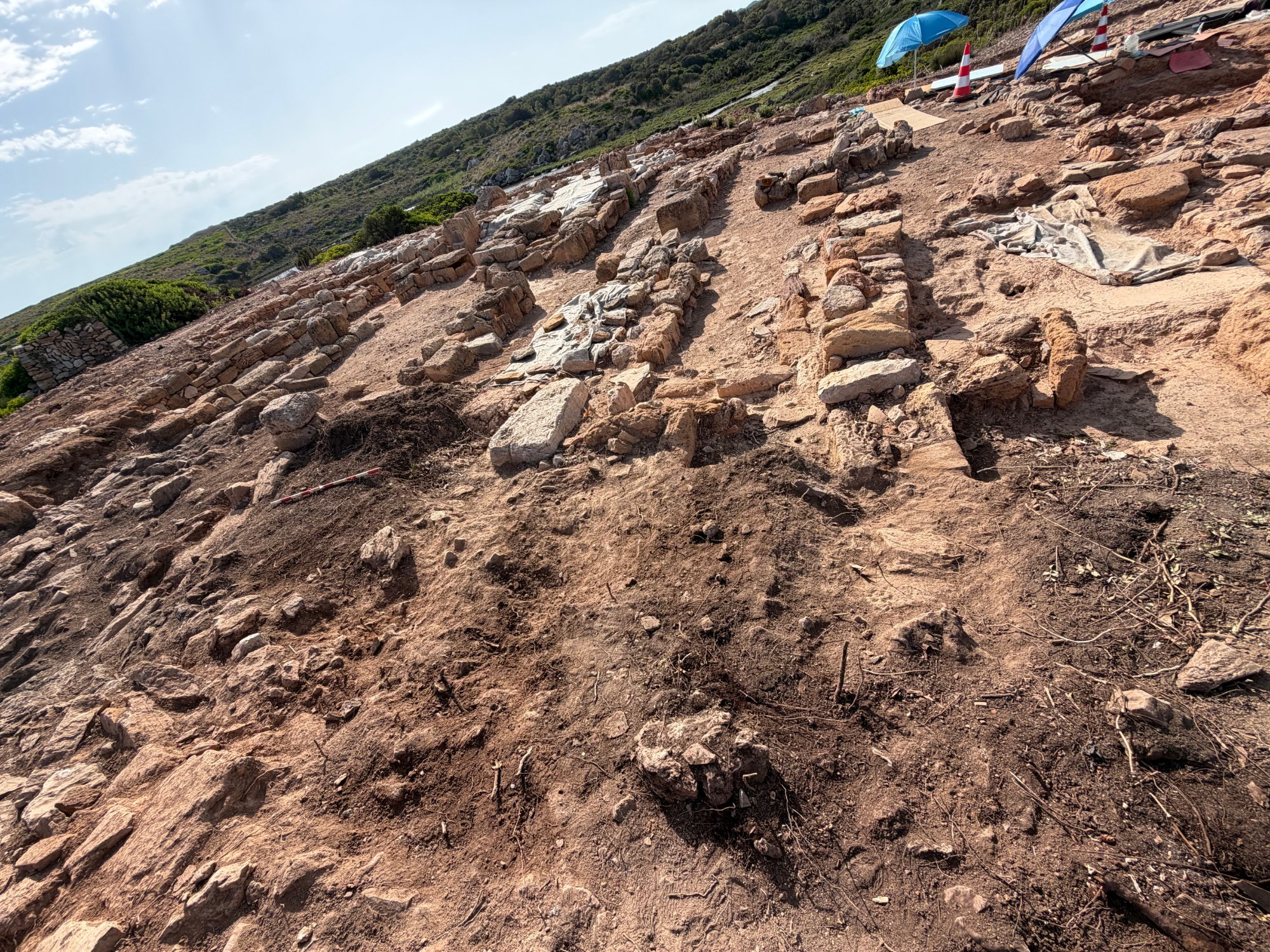
The umbrellas are for shade. It was 35°C most days.
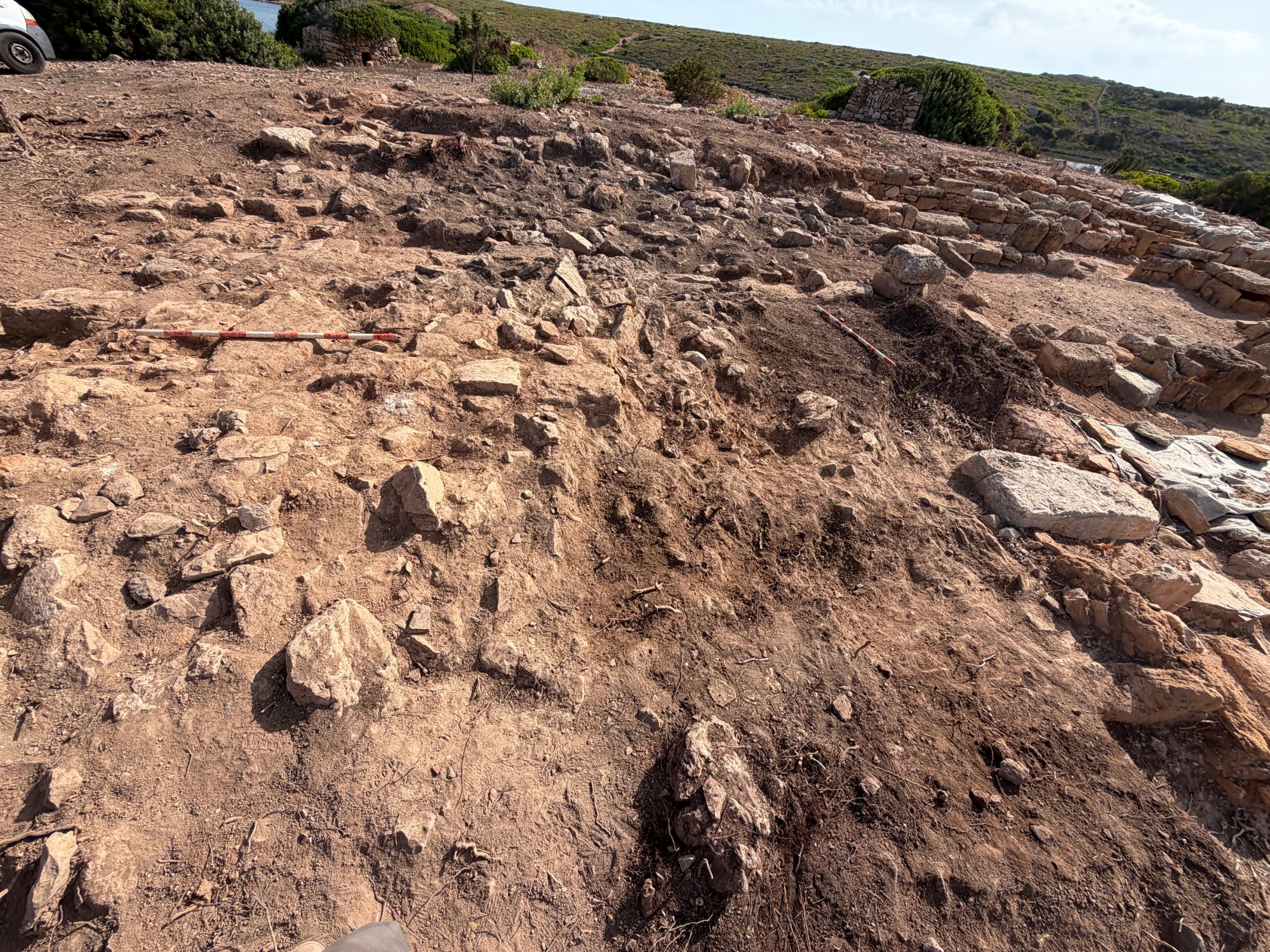
Our van, our trench, and the wall we spent a week on.
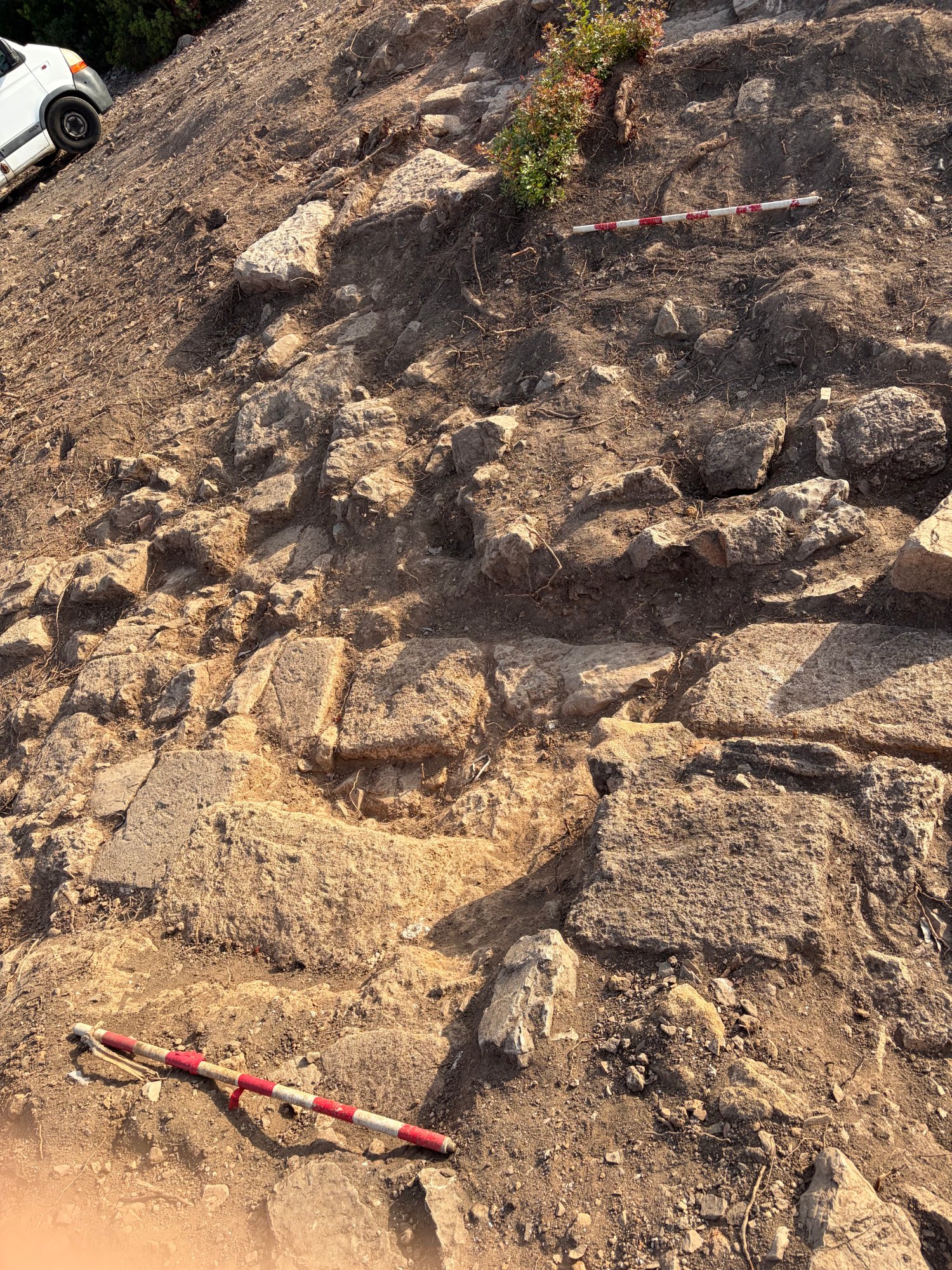
The late afternoon light makes the stone look better than it does at noon.
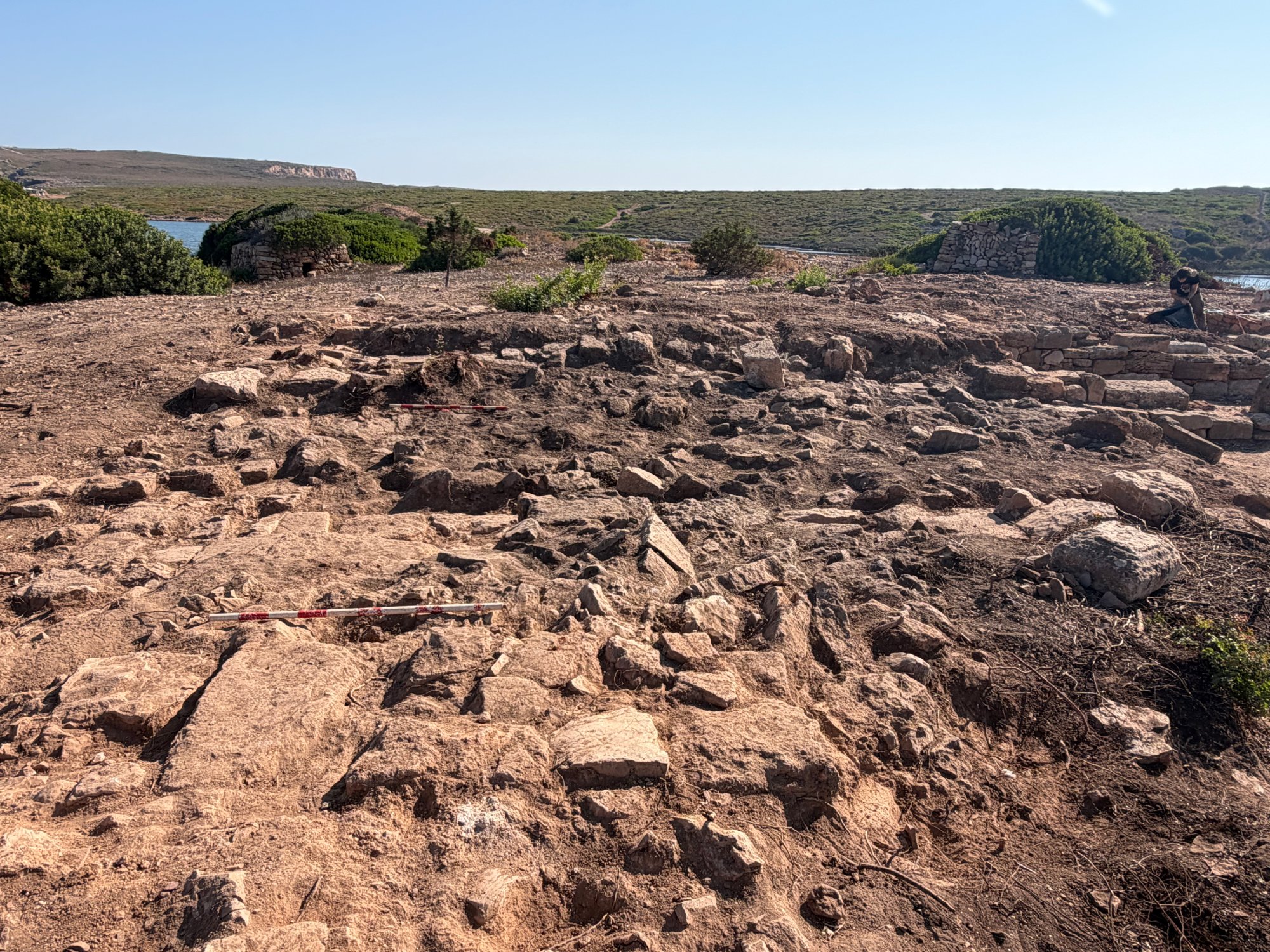
Still digging in the far corner at the end of the day.
First light
We started before the sun came up to beat the heat. That meant seeing the site at sunrise every morning, and I never got tired of it.
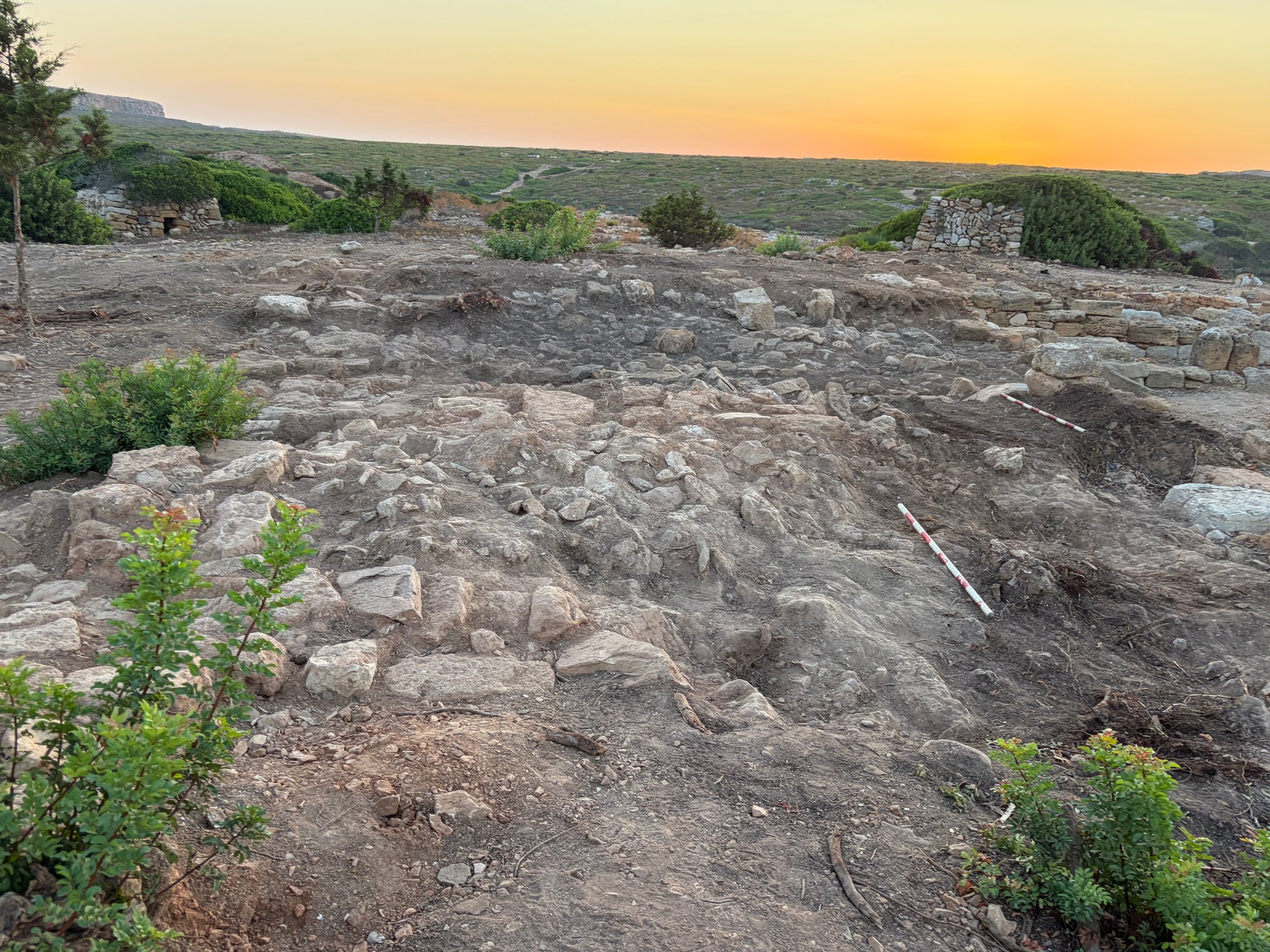
The area at sunrise, with the plants we were not allowed to pull up.
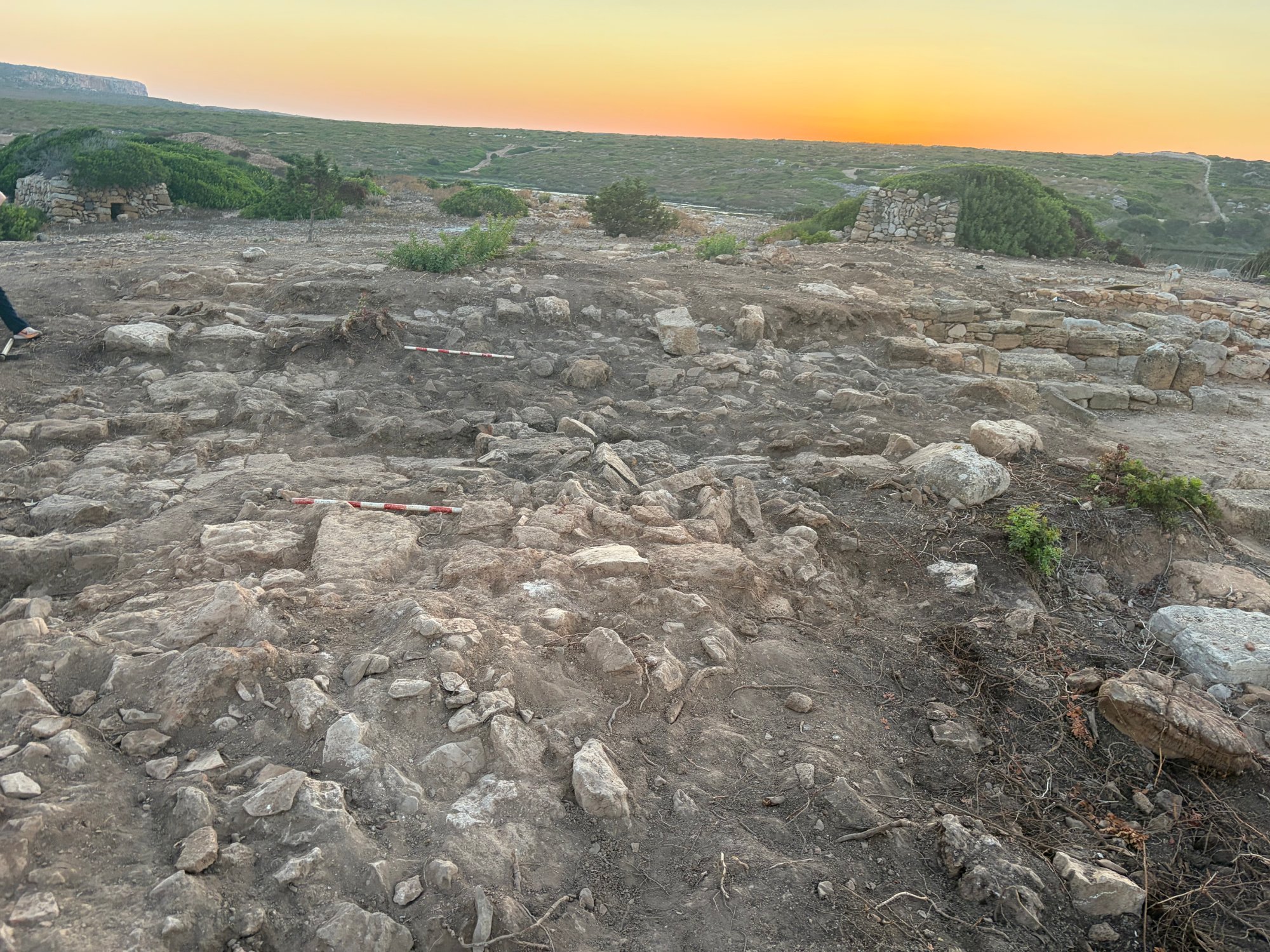
First photo of the day, every day.
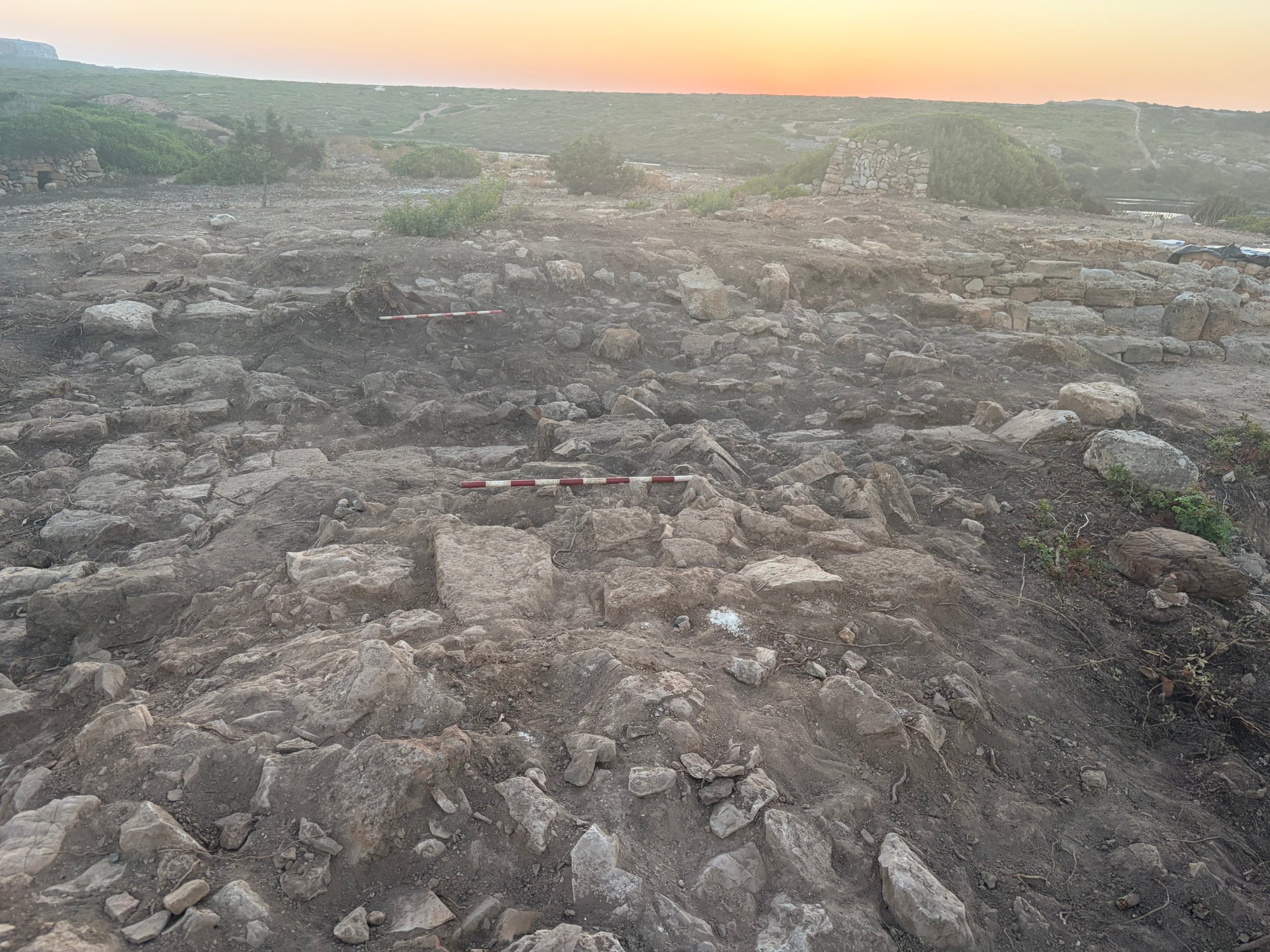
Same view, different morning.
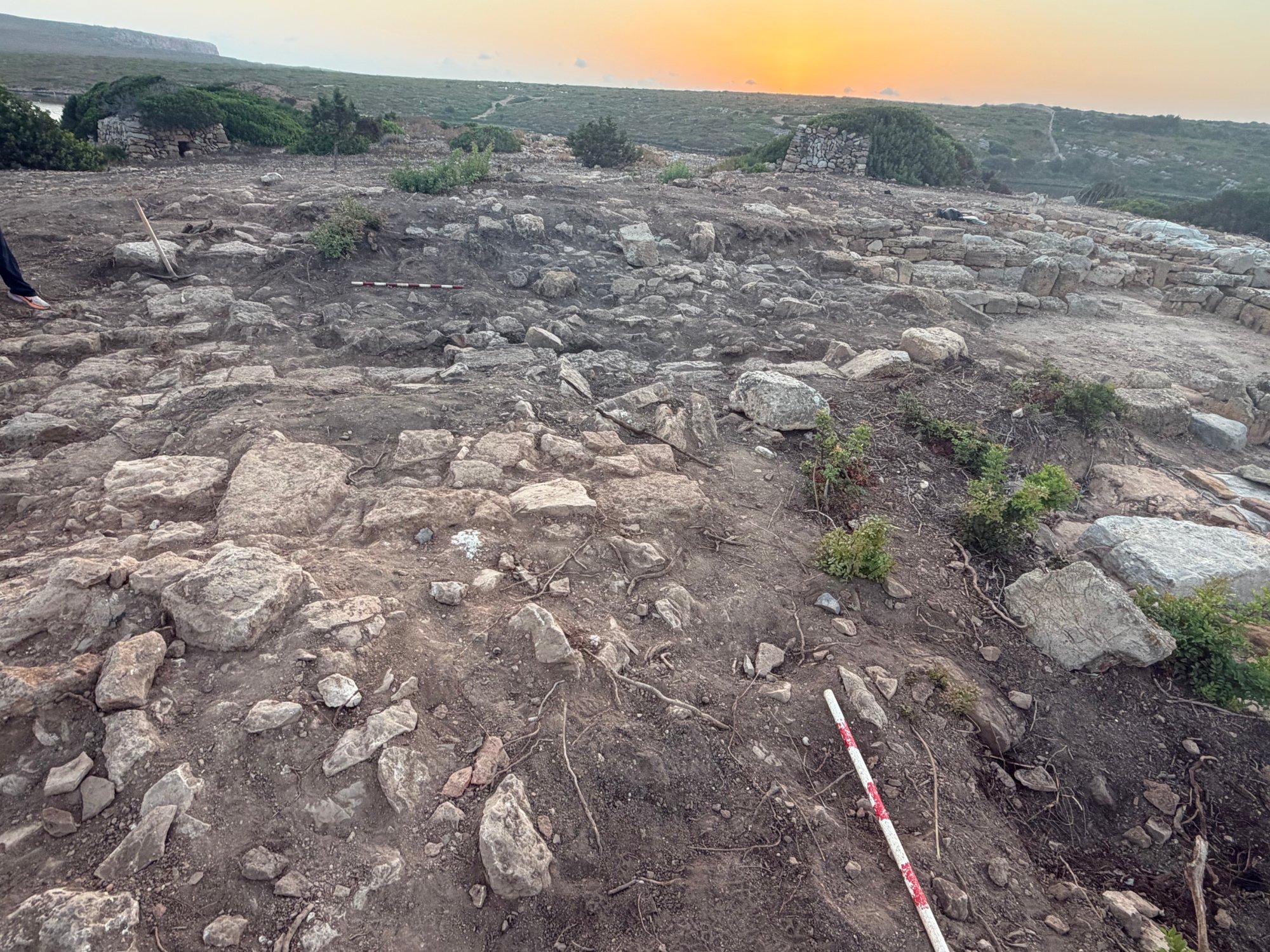
The rubble in the middle is what I dug through to find the nail.
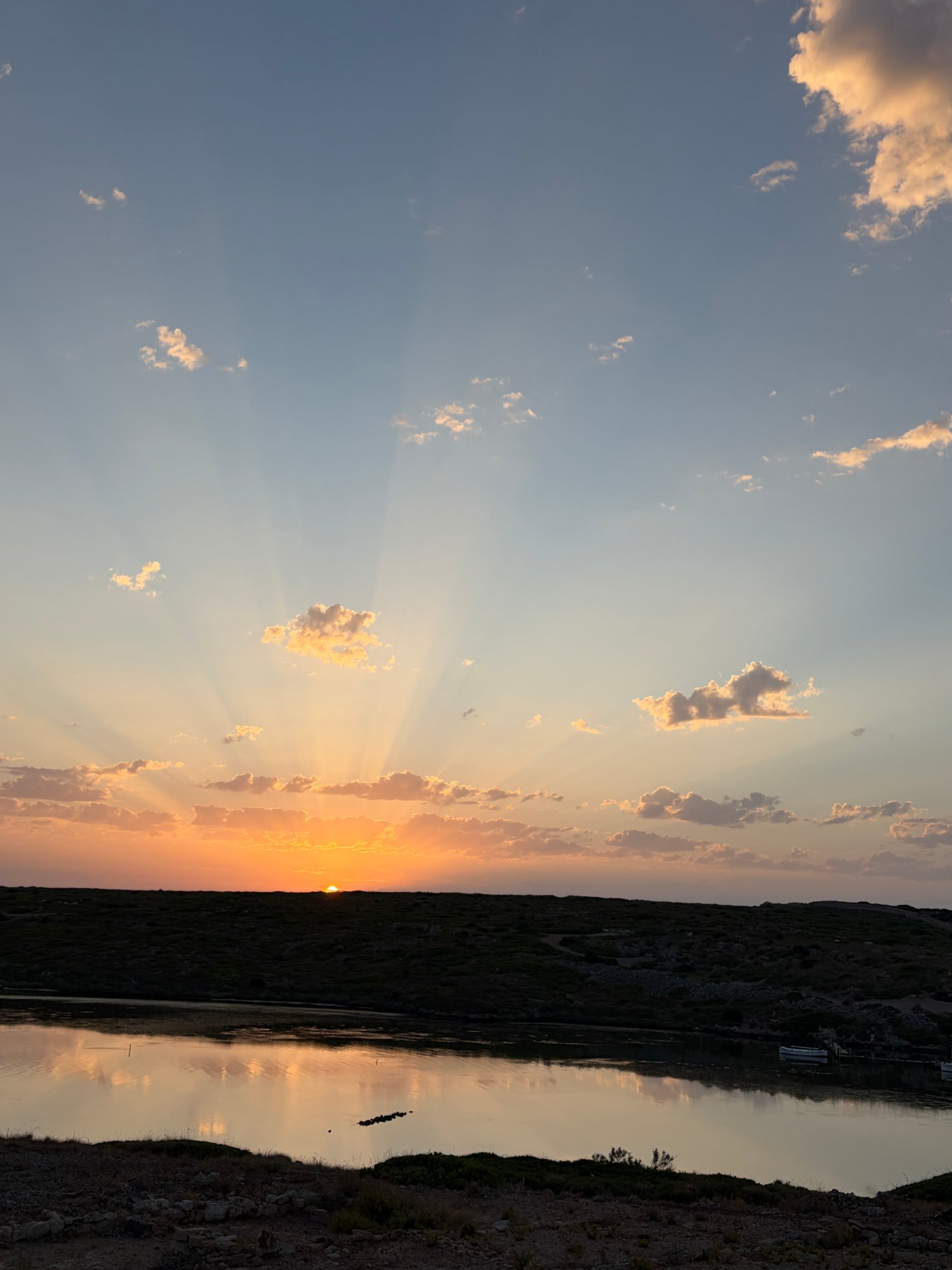
Port de Sanitja, just before we started work.
Day off: the Talayotic sites
People lived on Menorca long before the Romans arrived. The Talayotic culture left behind stone towers, walls, and taulas, which are giant T-shaped stones that nobody fully understands. My dad and I went to see them on our day off.
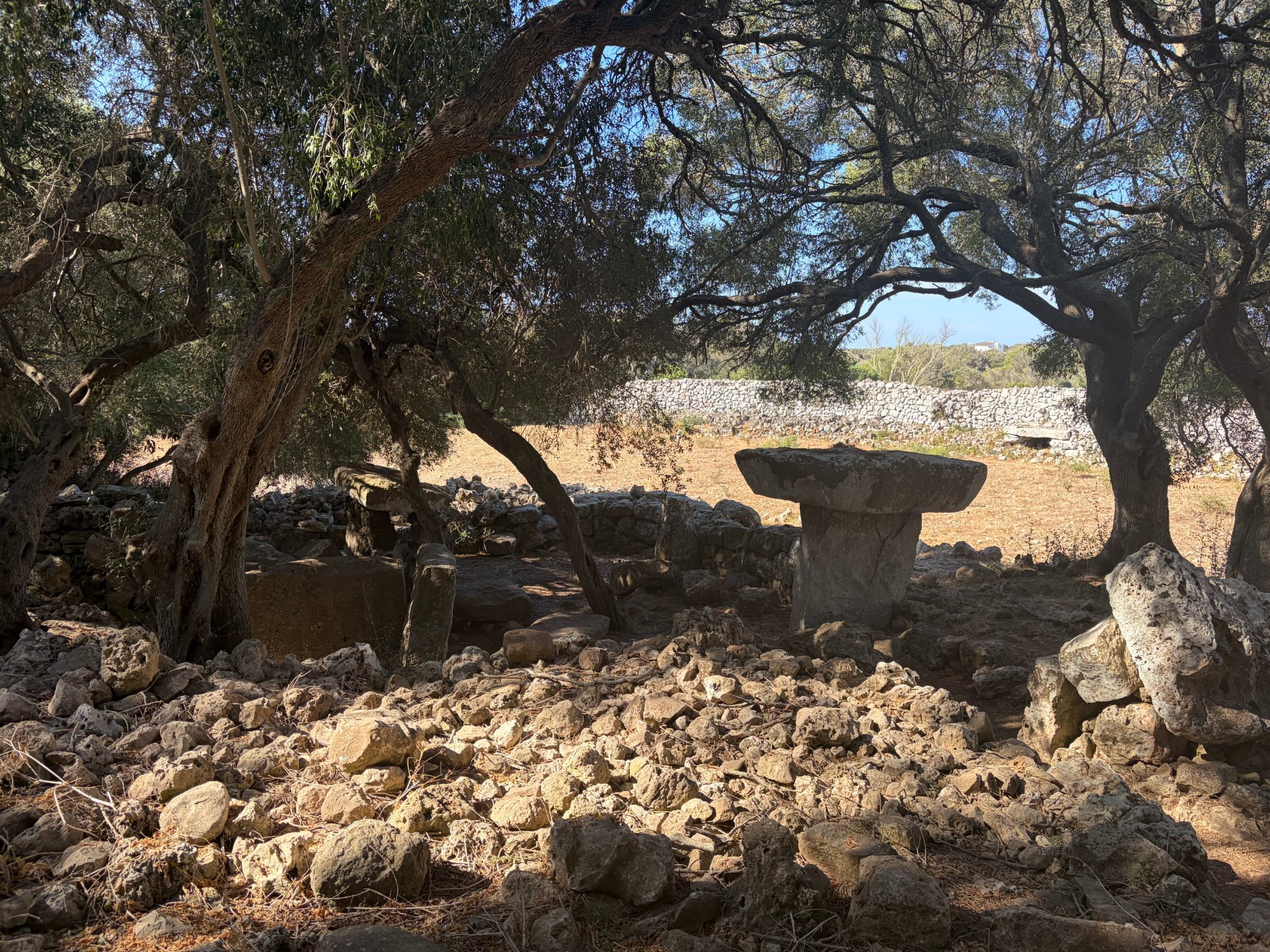
A taula, the T-shaped stone. It is from the Bronze Age and is still standing.
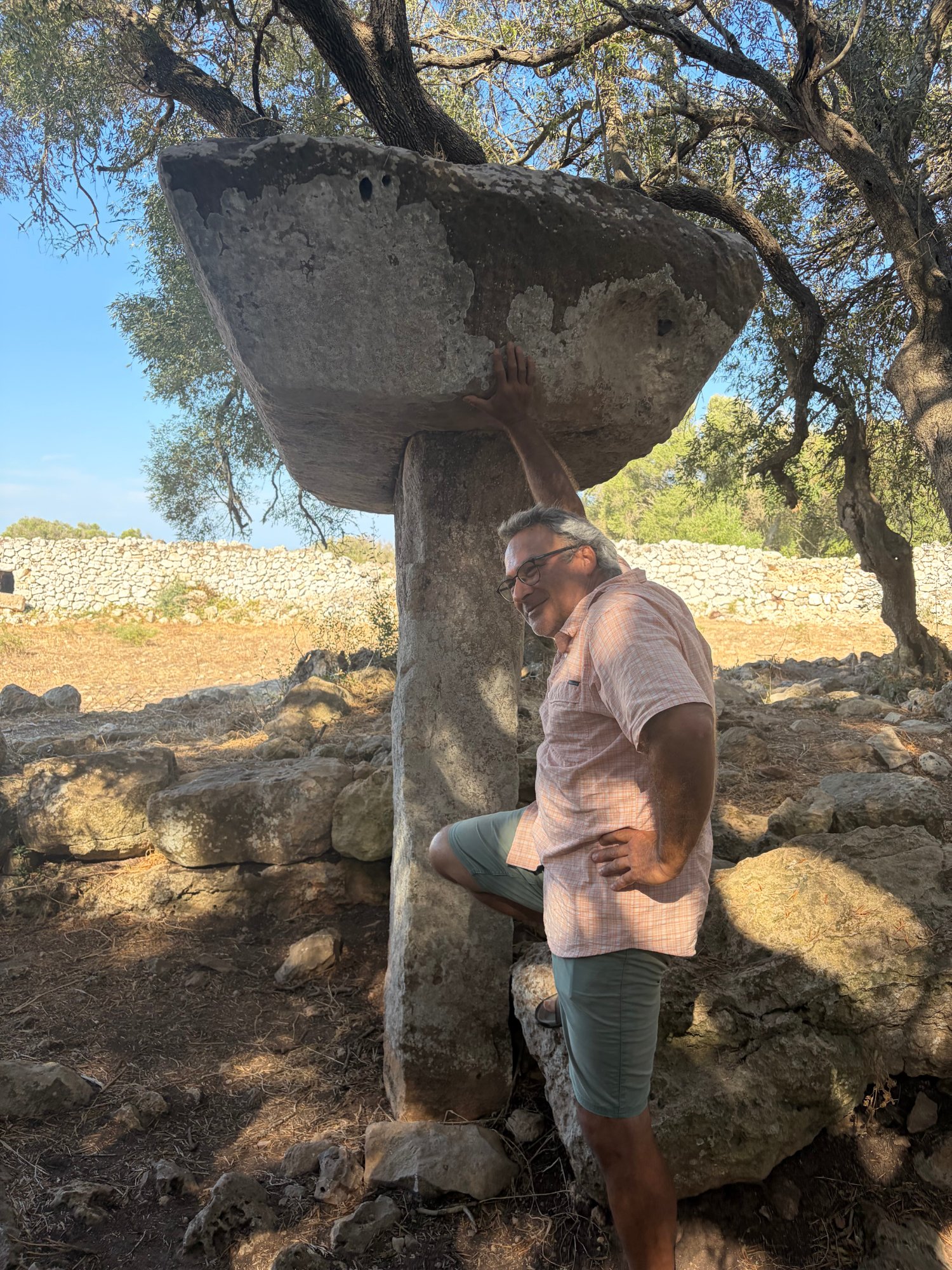
Fernando, the group leader, in front of the taula.
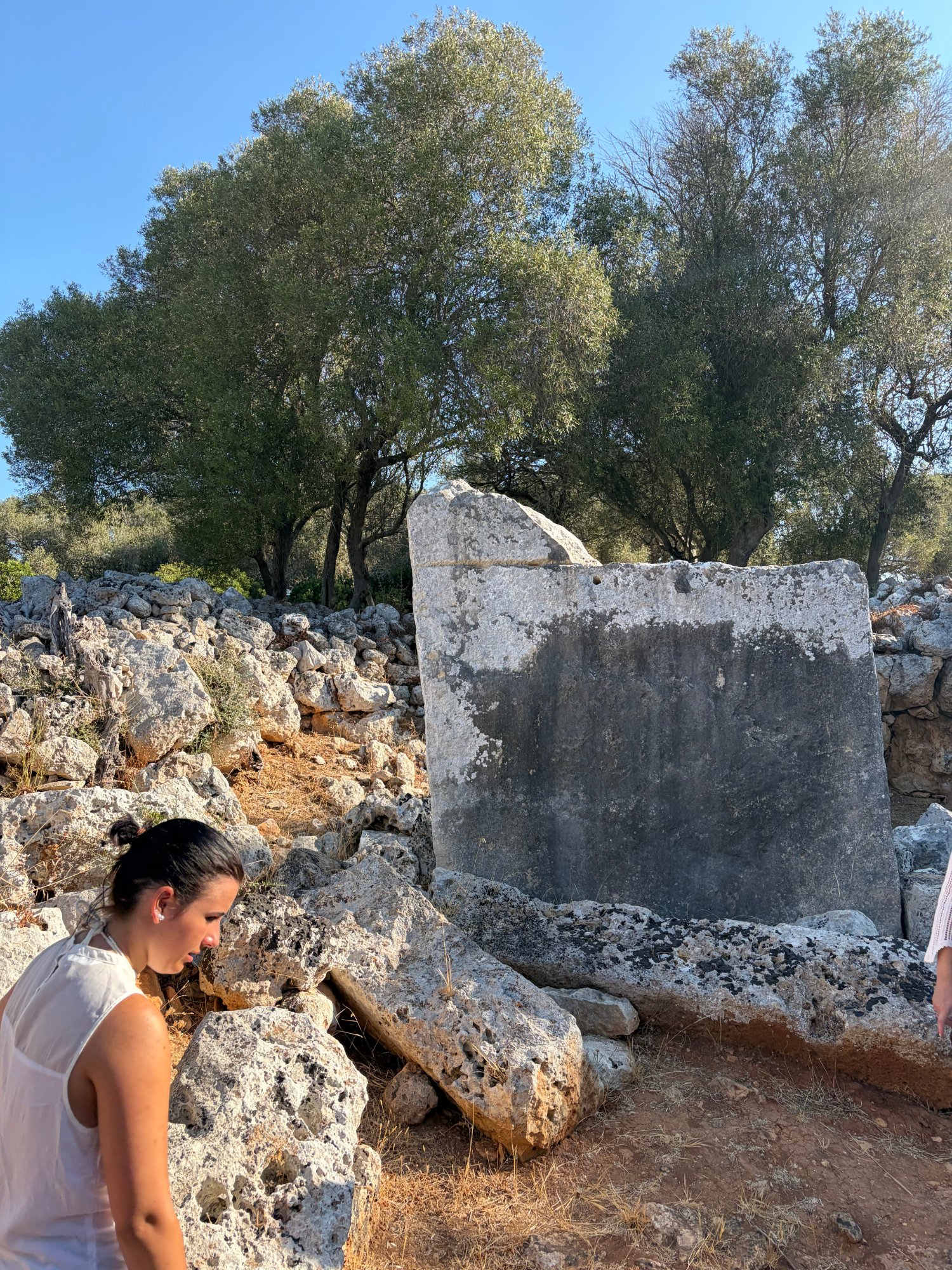
The big slab. It was cut, moved, and set upright without any machines.
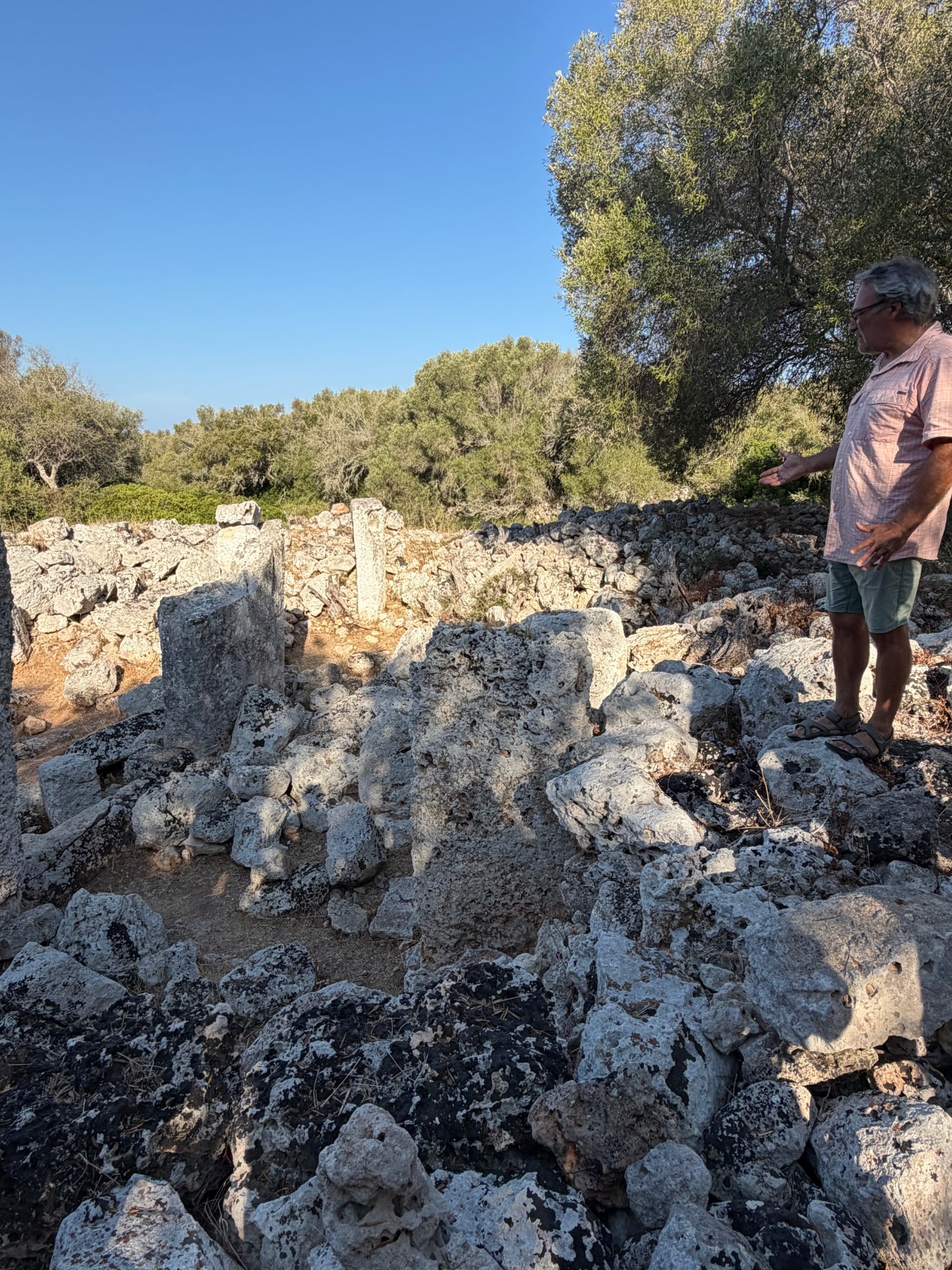
Fernando explaining the history.
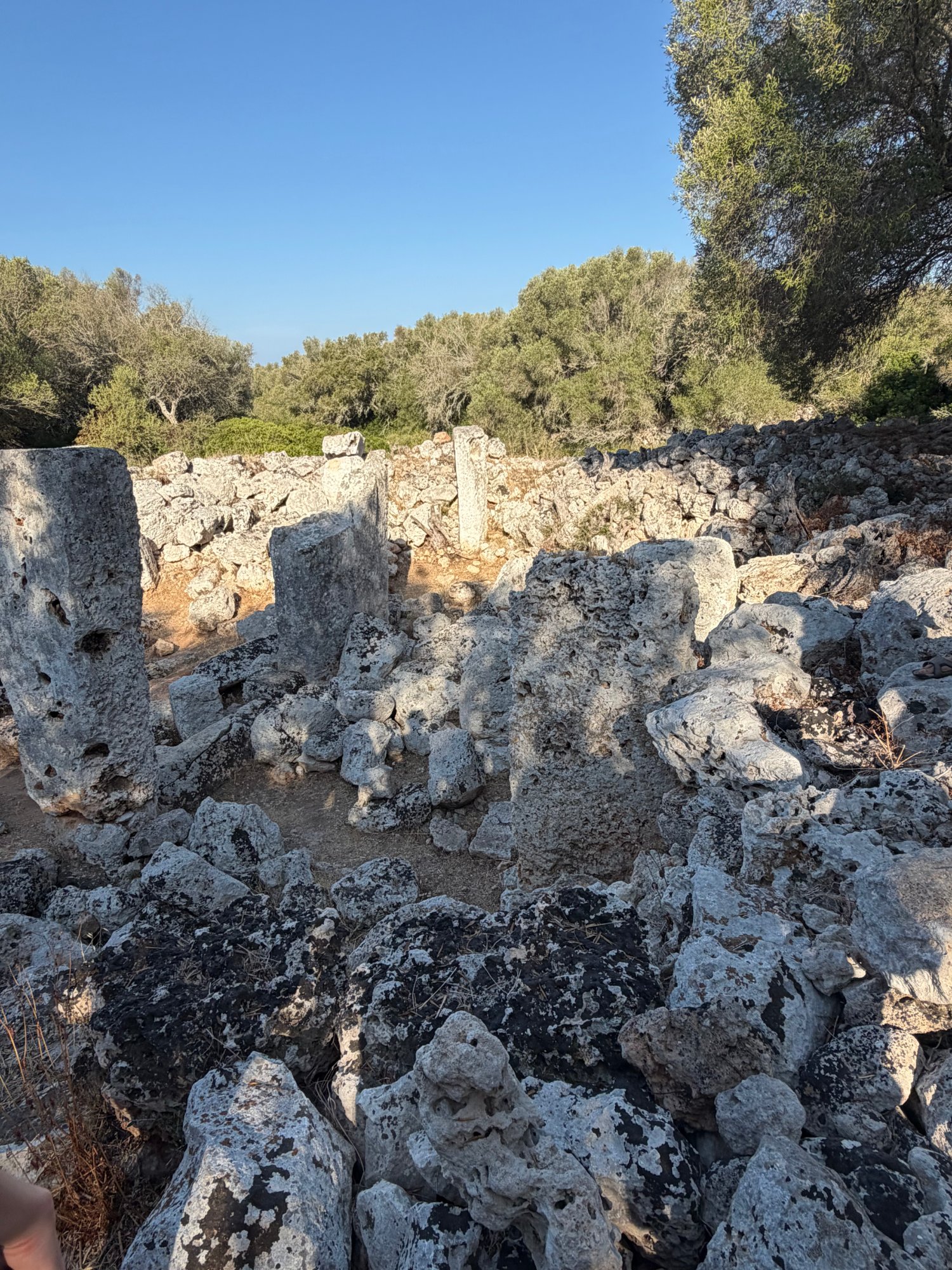
Pillars from a house. The roofs were made of wood and are long gone.
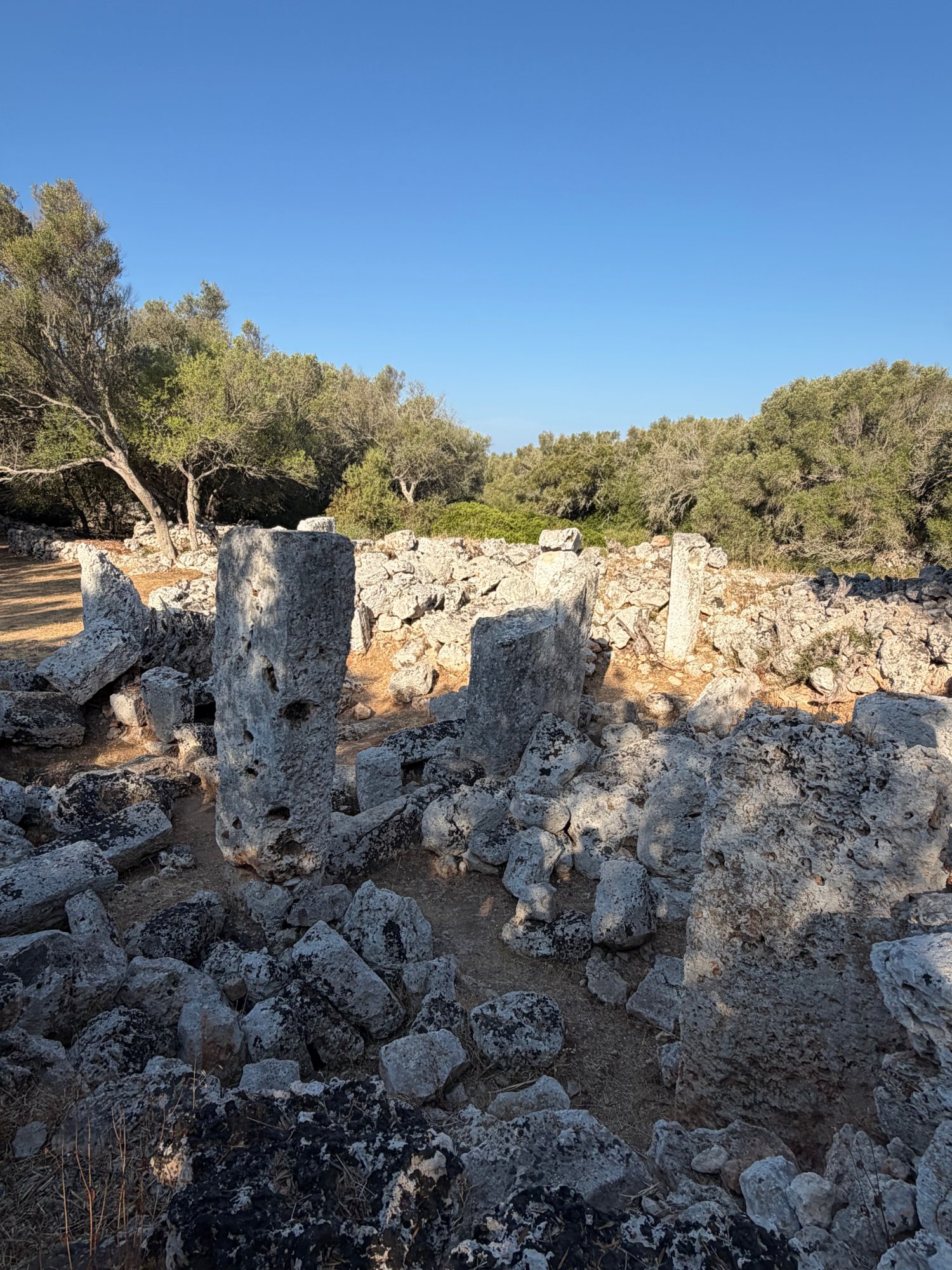
Same pillars from the other side.
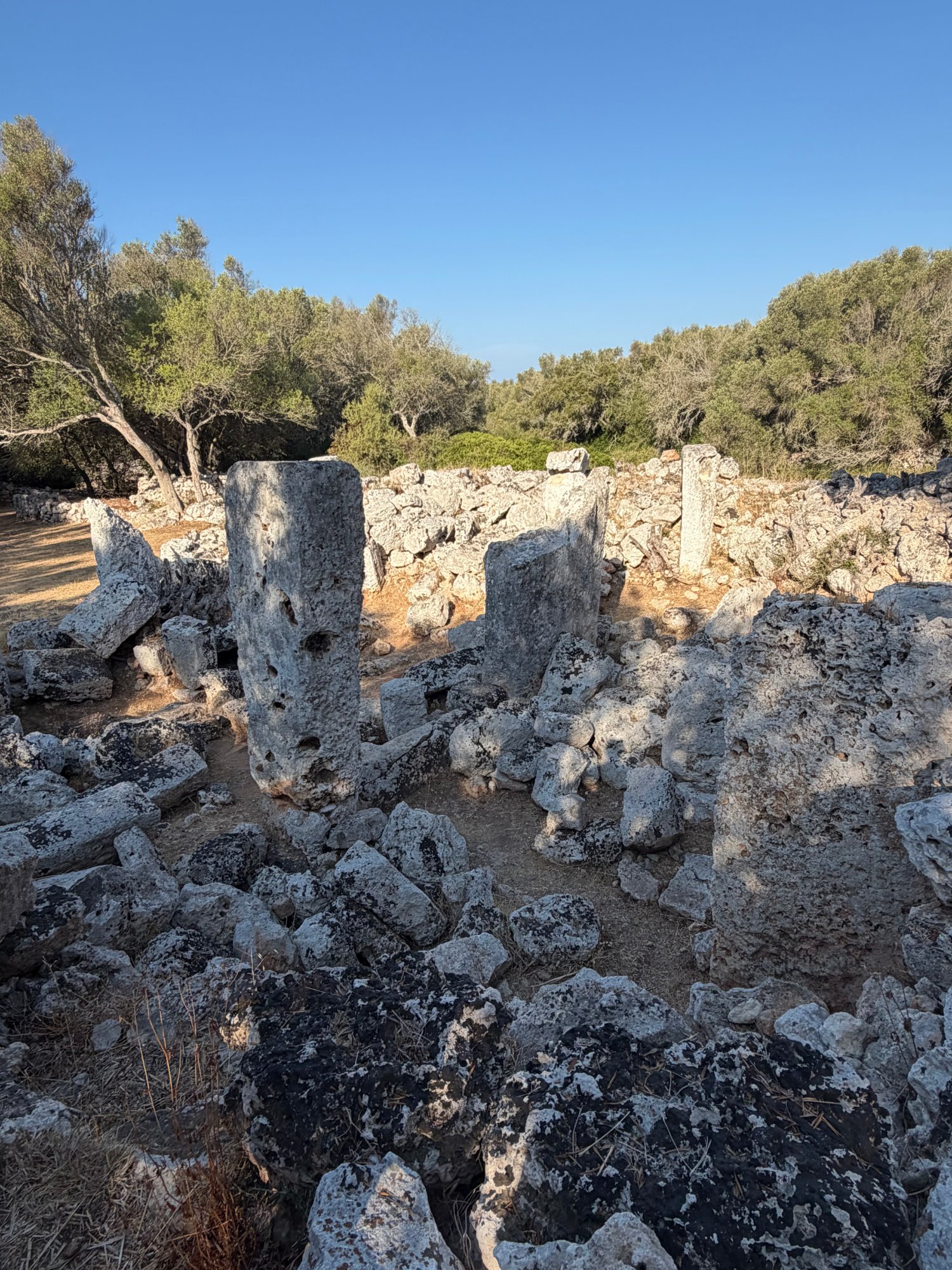
A whole village, mostly fallen down.
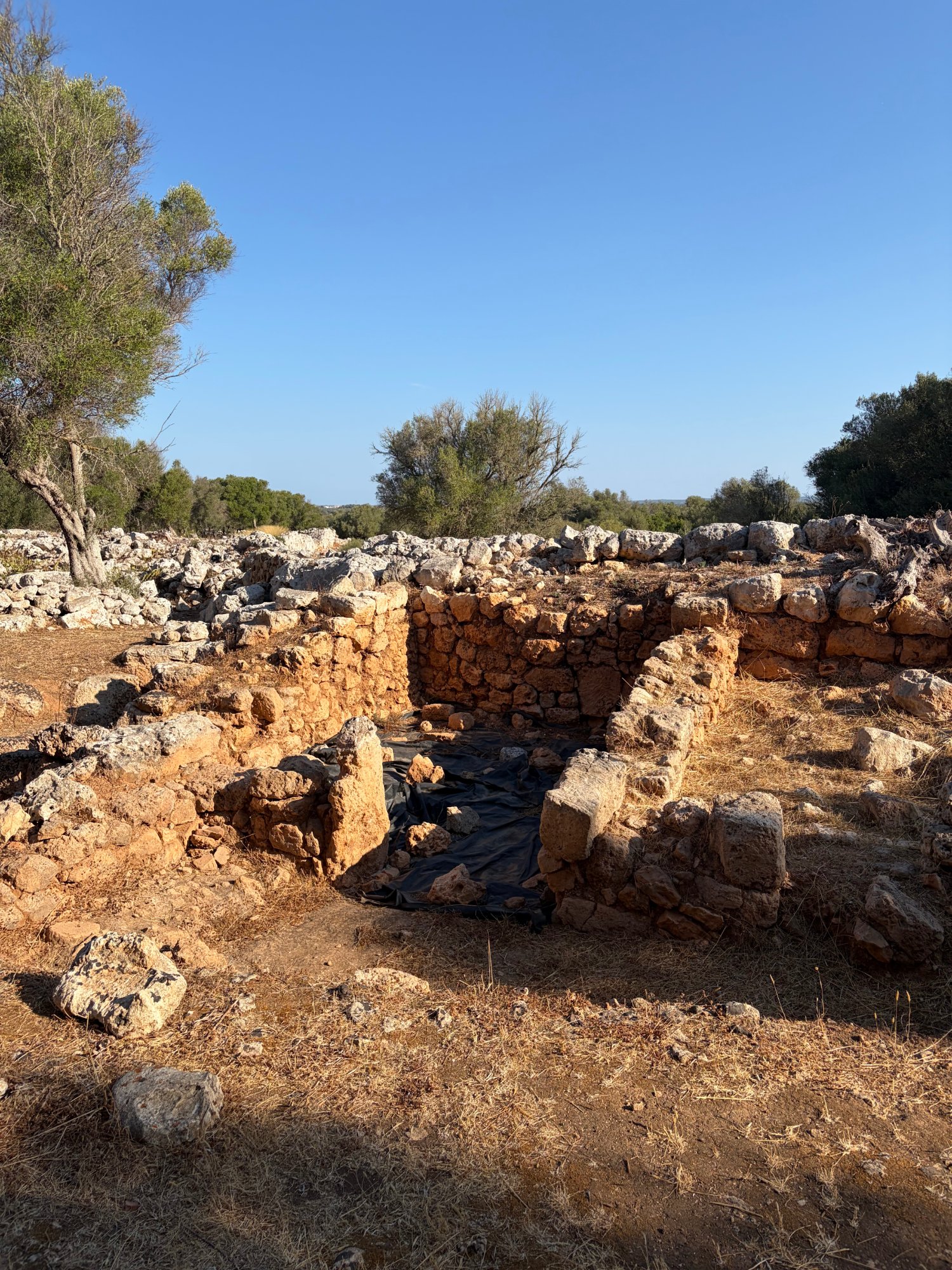
A house being excavated. The tarp keeps the sun off the floor.
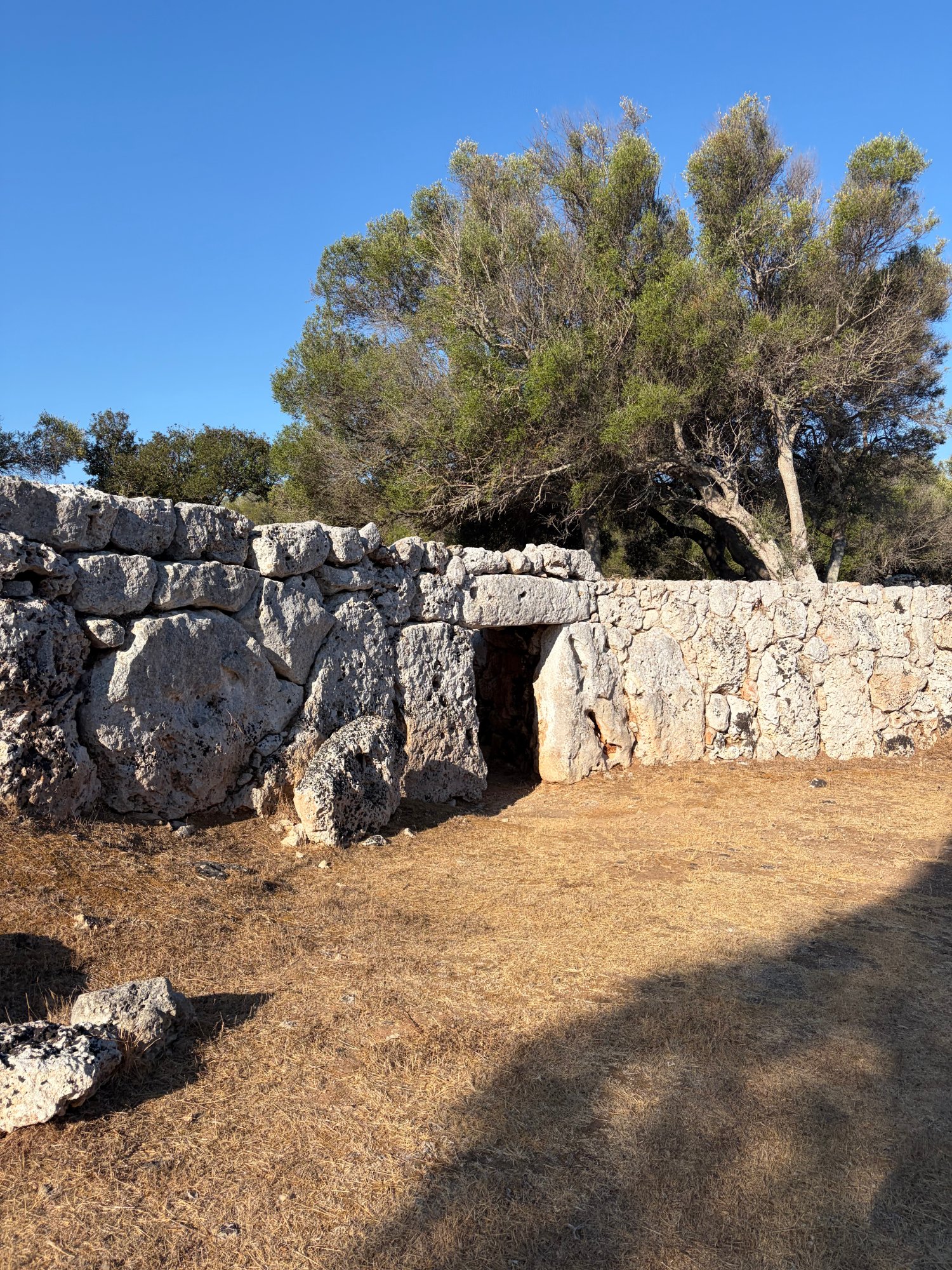
A wall with a doorway you can still walk through, which I did.
The rest of Menorca
What we did after work.
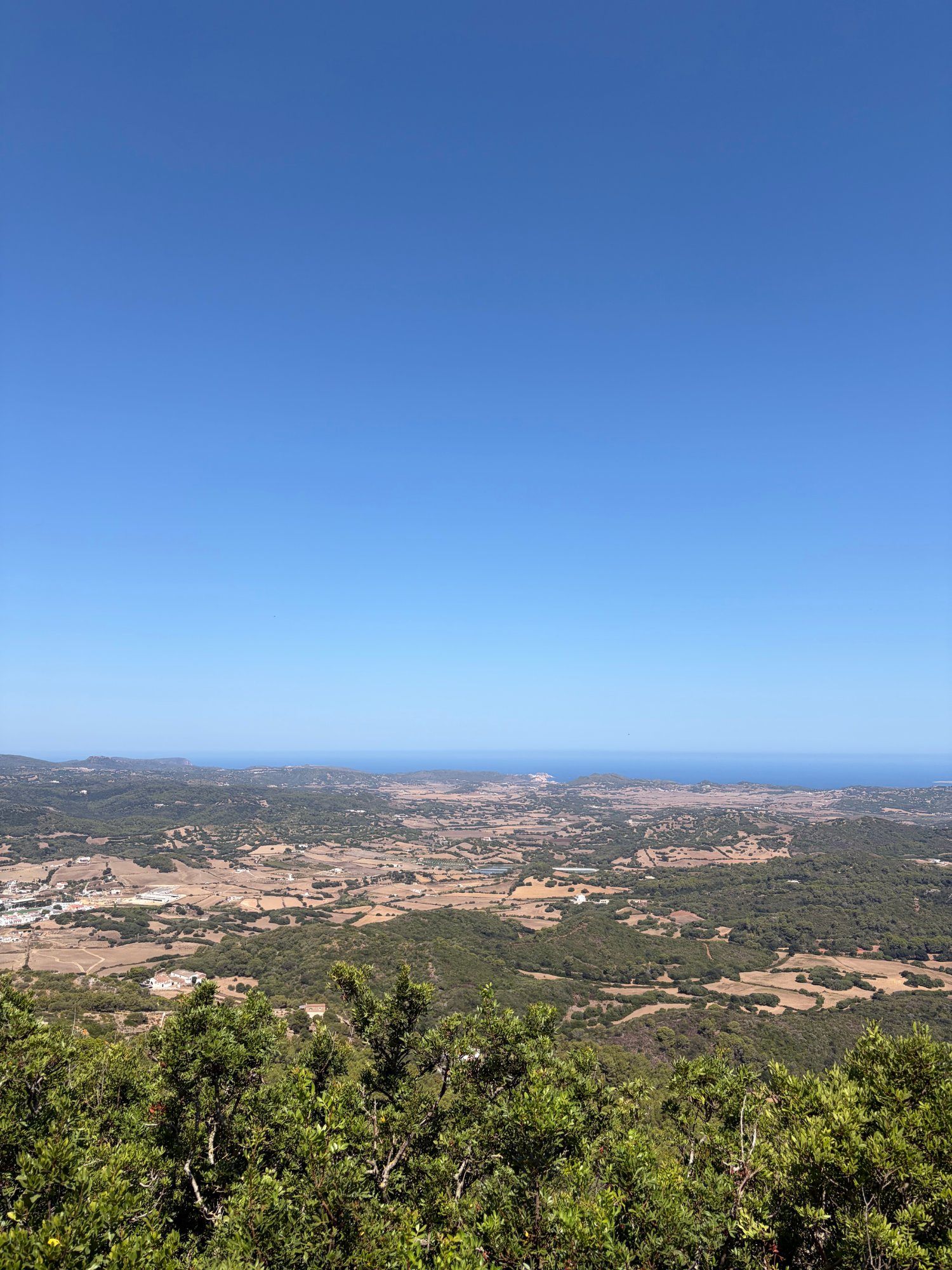
From the top of Monte Toro, the highest point on the island. You can see the whole island from here.
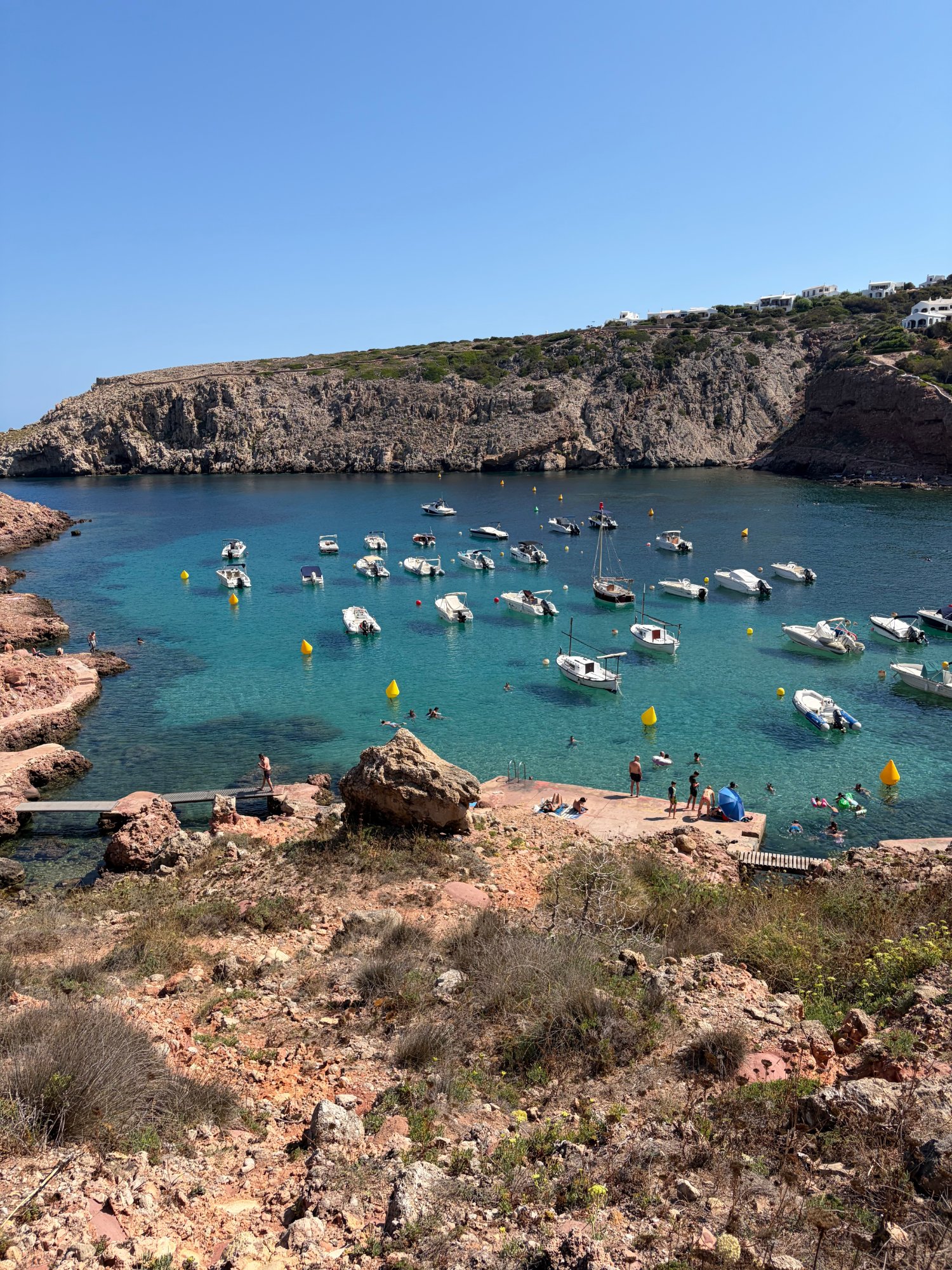
Cala Morell, where we swam after work.
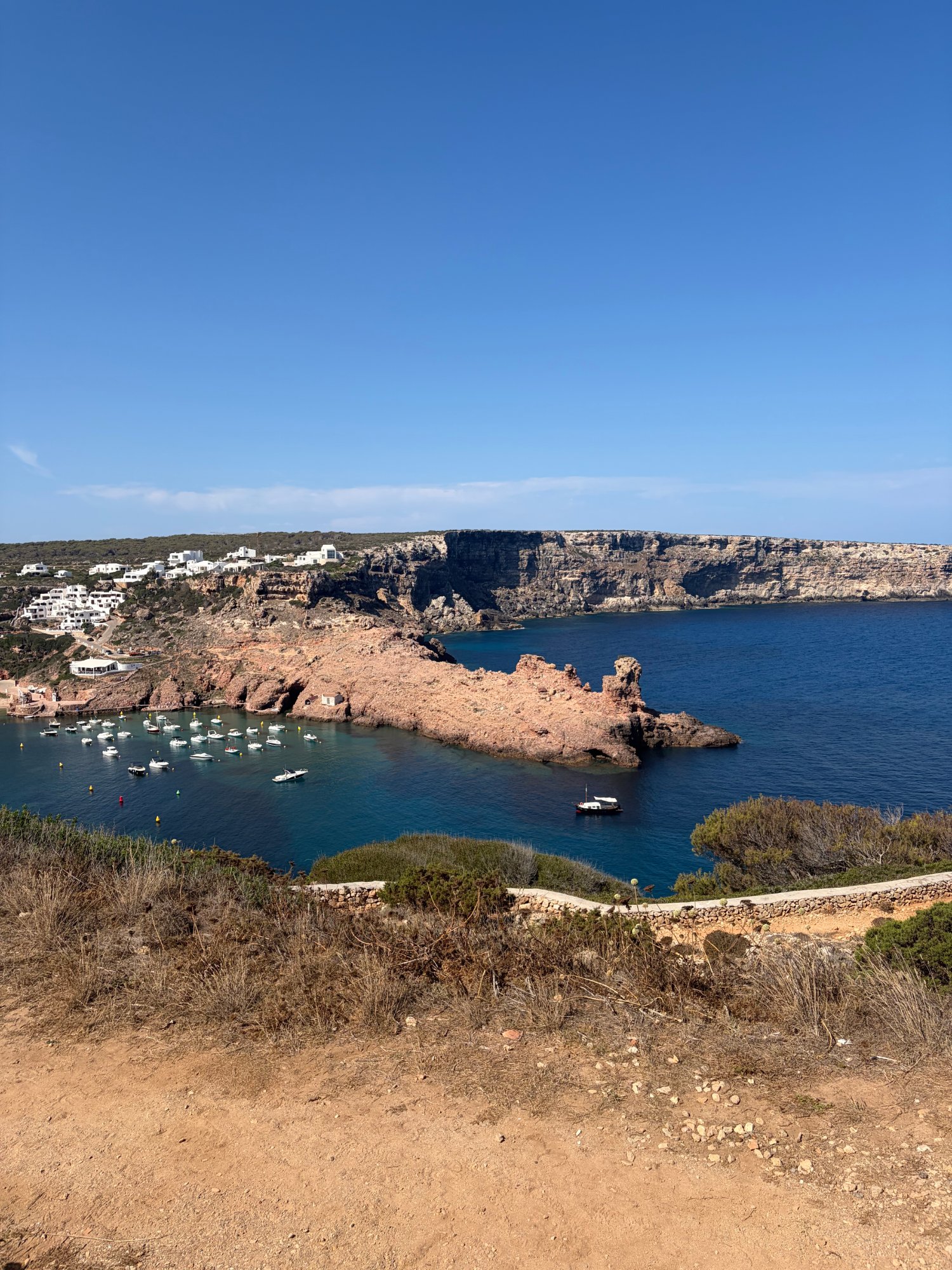
The cliffs on the north coast. The water really is that color.
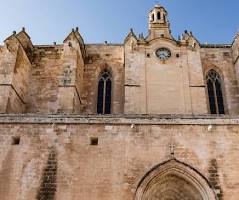
The cathedral in Ciutadella. It was built on top of a mosque, which was built on top of something even older.