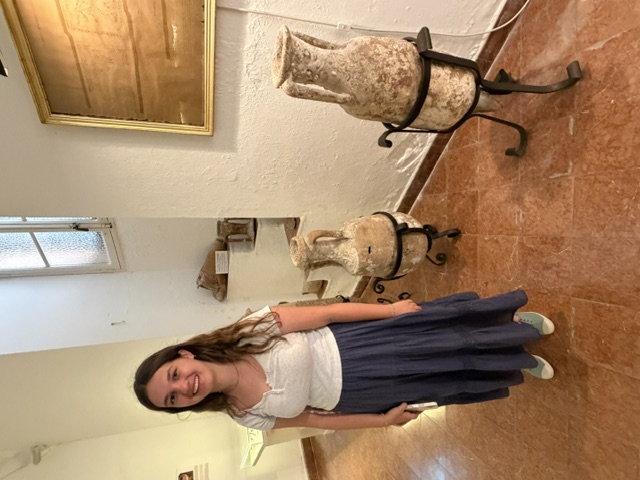
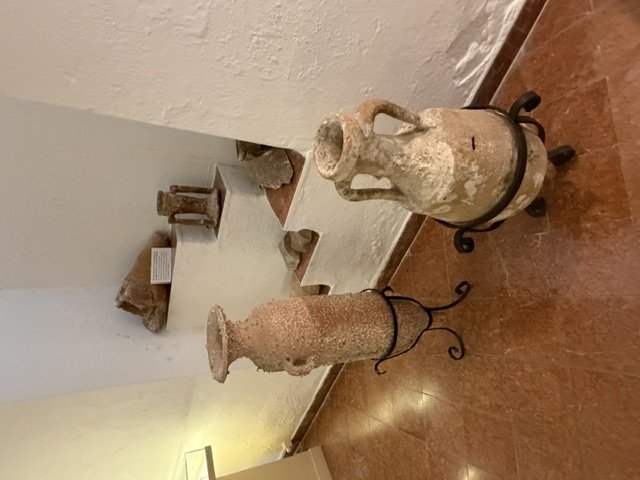
With two Roman amphorae in the Roman rooms. They were pulled out of the sea, which is why their surfaces are covered in marine growth.
We visited on one of our days off from the dig. The museum is in an old Franciscan convent in Maó. The ground floor covers the island before the Romans, including the Talayotic people who built the taulas we had seen the day before. Upstairs is Roman Sanitja, the port we were digging in. It is a strange feeling to see objects in cases that came out of the ground a few meters from your own trench.
The museum is in an old Franciscan convent in Maó. The rooms go in order from the first people on the island through the Talayotic culture, the Romans, and the Middle Ages. Most of what is here came out of the ground on Menorca, and some of it came out of the water. Sanisera has its own case.
Before the Romans
The Talayotic people lived on Menorca from about 1400 BC. They built the taulas and talayots we visited on our day off from the dig. Their pottery is handmade and decorated by pressing patterns into the clay.
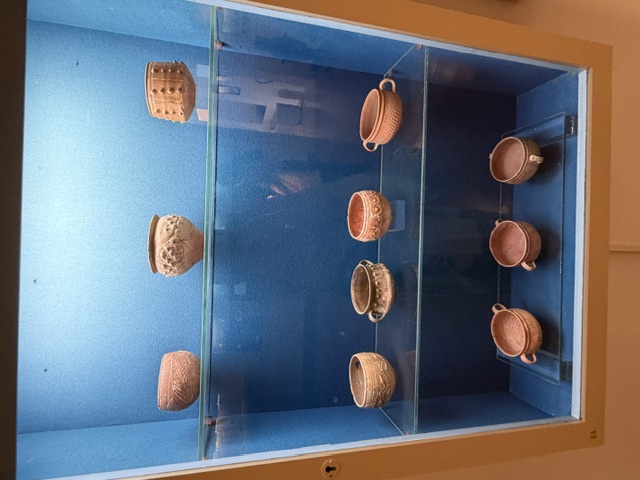
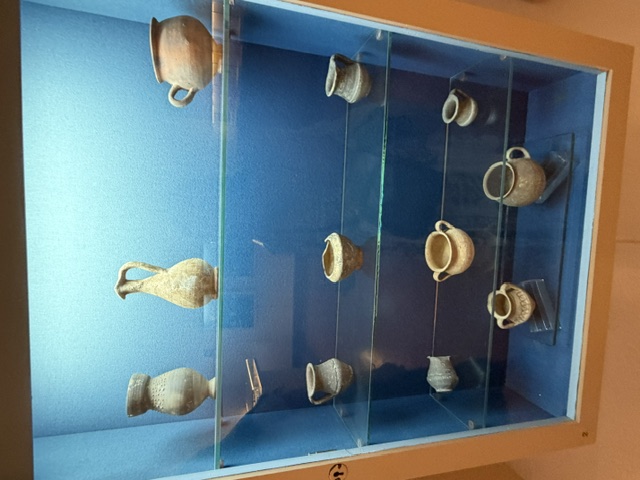
Talayotic bowls. The decoration was pressed or scratched into the clay before firing. The three cups on the bottom shelf each have one handle.
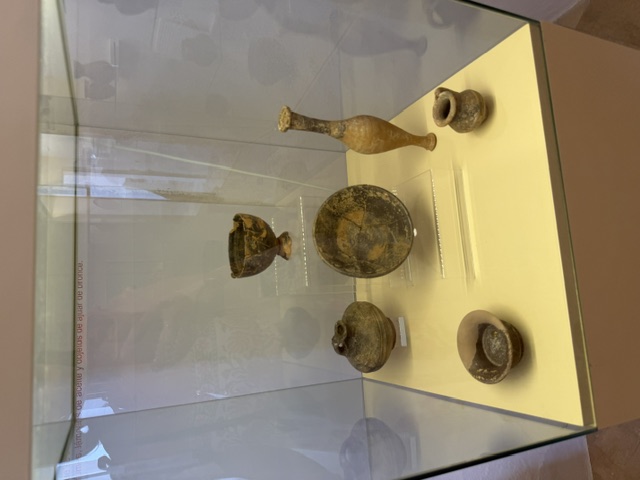
Grave goods from a Talayotic burial: a footed cup, a flat dish, and a long, thin bottle for oil or perfume.
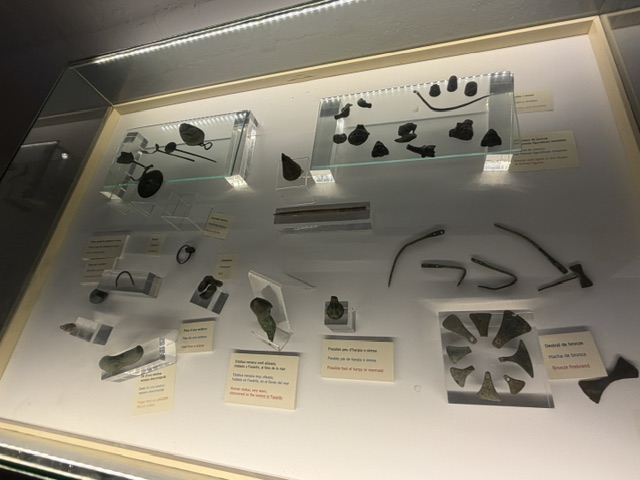
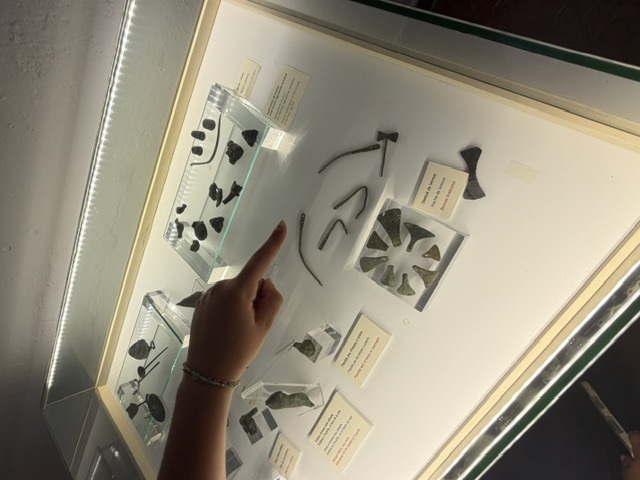
Bronze tools, spearheads, and axes laid out under glass. The small blades in the square case are arrowheads.
Pointing at a bronze axe. It looks like the ones we had seen in the field school textbook.
Roman Menorca
Rome took the Balearic Islands in 123 BC. The label in this room says Menorca became a stop on the shipping routes across the western Mediterranean, and most of the pottery in these cases arrived by ship.
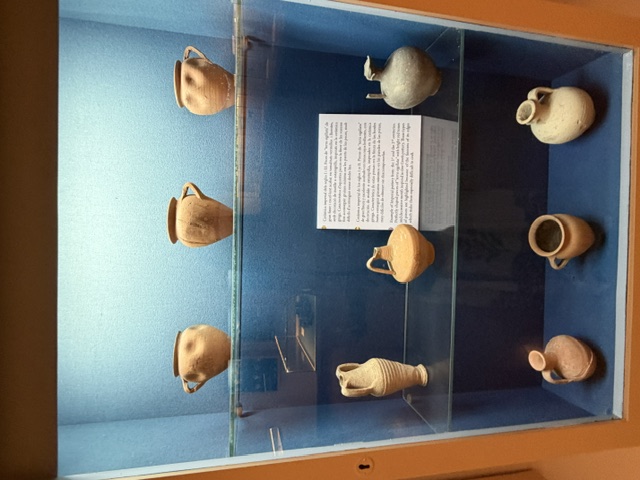
Roman pottery from the 1st and 2nd centuries AD. The label explains that most of it was made in Italy and Gaul and brought to the island by sea.
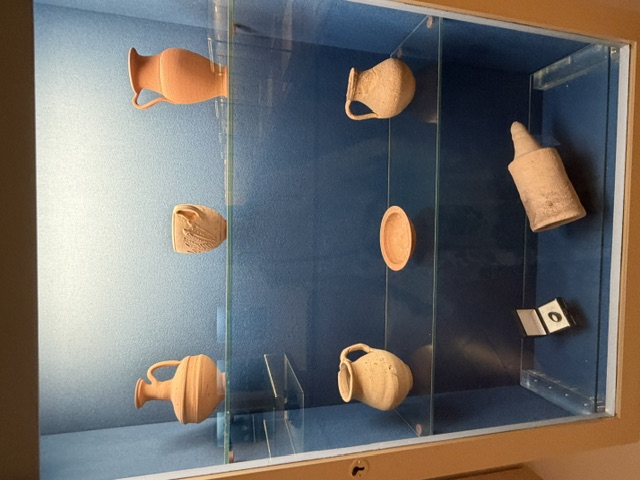
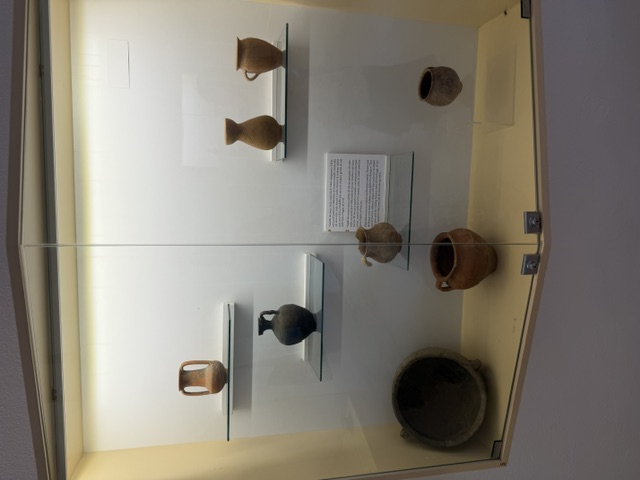
Roman jugs and a small plate. At the bottom there is a broken amphora neck and a single coin in its own box.
Grey-ware jugs and cups. The one at the top left with the rough surface is a mortarium, a bowl used for grinding food.
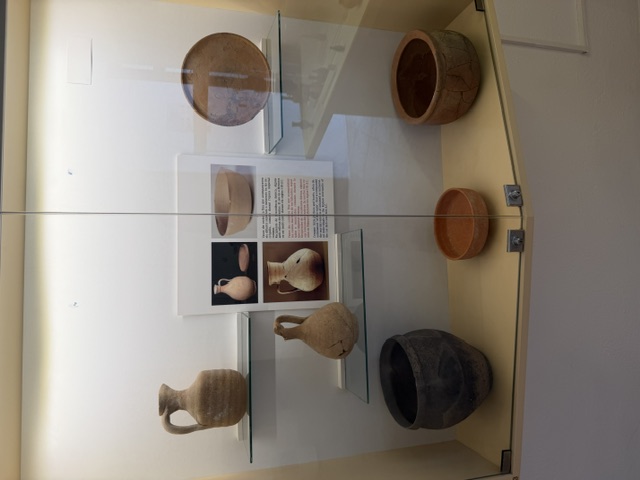
A case of everyday cooking and serving pottery, with a panel showing what the complete pieces would have looked like.
Jugs, a two-handled pot, and a large shallow basin. This is the kind of pottery we were finding in pieces in the trench.
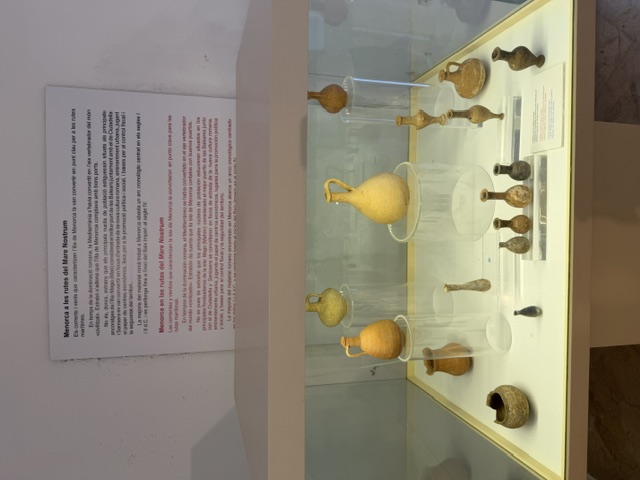
Roman glass displayed under the panel about shipping routes. The tall yellow bottles held perfume or oil. Glass this thin almost never survives in one piece.
Amphorae
Amphorae were the shipping containers of the ancient world. They carried wine, oil, and fish sauce, and when they broke they were thrown away, so pieces of them are everywhere on a Roman site.
Two amphorae in stands. The one on the left was on the sea floor long enough to grow a crust of shells and coral.
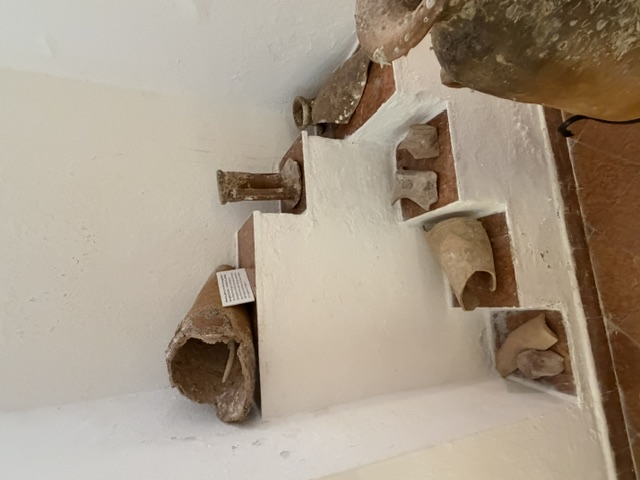
Broken amphora necks, feet, and handles set out on the steps. This is what they usually look like when you find them.
Oil lamps
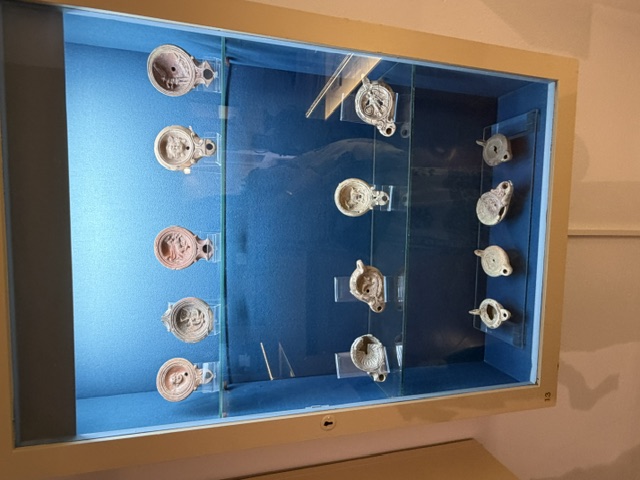
Roman oil lamps were made by the thousands in molds. The round top usually has a picture pressed into it, and the small hole is for the wick.
Lamps from the 1st to 4th centuries AD. The top row has the best pictures: faces, animals, and a gladiator.
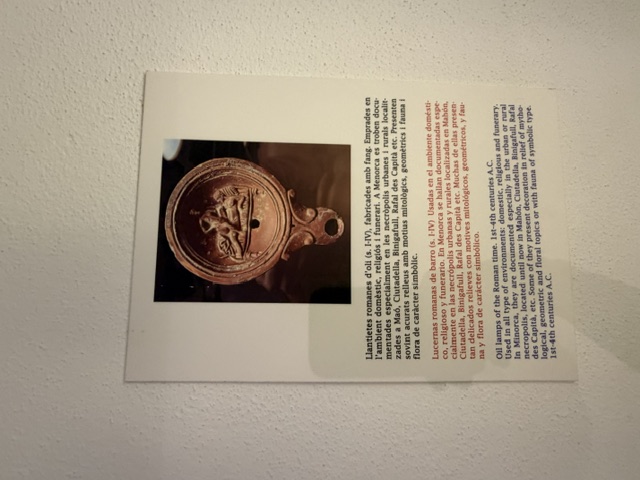
The label for the lamps. The one in the photo has a lion on it. They were found in graves and houses in Maó, Ciutadella, and other places on the island.
Coins and small things
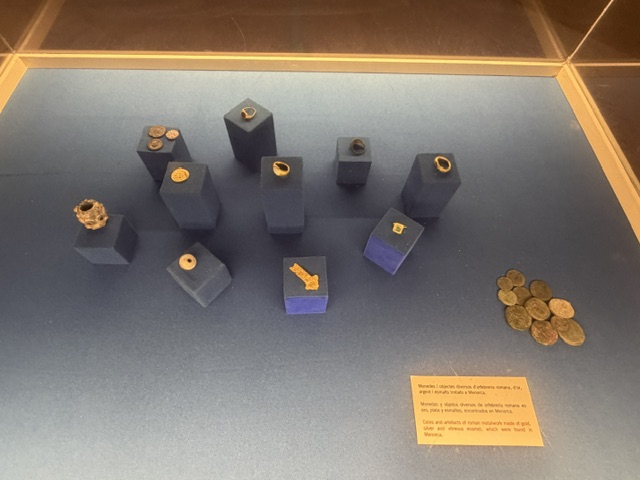
A single case of Roman coins, rings, and beads found on Menorca. After spending the summer cleaning my own coins, this was the case I stayed at the longest.
Roman coins, gold and silver rings, and a small bronze vessel. The pile of coins on the right is about the size of my own collection.
After Rome
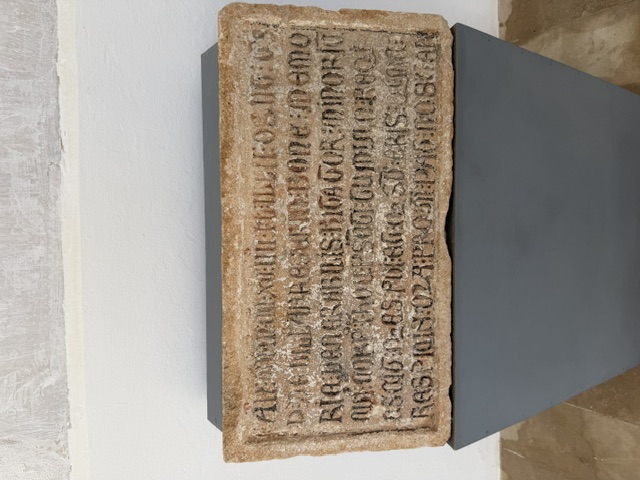
The last room jumps forward in time. This inscription is from the Middle Ages, when the island was ruled from Aragon.
A stone inscription in Gothic letters. It is a memorial, and it gives the date.
Me at the cases
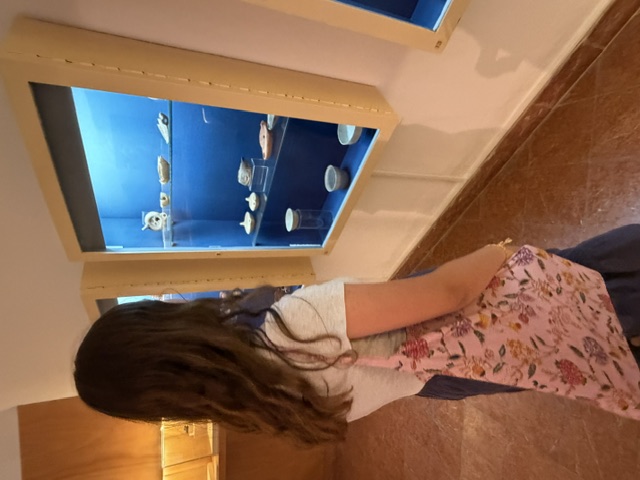
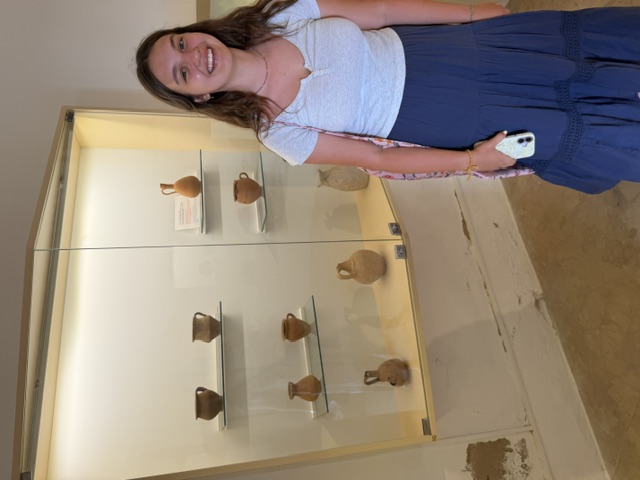
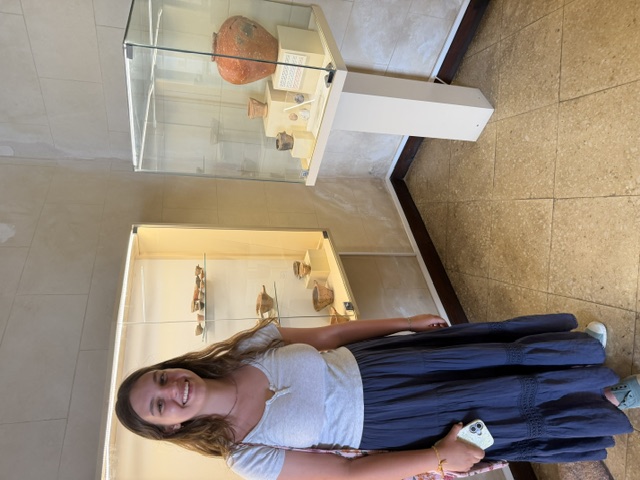
I take a lot of photos of cases, and my dad takes a lot of photos of me looking at cases.
Looking at the small Roman pieces.
With the Roman jugs.
Beside a large storage jar that was found nearly whole.