Repatriation
Who should have the things I go to see?
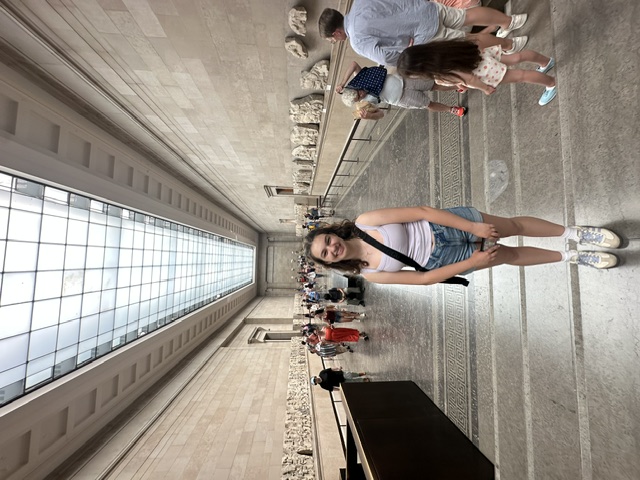
Almost every museum on this site holds something that was taken from somewhere else. Sometimes it was bought. Sometimes it was dug up with permission. Sometimes it was carried off by an ambassador with a permit that nobody can find anymore. I love these museums, and I also think the question of who should have these objects is the most important question in my field right now. This page is where I try to work out what I think.
I do not have one answer. I have a few cases I keep coming back to, and a few rules I am trying out.
The Parthenon sculptures
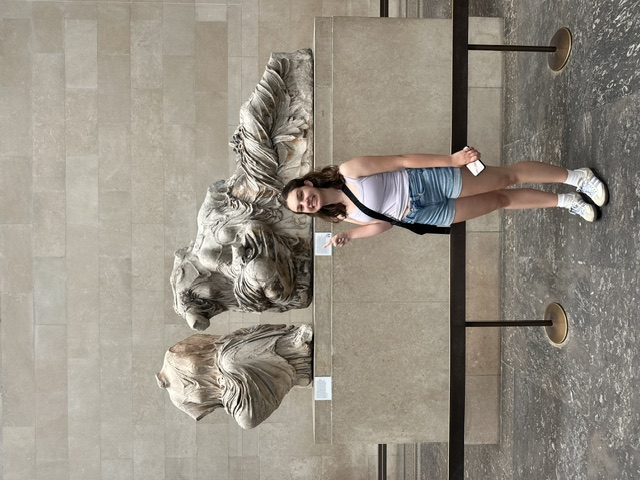
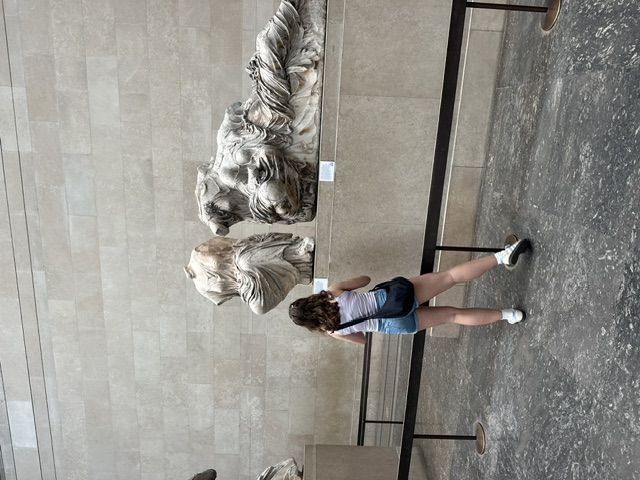
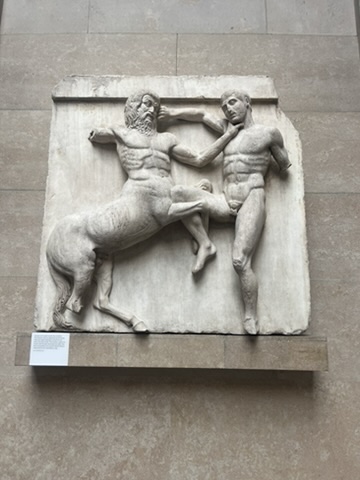
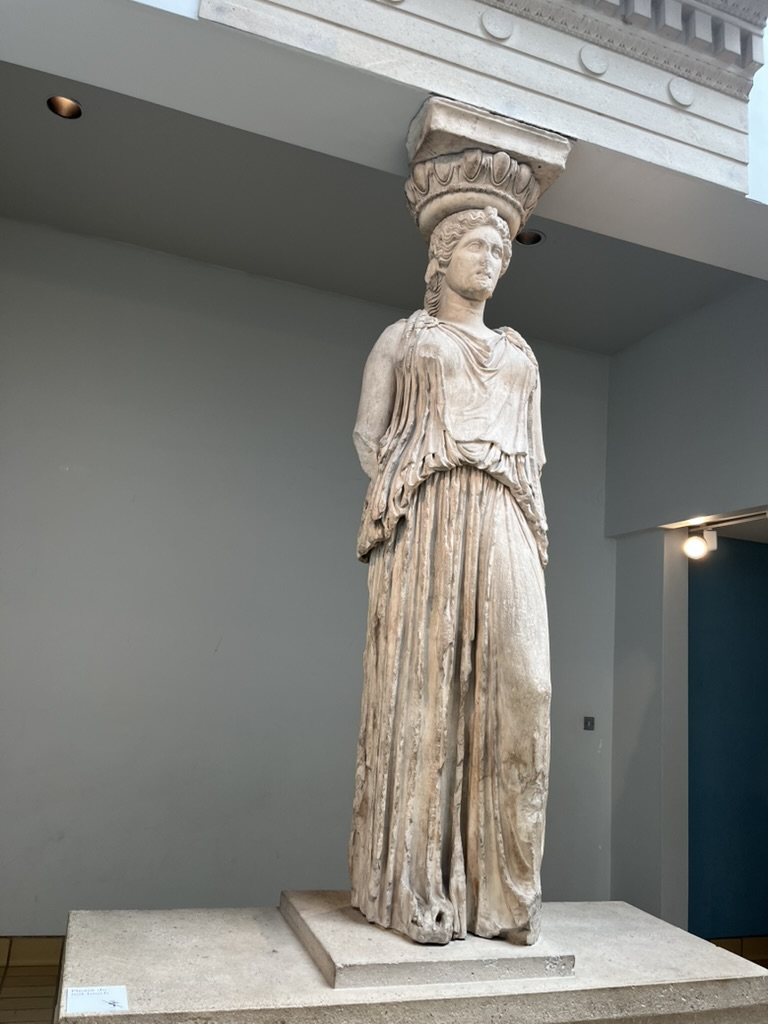
The Parthenon was built between 447 and 432 BC as a temple to Athena, on the hill above Athens. It was covered in sculpture. A frieze about 160 meters long ran all the way around the inner building and showed a procession of Athenians. Above the columns were 92 carved panels called metopes, mostly showing fights: gods against giants, Greeks against centaurs. The two triangles at each end held full statues of the gods. Almost all of it was painted, which I still have trouble picturing.
The temple stayed mostly intact for two thousand years. It became a church, then a mosque. In 1687, the Venetians were attacking Athens, and the Ottomans, who ruled Greece at the time, were storing gunpowder inside it. A Venetian shell hit the building and blew out the middle. Most of the damage you see on the sculptures today happened that one night.
In 1801, Thomas Bruce, Lord Elgin, was the British ambassador to the Ottoman Empire. He got a permit from the Ottoman government that let his workers draw the sculptures, make casts, and take away some stones. Nobody agrees on what that permit actually allowed, because the original is lost and all we have is an Italian translation. Elgin’s men took about half of what was still on the building. They sawed some of the frieze slabs in half so they would be lighter to ship. One of the ships sank on the way, and it took three years to recover the crates.
Elgin wanted the sculptures for his house in Scotland. Instead, he went broke, partly because of the cost of moving them, and in 1816 he sold them to the British government for £35,000. Parliament debated whether the purchase was legal and voted yes. The sculptures went to the British Museum and have been there ever since. Greece became an independent country in 1832 and has been asking for them back ever since. Melina Mercouri, an actress who became the Greek culture minister, made the campaign famous in the 1980s. The Acropolis Museum opened in 2009 with a gallery built to the exact size of the Parthenon. The Athens pieces are in place. Where the London pieces should be, there is blank white plaster.
Why London says they should stay
- Elgin had a permit from the Ottoman government, which ruled Athens at the time, so the removal was legal.
- Parliament gave the sculptures to the museum in 1816, and a 1963 law says the museum is not allowed to give objects away. The museum has no legal power to return them.
- Taking them saved them. The pieces Elgin left on the building were damaged by weather, pollution, and more wars, and eventually had to be moved indoors anyway.
- The museum is free, and about six million people a year walk through it. That is more than the Acropolis Museum gets.
- In London you can see Athens next to Egypt, Assyria, and Persia in one building. You cannot do that in Athens.
- If these go back, everything goes back, and the big museums will empty out.
Why Athens says they should come home
- The permit is lost. The Italian copy we have says his men could draw, make casts, and take “some pieces of stone.” That is not the same as sawing the frieze off the building.
- The Ottomans were occupying Greece. The Greeks never agreed, and they have been asking for the sculptures back since the day they became an independent country.
- This is one work of art made for one building, and the building is still standing. Half a frieze in each city is just two broken halves.
- The Acropolis Museum is new and climate-controlled, and it has a gallery the exact size of the Parthenon with a window looking out at the actual Parthenon. The argument that Greece cannot take care of the sculptures no longer holds.
- London has not been perfect either. In 1938, museum workers scrubbed the marble with copper tools to make it look whiter, and they removed the original surface.
- Other museums have already done it. The Vatican, Palermo, and Heidelberg have all sent their Parthenon pieces back to Athens.
I have done the walk from Athens to Assyria to Egypt in the British Museum, and it really is remarkable. I have not yet been to the gallery in Athens with the blank plaster, and it is the room I most want to stand in. Both of those things are true at the same time, which is what makes this question hard.
Famous people have opinions about this too
Actors and a prime minister.
“They’re going to come back. I know they are. My wife and I have both worked to get the Parthenon Marbles back to Greece. We’ll keep pushing until it happens.”
“Returning the Parthenon Marbles to Greece is easy. All that’s needed is political will. Let’s not hide behind legal technicalities. My country looks increasingly foolish as this issue drags on.”
“It’s time to simply say: let them go.”
“This is not an ownership question, this is a reunification argument. It’s as if I had told you I had cut the Mona Lisa in half and you would have half of it at the Louvre and half of it at the British Museum.”
Where the 114 blocks are right now
Here is where I stand for now. The Parthenon sculptures are a special case because they are pieces of one object that is still standing. A pot from a grave can be understood anywhere. A metope belongs to the building it was cut from. I think they should go back. I also think the British Museum should get a full set of casts and put on a really good exhibition about how the sculptures ended up in London in the first place. I hope one day I can visit Athens and see all of these again, at home.
The Getty Bronze
This is the Getty’s own book about the statue. It covers how he was found, how bronzes like him were made, who he might be, and why he was on a ship in the first place. It is free to read in the Getty’s Virtual Library.
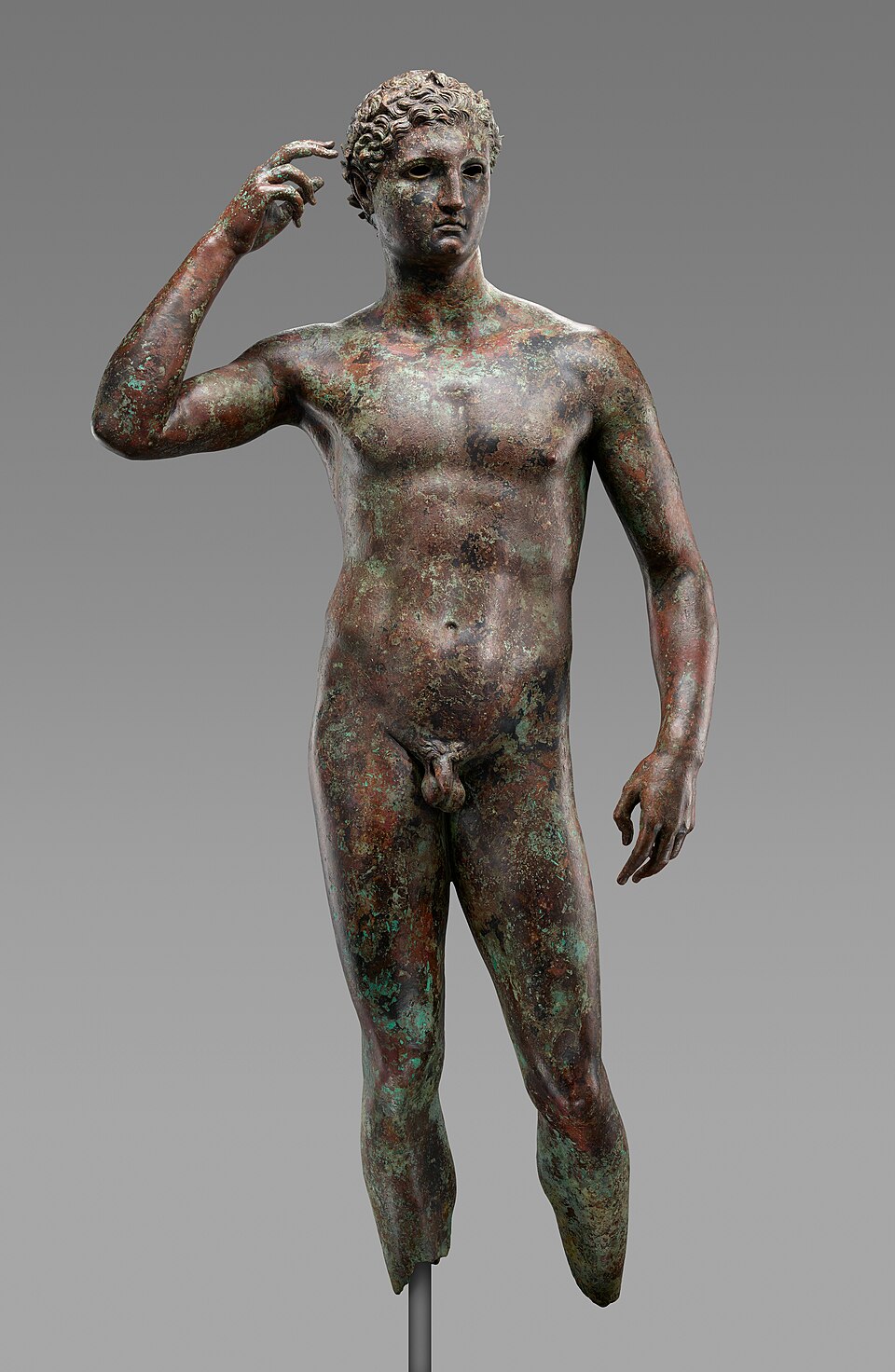
Open the book ↗In 1964, some fishermen from Fano, on the Adriatic coast of Italy, pulled up a life-size bronze statue of a young athlete in their nets. He is Greek, made sometime between 300 and 100 BC, and he was probably on a Roman ship headed for Italy when the ship sank. Bronze statues almost never survive, because bronze gets melted down and reused. This one survived by spending two thousand years at the bottom of the sea.
The fishermen brought him ashore, hid him, and sold him. He was buried in a cabbage field for a while and then kept in a priest’s bathtub. By 1965 he was out of Italy, first in Brazil and then in Germany. Italy put the fishermen and the dealers on trial, and they were acquitted because nobody could prove the statue had been found in Italian waters. In 1977, the Getty bought him for almost four million dollars. He has been at the Getty Villa ever since. I have stood in front of him, and he is the best thing in the building.
Italy first asked for him back in 1989. In 2007, a court in Pesaro ordered the statue confiscated, and Italy’s highest court agreed in 2018. The Getty took the case to the European Court of Human Rights and argued that Italy was taking its property. In May 2024, the court ruled against the Getty, unanimously, and said the museum had shown “negligence or bad faith” by buying a statue it knew Italy was trying to recover. The Getty’s response is that the statue is Greek, not Italian, that it was found in international waters, and that it has been on public display for almost fifty years. He is still in Malibu, and Italy still wants him.
This case is harder for me than the Parthenon. The Greeks made him. The Italians never owned him, except as cargo on a ship that sank. The Getty bought him from people who had no right to sell him, and the court says the Getty knew that. So who should have him? Greece has not asked. Italy has been asking for thirty-five years. The Getty has taken excellent care of him and lets anyone see him for free. I think the rule I wrote below still applies: no papers, no purchase. The Getty bought him without papers in 1977, and everything since then has been the consequence of that decision.
The Getty and the Italian list
In 2007, the Getty agreed to return forty objects to Italy after Italian prosecutors showed they had been dug up illegally and sold through dealers who gave them fake histories. The Getty’s own curator was put on trial in Rome. The museum I love most in California spent the 1980s and 1990s buying things it should not have bought.
This case changed how I think about the word “provenance.” Every object has a history of where it has been. The question is whether that history is honest. A vase with no findspot and a story that starts in a Swiss warehouse in 1985 probably came out of a tomb the year before, and a tomb that was looted is a tomb nobody will ever be able to study. The Getty case is the reason I care about findspots on the Kelsey page and the reason I wrote about where my coins came from.
Other things people are arguing about
A short list. Some of these have gone home, but most have not.
Found on the island of Melos in 1820 and taken by the French while Greece was still under Ottoman rule. Greece has asked about her more than once. France has never seriously considered returning her.
Dug up by a French consul in 1863 on Ottoman-ruled Samothrace and shipped to Paris. She is my favorite statue in the world, and Greece would like her back too.
German engineers excavated it in the 1880s with Ottoman permission and rebuilt the whole altar in Berlin. Turkey has been asking for it since the 1990s.
The Getty bought this seven-foot goddess in 1988 for $18 million. Italy showed that she had been looted from Morgantina, and the Getty sent her home in 2011. She is now in the small archaeological museum in Aidone, a few kilometers from where she was dug up. Most scholars now think she is Demeter or Persephone rather than Aphrodite.
The Met bought this vase in 1972 for a record $1 million. It turned out to have been dug out of an Etruscan tomb near Cerveteri the year before. The Met returned it in 2008.
This one is not Greek or Roman, but it has Greek writing on it. Napoleon’s soldiers found it in 1799, the British took it from the French in 1801, and Egypt has been asking for it since 2003.
This is the same story in a different country. German excavators took her out of Egypt in 1913 under a division of finds that Egypt says was misleading. Egypt has been asking for her since the 1920s.
A single piece of the Parthenon frieze, the foot of Artemis, that sat in Palermo for two hundred years. Sicily sent it back in 2022 in exchange for loans from Athens, and it is now attached to the frieze where it belongs. If Palermo can do it, London can too.
My coins
I bought a bag of uncleaned Roman coins on eBay for my coin project. Lots like that usually come from the Balkans or the eastern Mediterranean, and they usually come without export papers. I asked the seller and did not get a clear answer. The coins are common, worn, and worth a few dollars each. Nobody is going to ask for them back. But the same question applies to them as to the Parthenon: something left the ground in a country that has laws about that, and I do not know whether those laws were followed.
I am not sure I would buy them again. I learned a lot from them, and I am glad I have them. I also think that if I want to be the kind of archaeologist who cares where things come from, I have to care about the small things too.
Rules I am trying out
Pieces of a building that is still standing should go back to that building.
Anything that left the ground after 1970, when the UNESCO convention was signed, needs papers. No papers, no purchase.
A museum that cannot say where an object came from should say so on the label, in the same size type as the date.
Long-term loans and shared ownership are reasonable solutions. A statue that spends ten years in Rome and ten in London is seen by more people than one that stays in one place.
I can love a museum and still think it is wrong about something.
I will keep adding to this page as I read more and see more. If you think I am wrong about any of it, I would like to hear why.