Walking the other way
the ancient rooms, while everyone else lines up for the painting
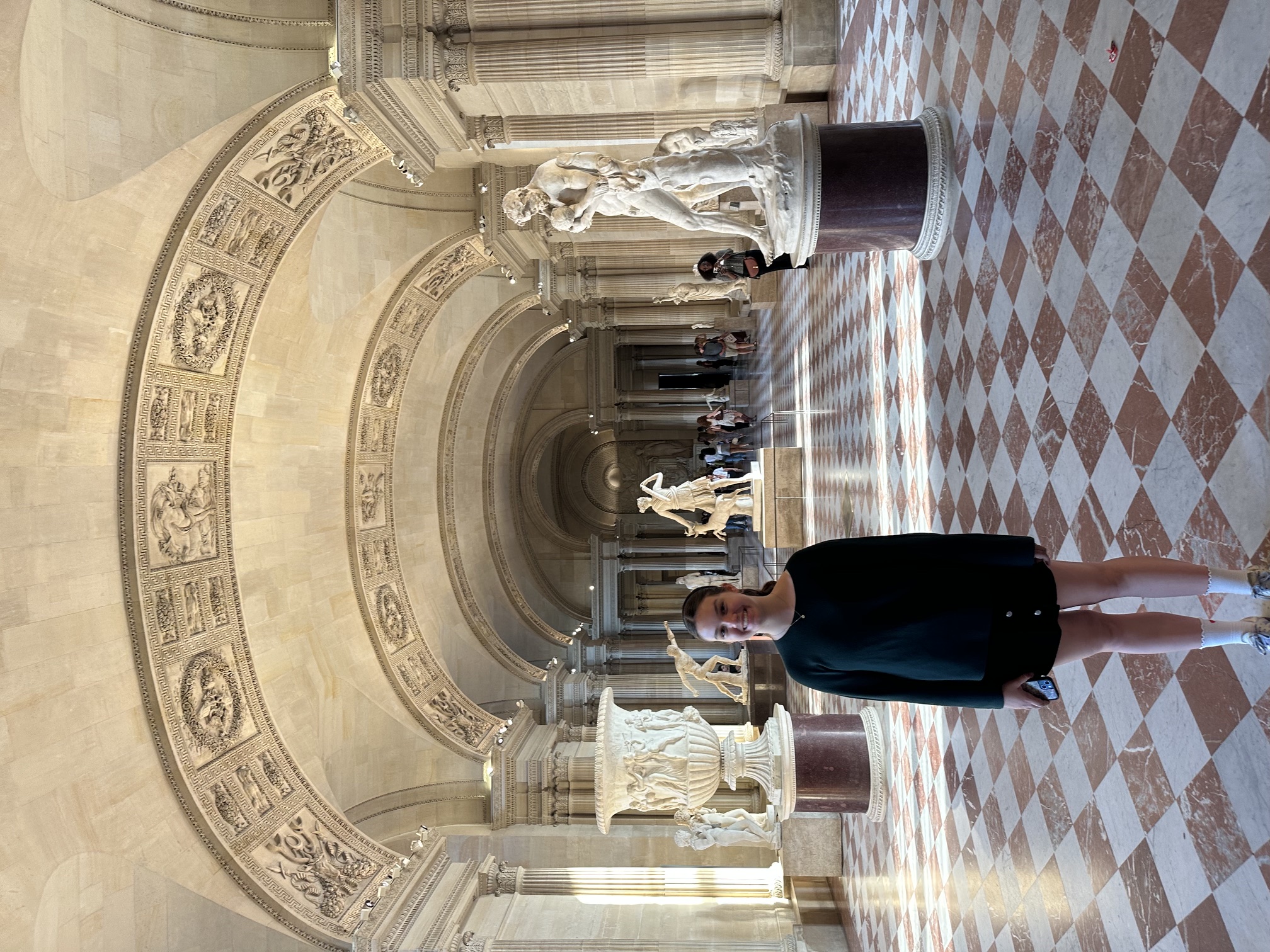
A red and white marble floor, a stucco ceiling, and almost no one in the room.
The trick to the Louvre is to let everyone head for the Mona Lisa and then walk the other way. Twenty meters past the turn, the noise drops off and you are alone in rooms the size of churches, full of Roman copies of everything you have ever read about. Three hours went by, and I did not see a single painting.
Here is the route I took: the marble halls, then the vases, then the little terracotta figures that most people skip, and finally the staircase with the Victory of Samothrace at the top.
The marble halls
Roman copies of lost Greek bronzes, arranged the way collectors in the 1700s liked them instead of by date. So you end up learning about the collectors too.
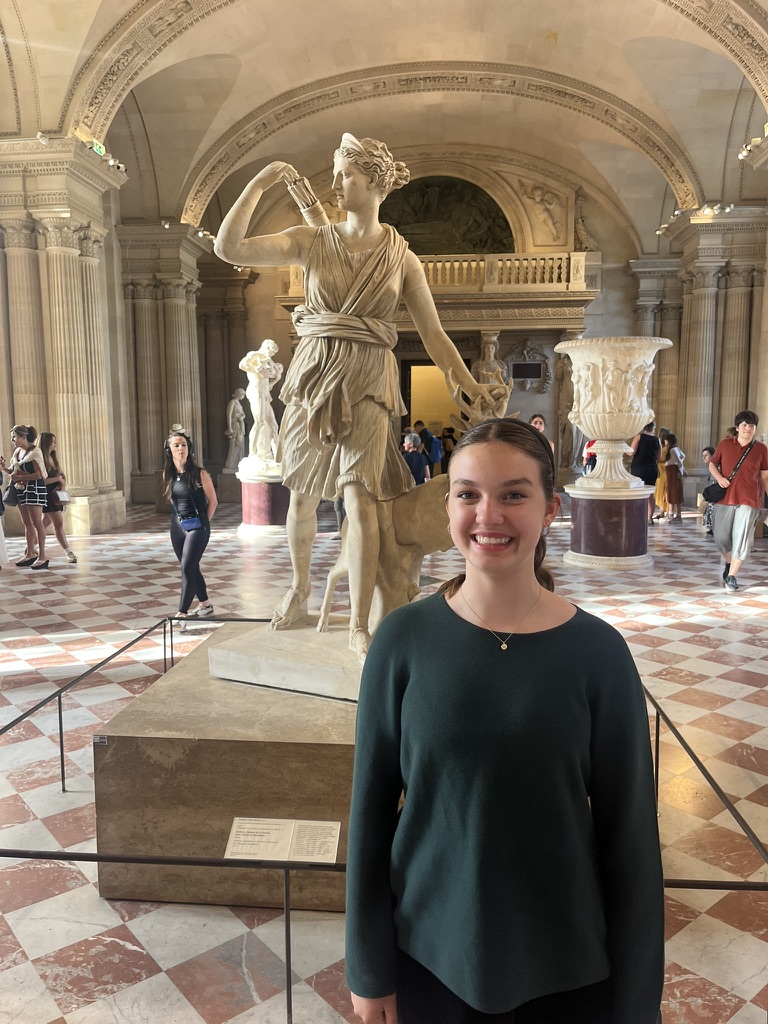
The Diana of Versailles, reaching for an arrow she never quite pulls out.
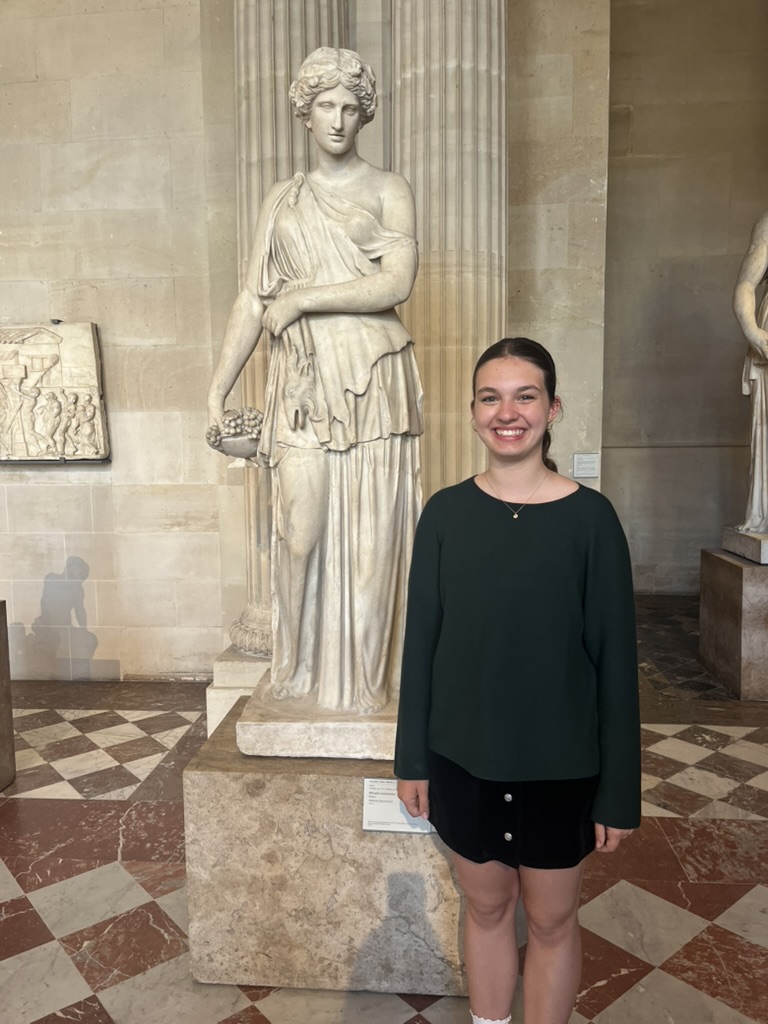
A goddess with a basket of fruit. Half of this statue is the work of the original sculptor, and half is the work of whoever repaired her.
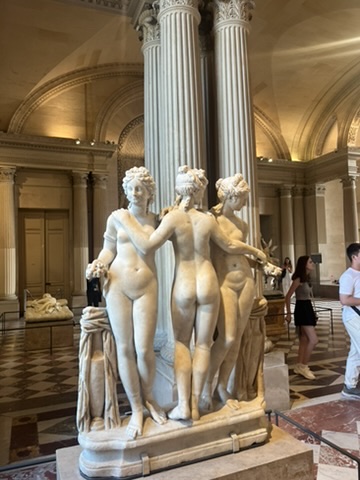
The Three Graces. The same pose, carved three times.
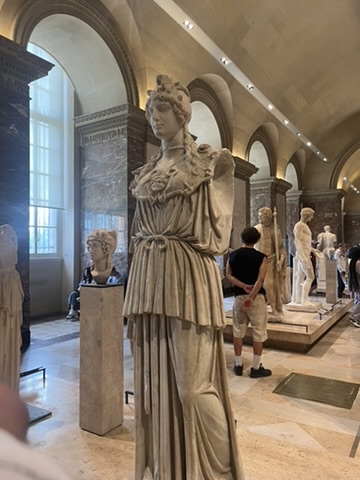
Athena with her aegis and gorgon still in place, in a room full of headless statues.
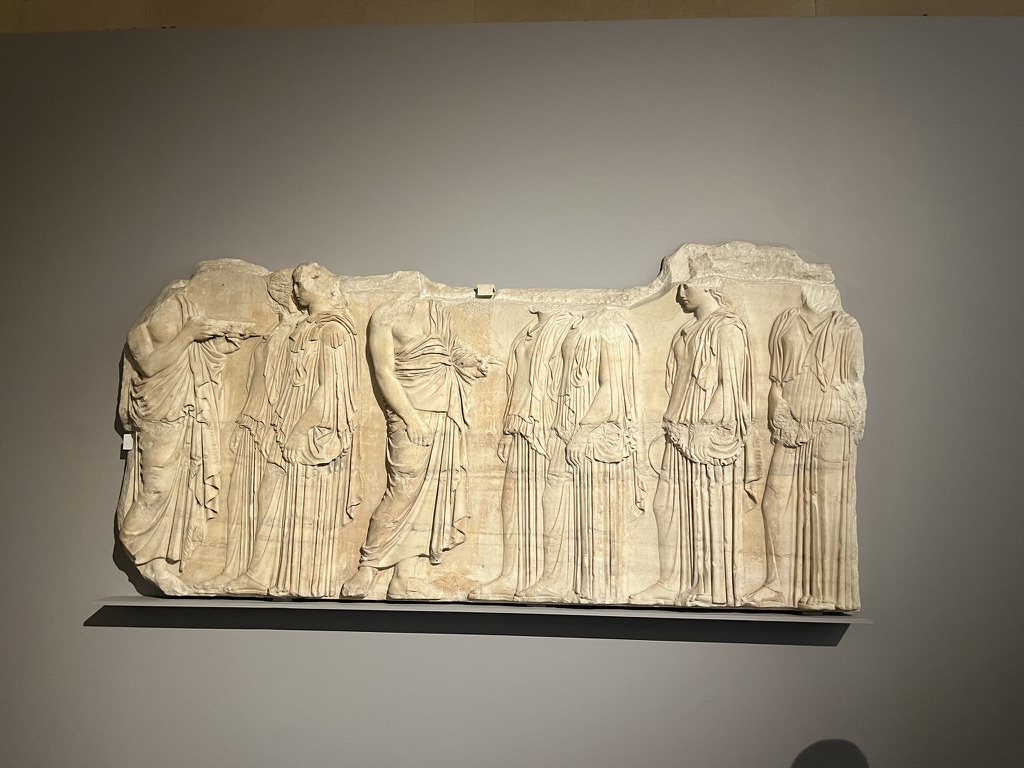
The Ergastines, a piece of the Parthenon frieze that ended up in Paris instead of London. One procession is now split between two cities and the building it was made for.
Vases
The Campana collection, case after case. I took these photos through the glass, reflections and all, because that is what the vases actually look like in person.
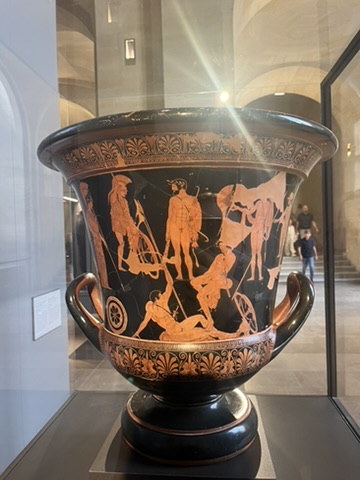
A krater with a battle scene. The fallen soldier at the bottom holds the whole composition together.
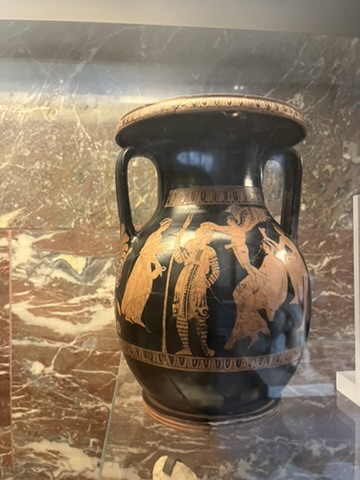
A pelike against purple marble. It shows someone chasing someone, a palmette band, and a glaze that has lasted 2,500 years.
Terracotta
Fired clay keeps its paint much longer than marble keeps its details. Both of these still have their color.
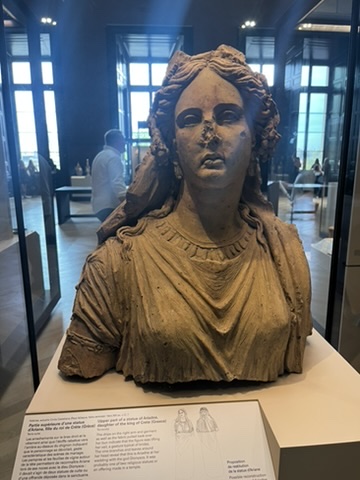
Elektra, daughter of Idomeneus. This is the top half of a terracotta statue.
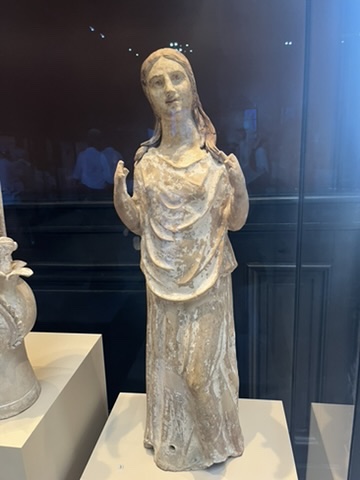
A little offering figure with her paint still on: pink, cream, and what used to be red. Someone left her at a shrine and hoped for something.
The Victory
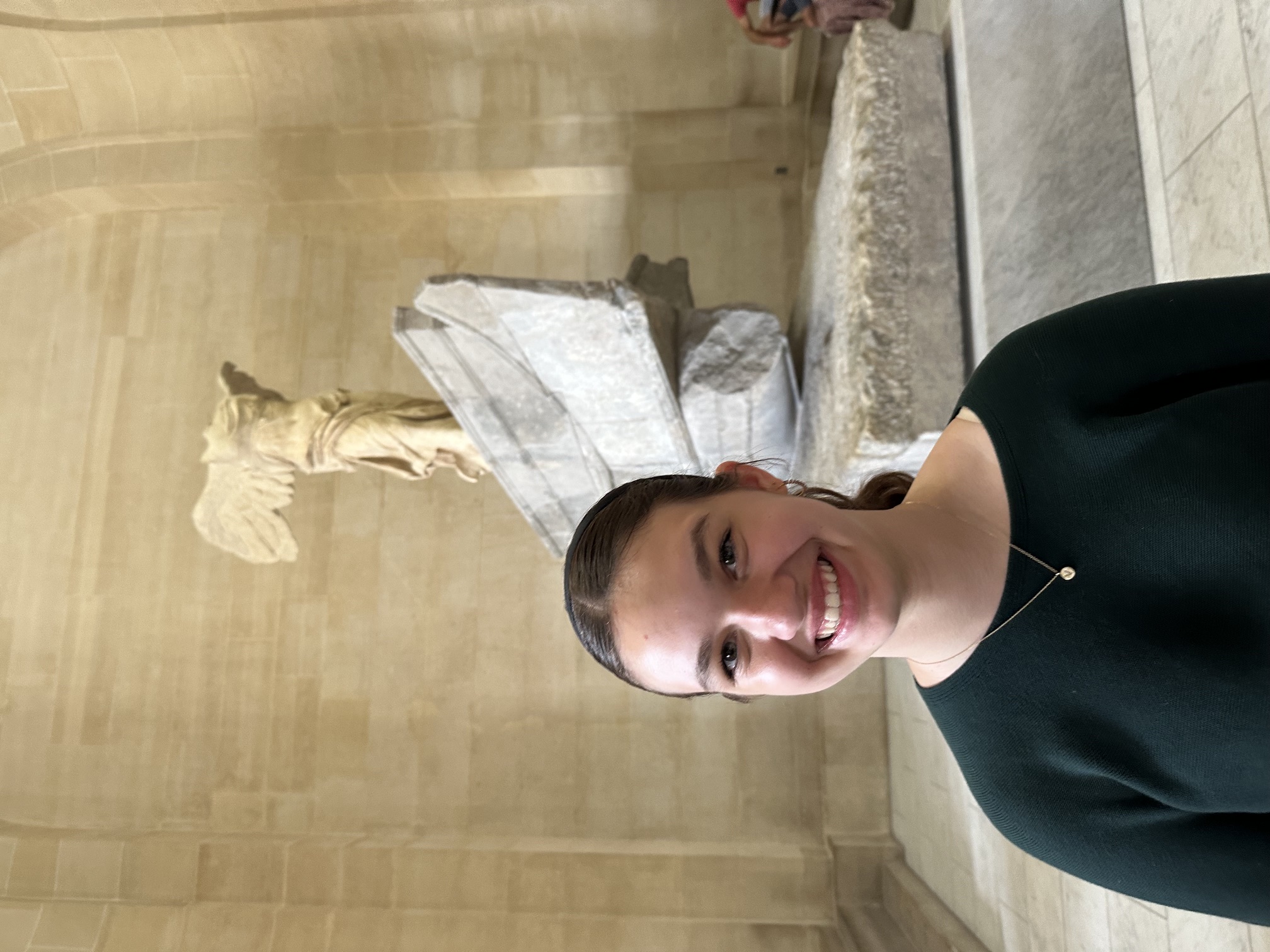
The Victory of Samothrace landing on the front of her ship. Her postcard has been on my wall for years, so I stayed with her for a long time. Her wings are out, she is facing straight into the wind, and she has no head. The statue does not need one.
{{ iiifCaption }}
I left through the courtyard at closing time, past the line of people still waiting for the painting. The Greek and Roman rooms will be just as empty tomorrow. That is the best thing about them, and also a little sad.