Casts and marbles on a free afternoon
the marbles I had only read about
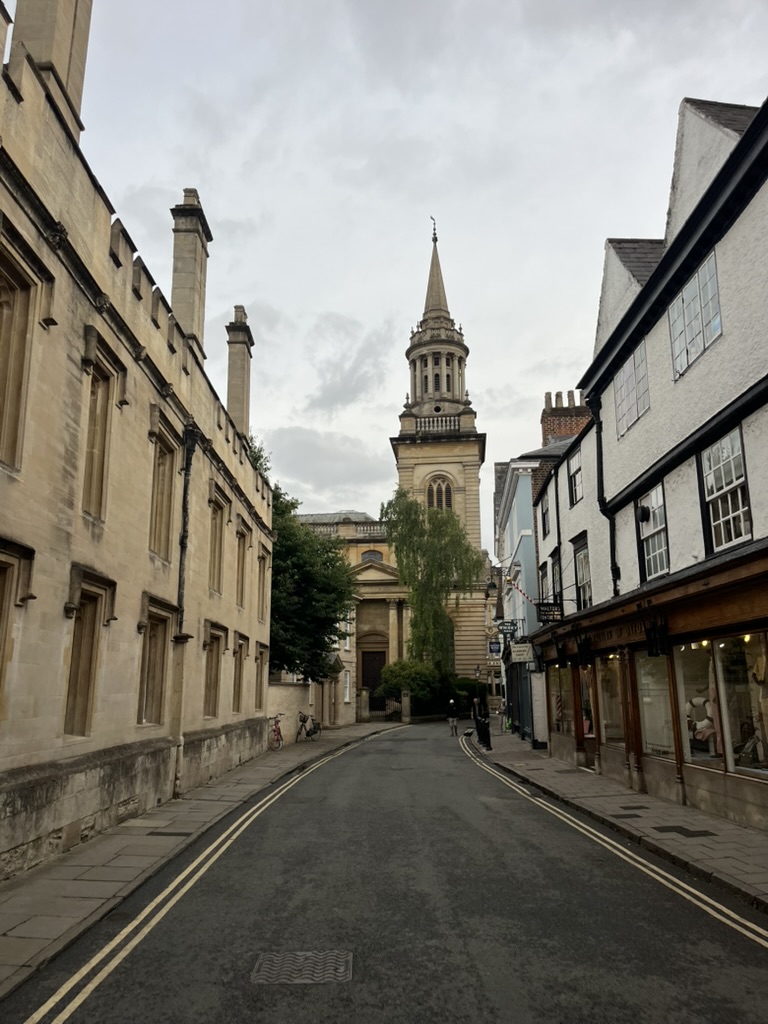
Oxford at eight in the morning. There is a college wall on one side, shops on the other, and a spire at the end of the street.
I had been meaning to come here all term, and I finally gave it a whole afternoon. Two of my favorite objects came from the Arundel collection, a group of inscriptions that Englishmen in the 1600s bought up without much regard for who they belonged to. The Parian Marble is a timeline that counts backwards from the year it was carved, so I stood in front of it doing the math in my head, which I really enjoyed.
The third object was the whole cast gallery, which is a bit of a stretch to count as one object. Every famous statue I have ever wanted to walk around is in there in plaster, and you can stand there as long as you like. A copy can still teach you something real about the original. Then tea, because Oxford.
The sculpture rooms
The sculpture rooms have deep red walls, spotlights, and no windows. The Fitzwilliam does the opposite, with daylight and white walls. For statues, I think the red works better. Everything in here looks like it belongs.
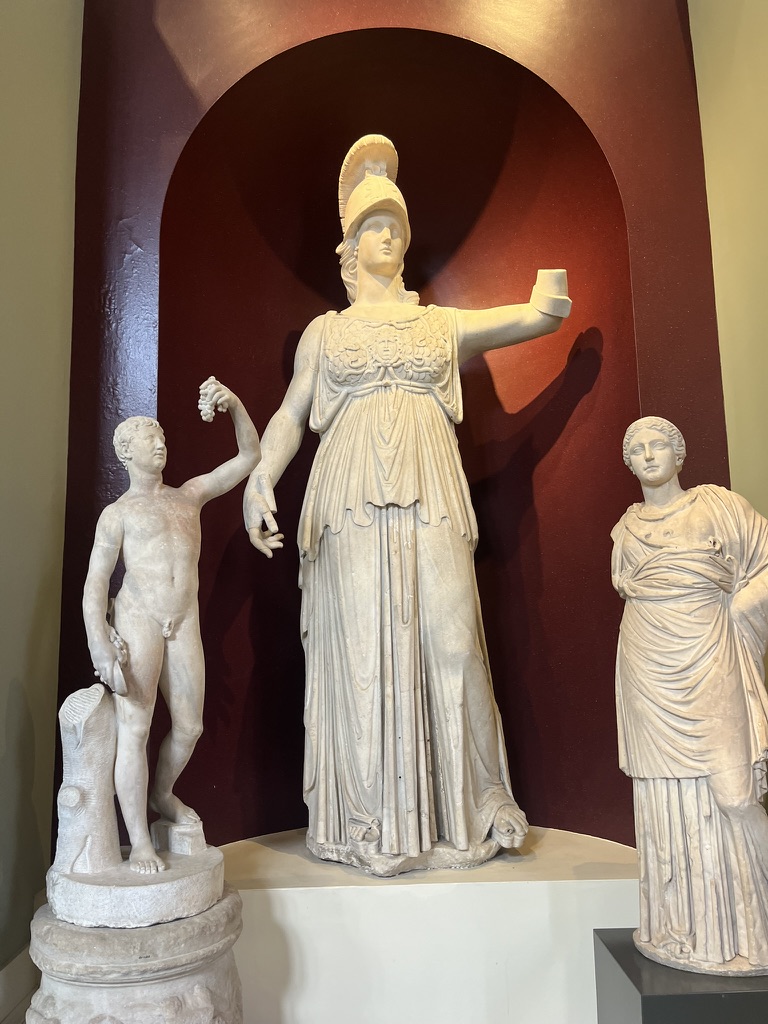
Athena in the apse, with a helmet crest and a gorgoneion aegis, and a youth and a draped woman beside her.
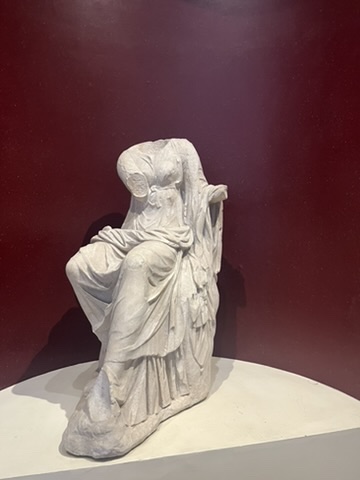
A seated, headless figure on a white drum against the red wall. You can tell how she is feeling just from the folds of her clothes.
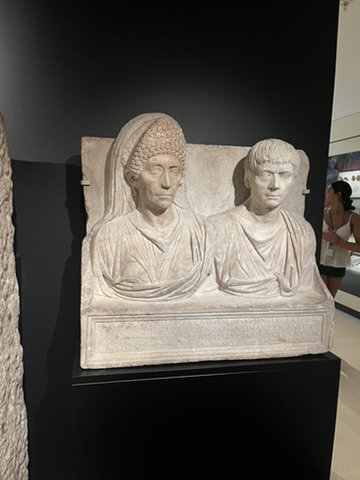
Two people side by side with their names carved underneath. Someone paid for this so they would not be forgotten, and it worked. I was standing there reading their names.
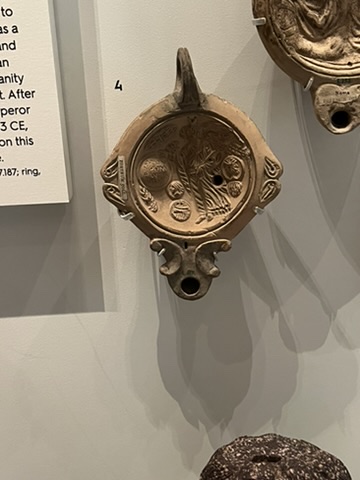
A late Roman lamp with symbols pressed into the top. This is the kind of everyday object I always end up stopping to look at.
Oxford on the walk over
Oxford is full of buildings that copy the objects in its own museum.
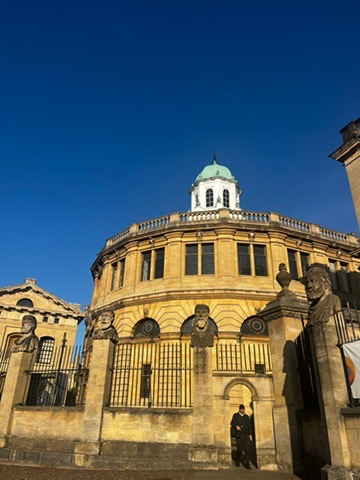
The bearded heads outside the Sheldonian, looking out at everyone who walks past.
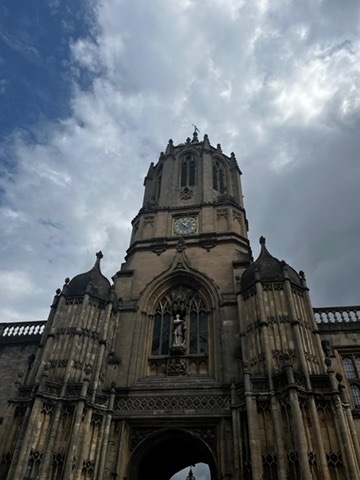
Tom Tower under a grey sky, which is the only way I have ever seen it.
{{ iiifCaption }}