A Roman villa in Malibu
the Lansdowne Herakles at sunset
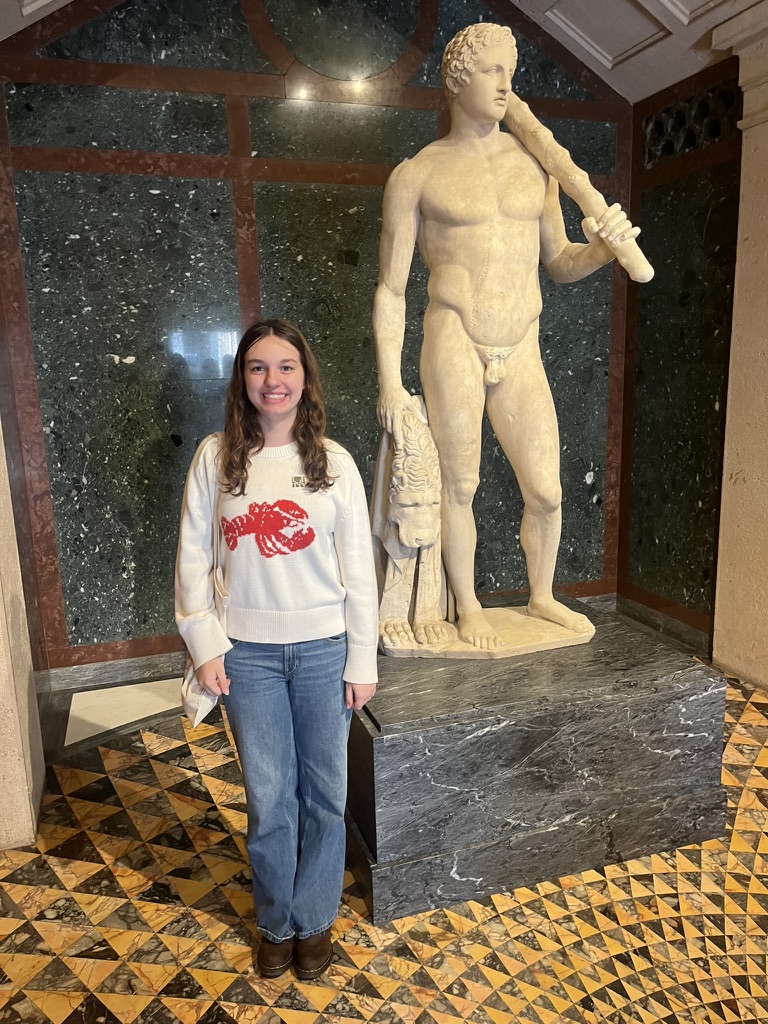
The Lansdowne Herakles. He has a club over his shoulder, a lion skin at his feet, and a whole room to himself.
The Getty Villa is a copy of a Roman villa that was buried in 79 CE, built by an oil billionaire on a hill in Malibu. It sounds like it should not work, but it does. Walking the peristyle at sunset showed me something that floor plans never did: the whole layout is about light first, then water, then statues.
The Lansdowne Herakles was the highlight. He went from Hadrian’s villa to an English living room to this museum. His history reads like a novel. After him, I spent the rest of the visit with the vases and a case of bronzes smaller than my hand. A year later, I came back as an intern.
Marble rooms
There is colored stone everywhere. Alabaster panels, green columns, and floors so beautiful that I kept stopping to look down.
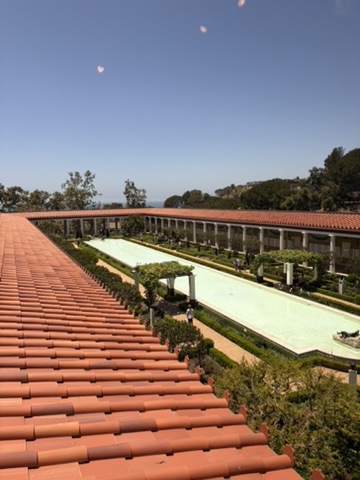
The outer peristyle from above. There is a long pool, clipped hedges, and the Pacific just out of frame.
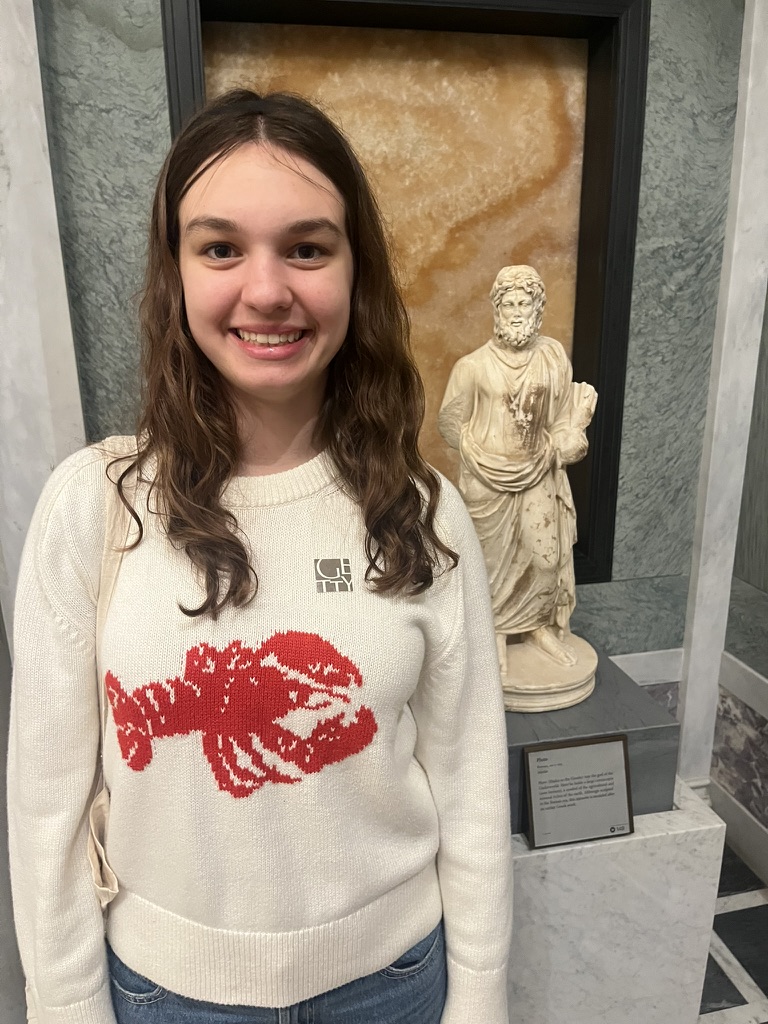
A bearded god in an alabaster niche. The lit stone behind him makes the statue look better than it would against a plain wall.
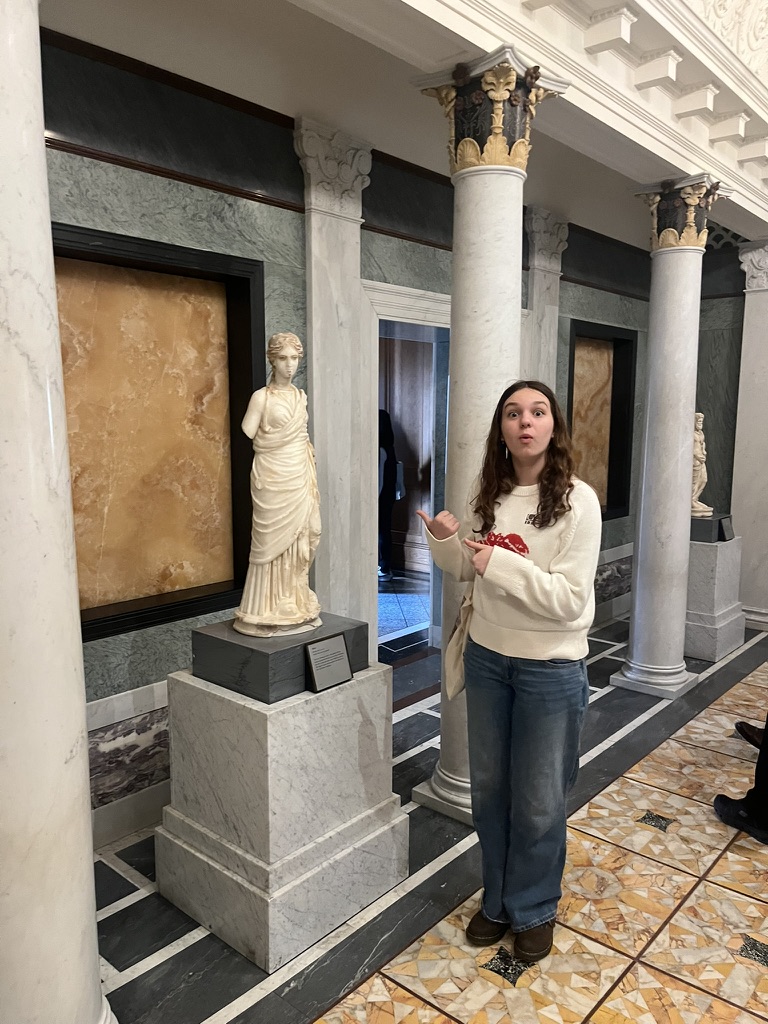
More drapery, and a Corinthian capital painted the way they really were painted in antiquity.
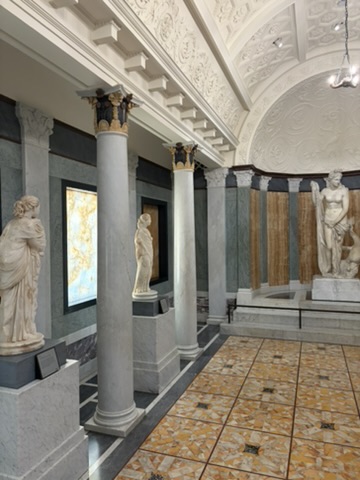
The whole room, with statues between the columns, a coffered ceiling, and a patterned floor.
The vases
Athenian black-figure, Panathenaic prize jars, and a row of South Italian vases about the size of small children. Every one of them is an everyday object that someone used.
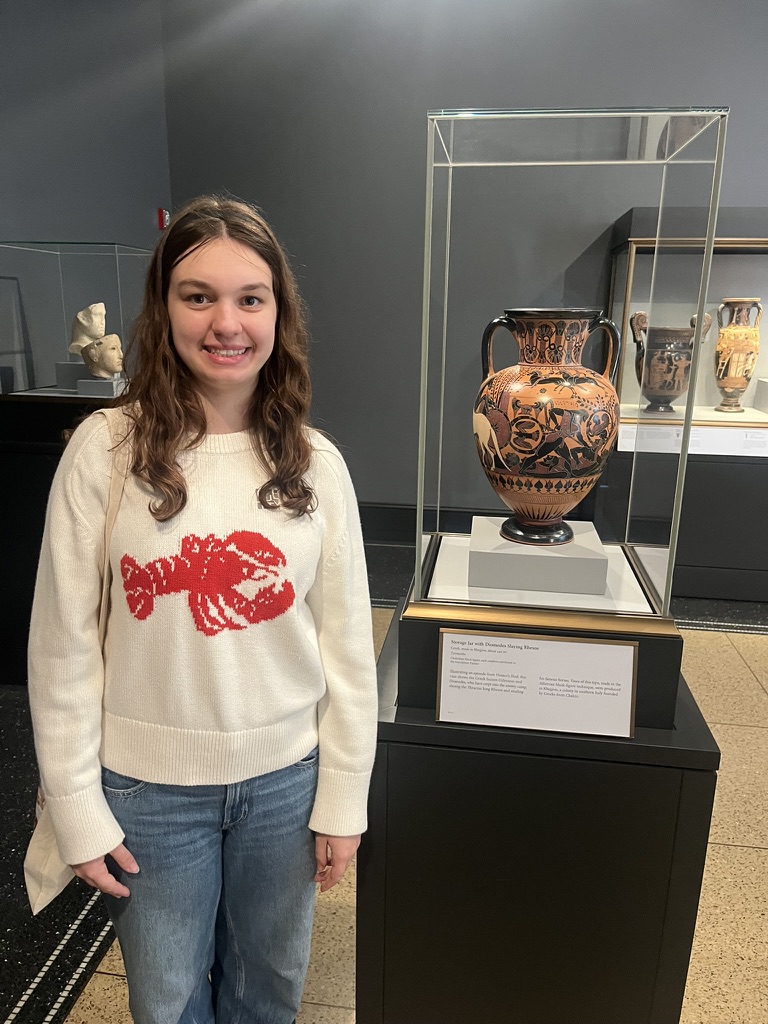
Storage jar with Diomedes slaying Rhesos — Iliad 10, the night raid, painted in Rhegion.
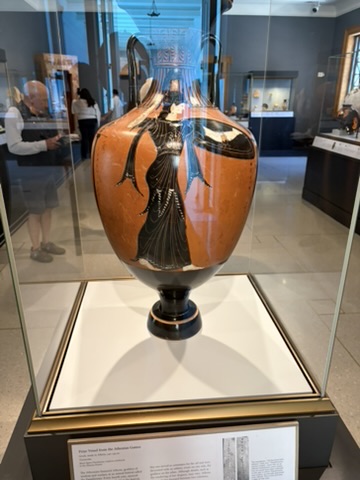
A Panathenaic prize vase. Athena stands between two columns, and the jar was once full of olive oil for the winner.
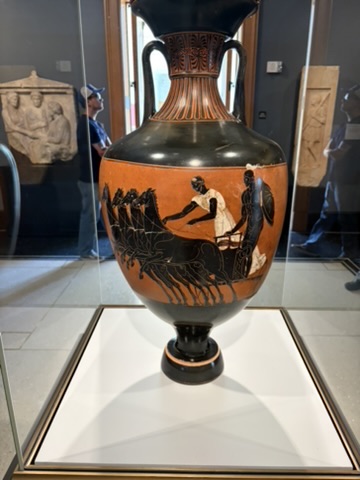
A chariot with four horses and a winged figure seeing them off.
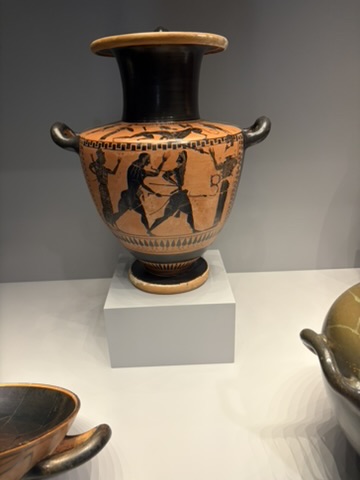
A water jar with one band of figures, scratched in so finely that you can still read it from arm’s length.
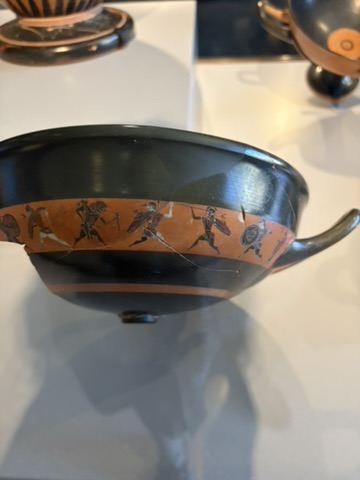
Hoplites running all the way around the rim of a drinking cup.
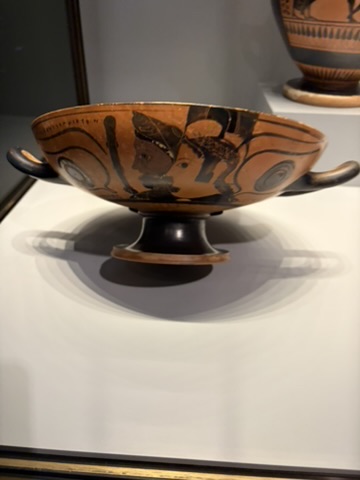
An eye cup. When you lift it to drink, the painted eyes stare at everyone else at the table.
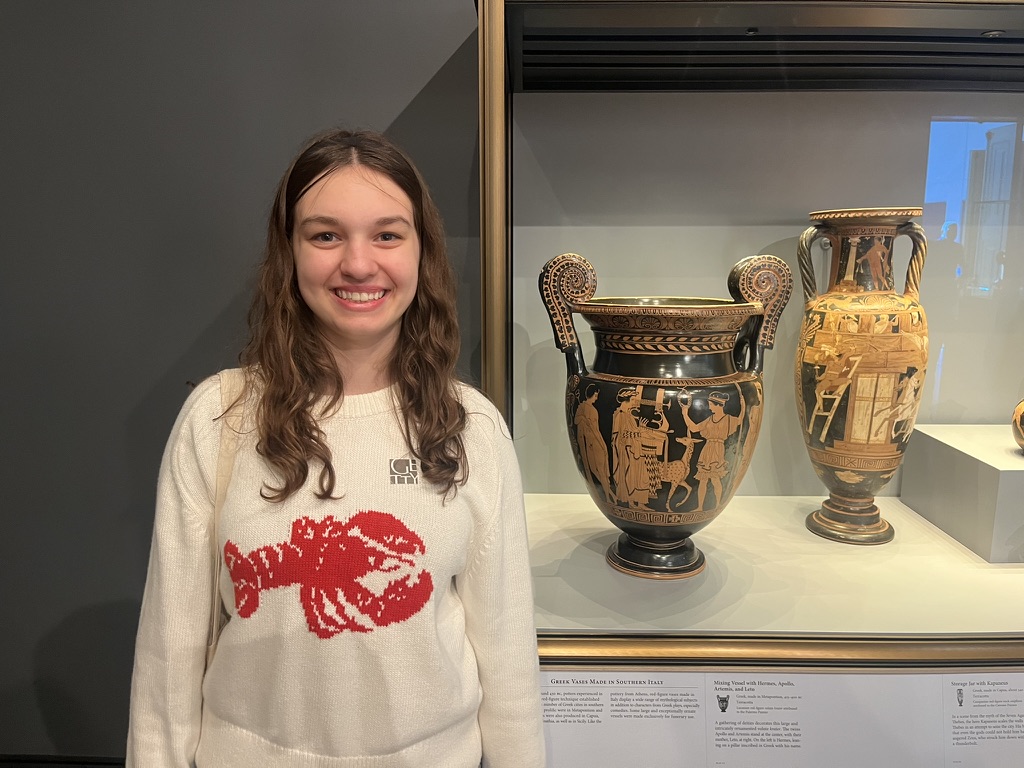
Greek vases made in southern Italy — a volute krater with Hermes, Apollo, Artemis, and Leto, next to a storage jar with Kapaneus.
Bronzes and a sarcophagus
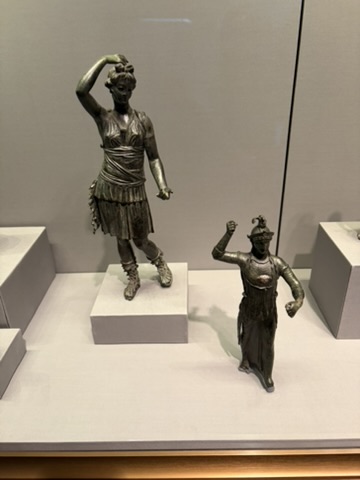
Two bronzes the size of my hand: a huntress in mid-stride and a goddess wearing a helmet.
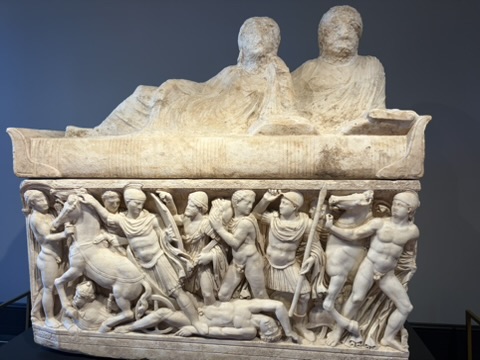
A battle sarcophagus. The front is a chaotic fight scene, and the couple who paid for it are shown lying calmly on the lid.
{{ iiifCaption }}
I walked the peristyle again at closing time, when the pool turns the color of the sky and the bronze copies throw long shadows. It is a reconstruction, and everyone knows that. But the light is real, and the light turned out to be most of the point.